What to Expect on a Uganda Gorilla Trek
Uganda wildlife safaris offer something no other destination in Africa can fully replicate. In a single trip, you can look a wild mountain gorilla in the eyes inside an ancient rainforest, watch tree-climbing lions at dusk on the equator, cruise past pods of hippos on the world’s longest river, and track chimpanzees through a forest holding 13 different primate species.
This is Uganda — the Pearl of Africa — and this is your complete guide to experiencing it.
What Makes Uganda Different From Every Other African Safari?
Africa is vast. But Uganda is special in ways that go beyond scenery and wildlife numbers.
Uganda sits at the ecological crossroads of East African savannah and West African rainforest. That collision of two of Africa’s greatest biomes in one compact country creates staggering biodiversity — more mammal species, more primate species, and more bird species per square kilometre than most destinations on the continent can offer.
Here is what you need to know before we go any further:
- Uganda is home to over half of the world’s 1,063 remaining mountain gorillas, according to the most recent census confirmed by the Dian Fossey Gorilla Fund and Uganda Wildlife Authority
- Uganda protects 13 primate species, including chimpanzees, that can be tracked in a single national park
- Over 1,000 bird species have been confirmed in Uganda — representing nearly half of all bird species found across the African continent
- Uganda holds 345 mammal species across 10 national parks, 12 wildlife reserves, and dozens of protected sanctuaries
- Uganda is one of only two places on Earth where lions regularly climb trees
- The mountain gorilla is the only wild great ape whose global population is growing — and Uganda is the reason why
These are not marketing claims. They are verified, documented facts from the Uganda Wildlife Authority and international conservation bodies.
Uganda’s 10 National Parks: Authoritative Guide
According to the Uganda Wildlife Authority (UWA), Uganda manages exactly 10 national parks alongside 12 wildlife reserves, 5 Community Wildlife Management Areas, and 13 wildlife sanctuaries. Each park protects a distinct ecosystem. Together, they make Uganda one of the most comprehensively protected wildlife destinations in Africa.
1. Bwindi Impenetrable National Park
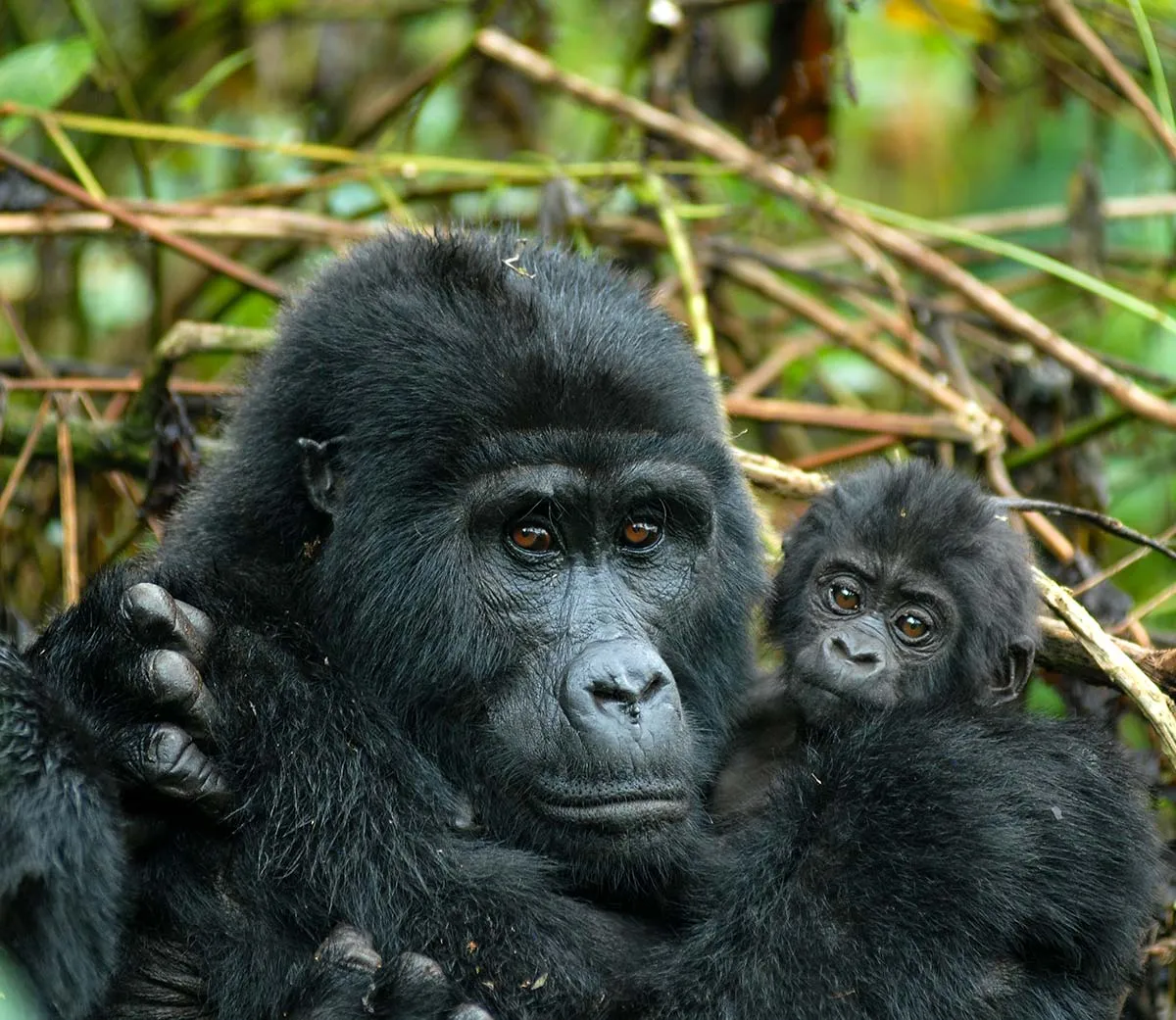
Bwindi is the single most important gorilla sanctuary on Earth. This UNESCO World Heritage Site in southwestern Uganda shelters 459 mountain gorillas across 331 square kilometres of ancient Afro-montane rainforest — the largest confirmed population of mountain gorillas in the world, according to the 2018 Bwindi-Sarambwe census conducted by the Greater Virunga Transboundary Collaboration.
The forest itself is over 25,000 years old and harbours 350 bird species, 120 mammals, 1,000 plant species, and over 200 species of butterfly. A 2025 census by the Uganda Wildlife Authority and Jane Goodall Institute also confirmed a coexisting population of over 400 chimpanzees — making Bwindi the only forest on Earth where mountain gorillas and chimpanzees share the same habitat.
Safari Activities:
- Gorilla trekking — the centrepiece of any Uganda wildlife safari; small groups of 8 trek with armed rangers and expert guides to spend one regulated hour with a wild gorilla family. Permit: USD 800 per person
- Gorilla habituation experience — a full-day permit spending the entire working day moving with a semi-habituated gorilla family alongside researchers. Permit: USD 1,500 per person. Available in Rushaga sector only
- Batwa cultural trail — a deeply moving experience with the Batwa pygmies, the forest’s original indigenous community, who share generations of forest knowledge and tradition
- Bird watching — the African green broadbill, Grauer’s rush warbler, Archer’s robin-chat, and 23 other species endemic to the Albertine Rift found nowhere else on Earth
- Guided forest hikes across all four park sectors
The Four Sectors: Buhoma (north; most accessible and most established), Ruhija (high-altitude; outstanding birding), Rushaga (largest sector; most gorilla families and the gorilla habituation programme), and Nkuringo (dramatic landscapes on the southern edge with views into DR Congo).
Getting There: 8–9 hours by road from Kampala, or a 1-hour charter flight to Kihihi or Kisoro airstrips.
Best Time: June–September and December–February offer drier trails. Gorilla trekking is excellent year-round — mountain gorillas do not migrate with the seasons.
Permits sell out months ahead during peak season. Book at least 3–6 months in advance through Tulambule or directly through UWA.
2. Queen Elizabeth National Park
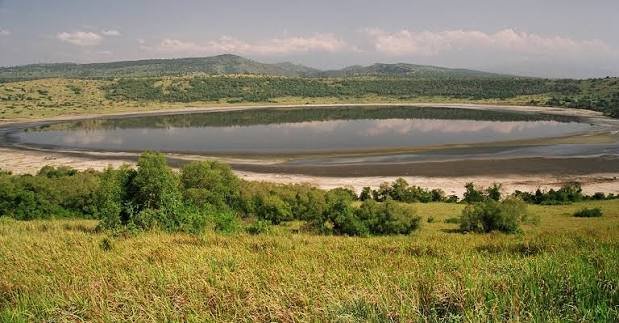
Queen Elizabeth is Uganda’s most visited park and one of its most ecologically complex. Straddling the equator across 1,978 square kilometres, it encompasses open savannah, crater lakes, the Maramagambo Forest, tropical wetlands, and the famous Kazinga Channel — all within a single, driveable park.
It supports over 95 mammal species and more than 600 bird species. Its Ishasha sector, in the park’s remote south, is one of only two places on Earth where lions regularly climb into fig trees — a behaviour so rare that it draws wildlife photographers from across the world.
Safari Activities:
- Game drives in Kasenyi Plains — lions, leopards, elephants, buffaloes, Uganda kob, warthog, and the rare giant forest hog
- Kazinga Channel boat safari — a 2-hour boat cruise on the 36-km channel linking Lakes Edward and George; home to one of Africa’s highest concentrations of hippos, with crocodiles, elephants at the water’s edge, and 500+ bird species along the banks
- Ishasha Sector game drives — the world-famous tree-climbing lions of the fig trees; an experience available in very few places globally
- Chimpanzee tracking in Kyambura Gorge — a habituated chimp community in a dramatic, river-carved gorge that drops 100 metres below the savannah surface
- Crater lakes exploration — scenic drives and walks through the Bunyaruguru and Katwe volcanic crater fields; a geological spectacle unique to this region
- Maramagambo Forest walks — primates, birds, and the famous bat cave with its python ecosystem
Getting There: 420 km from Kampala via Mbarara (5–6 hours by road), or charter flight to Mweya or Kasese airstrip.
Recommended Stay: Minimum 2–3 nights. Add 2 nights for the Ishasha sector if tree-climbing lions are on your list.
See our Queen Elizabeth safari itineraries for suggested routes.
3. Murchison Falls National Park
Uganda’s largest national park at 3,893 square kilometres, Murchison Falls sits in the country’s northwest and is named for what many hydrologists consider the world’s most powerful waterfall. The entire force of the Victoria Nile is compressed through a 7-metre-wide rocky gorge before plunging 43 metres in a thundering cascade — an extraordinary feat of geology that must be seen, not described.
The park protects four of Africa’s Big Five — lions, leopards, elephants, and buffaloes — alongside Rothschild’s giraffes (one of the world’s most endangered giraffe subspecies), Jackson’s hartebeest, and enormous Nile crocodiles.
Safari Activities:
- Game drives on the northern bank — lions, elephants, Rothschild’s giraffes, buffaloes, leopards, oribi, and Jackson’s hartebeest in classic open savannah
- Nile boat cruise to the base of the falls — a 3-hour cruise upriver past basking hippos, Nile crocodiles, elephants drinking at the bank, and superb birdlife including the rare Shoebill stork
- Hike to the top of the falls — stand on the rim of the gorge as the Nile explodes through solid rock beneath your feet; one of Uganda’s great natural spectacles
- Victoria Nile delta cruise — the Nile’s delta at Lake Albert is one of Uganda’s most reliable Shoebill stork locations
- Chimpanzee tracking in Budongo Forest — a habituated chimp community in a mahogany forest reserve within the park’s southern boundary
- Sport fishing — Nile perch, one of the world’s largest freshwater fish, in the Victoria Nile
Ziwa Rhino Sanctuary: Located on the main road between Kampala and Murchison Falls, Ziwa Rhino Sanctuary is the only place in Uganda where wild white rhinos can be tracked on foot. A guided rhino trek costs USD 40 per person and is the essential stop for completing Uganda’s Big Five on a single trip.
Getting There: Approximately 5 hours from Kampala by road along improved infrastructure. Charter flights land at Pakuba and Bugungu airstrips inside the park.
Recommended Stay: 2–3 nights to cover game drives, the Nile boat cruise, and the falls hike.
See our Murchison Falls safari packages for full itinerary options.
4. Kibale National Park
Kibale is the chimpanzee capital of the world. More than 1,500 chimpanzees live in this single forest in western Uganda — the highest density of chimpanzees, and the highest overall concentration of primates, found anywhere on Earth. The park is located near Fort Portal and protects all 13 of Uganda’s primate species in a single, continuous habitat.
Its birding is exceptional, with over 375 species recorded. Bigodi Wetland Sanctuary, a community-managed conservation area just outside the park boundary, is consistently rated among the finest birding sites in East Africa.
Safari Activities:
- Chimpanzee tracking at Kanyanchu — morning and afternoon sessions with habituated chimp communities; one of Africa’s highest success-rate primate tracking experiences. Permit: USD 250 per person
- Chimpanzee habituation — a full-day research experience moving with a semi-habituated chimp family alongside UWA scientists. Permit: USD 250 per person per day
- Primate walks — guided walks to encounter all 13 primate species, including red-tailed monkeys, grey-cheeked mangabeys, L’Hoest’s monkeys, and black-and-white colobus
- Bigodi Wetland Sanctuary birdwatching — a community-run birding trail; superb for papyrus specialists, grey crowned cranes, and forest birds
- Golden cat tracking — a newly introduced activity in the Kanyanchu area giving visitors a guided search for the African golden cat, one of the continent’s most elusive and rarely seen wild cats
Getting There: 320 km from Kampala (4–5 hours by road). Fort Portal town provides the nearest accommodation and facilities.
5. Kidepo Valley National Park
Kidepo is Uganda’s most remote national park and, for wildlife enthusiasts willing to make the journey, often its most rewarding. Located in the far northeast near the South Sudan border, the park protects the vast Narus and Kidepo valleys in a landscape of extraordinary drama — flat-topped mountains, dry river beds, and open savannah that feels primordially African.
Kidepo is consistently named by travel publications and wildlife photographers as one of Africa’s finest wilderness destinations, largely because so few tourists visit. Your game drive here is almost certainly private.
Wildlife: Elephants, lions, leopards, cheetahs, buffaloes, Rothschild’s giraffes, Burchell’s zebras, ostriches, Jackson’s hartebeest, and bat-eared foxes. Kidepo is one of the very few places in Uganda where cheetahs are reliably sighted.
Safari Activities:
- Game drives in the Narus Valley — the valley floor concentrates wildlife around its permanent water source, particularly during the dry season
- Game drives in the Kidepo Valley — seasonal; only accessible in the dry season but offering rare sightings including the striped hyena
- Walking safaris — guided wilderness walks through the Narus and Kidepo valleys with armed rangers
- Cultural visits with the Ik people — the Ik are one of Africa’s smallest and most isolated ethnic communities, living in the mountains above the park; a genuinely unique cultural encounter
- Bird watching — 475 recorded species, with numerous arid-zone species found nowhere else in Uganda
Getting There: 720 km from Kampala (10–12 hours by road) or a 1.5-hour charter flight directly to Kidepo airstrip. The charter flight is strongly recommended. Most visitors fly.
6. Lake Mburo National Park
Uganda’s smallest national park is also its most accessible from Kampala — just 240 km and roughly 3 hours by road, making it an ideal first-night safari stop on longer itineraries. Lake Mburo is the only park in Uganda where zebras and impala are reliably seen, and it is one of the very few parks in the country where open-savannah walking safaris are permitted.
The park’s activity variety is exceptional for its size. Horse riding among wild zebras, night game drives, and boat cruises on the lake are all available within a few kilometres of each other.
Safari Activities:
- Game drives — Burchell’s zebras, impalas, topi, hippos, warthog, eland, buffaloes, and leopard (spotted regularly at night)
- Walking safaris — guided walks in open savannah with an armed ranger; one of the finest walking safari experiences in Uganda
- Boat cruise on Lake Mburo — hippos and crocodiles at very close range, with excellent waterbird sightings including African fish eagles and malachite kingfishers
- Horse riding safaris — riding among free-roaming zebras and impalas; a uniquely memorable experience found almost nowhere else in East Africa
- Night game drives — serval cats, leopards, genets, spring hares, and porcupines after dark
Perfect For: An overnight stop between Kampala and Queen Elizabeth National Park; a standalone short safari for first-time visitors; or a family itinerary for travellers with children.
7. Mgahinga Gorilla National Park
Uganda’s smallest national park at 34 square kilometres, Mgahinga occupies the Ugandan section of the Virunga volcano chain on the shared tri-border with Rwanda and the Democratic Republic of Congo. The three extinct and active volcanoes — Muhabura, Gahinga, and Sabyinyo — dominate the skyline in one of the most dramatic landscapes in East Africa.
Only one gorilla family — the Nyakagezi group — is tracked here, making the experience more intimate than Bwindi. The park is also the finest location in Uganda for golden monkey tracking, with large and highly habituated troops in the bamboo zones.
Safari Activities:
- Gorilla trekking — the Nyakagezi family is one of the most relaxed and photogenic gorilla groups in Uganda; permits cost USD 800 per person
- Golden monkey tracking — the best golden monkey experience in Uganda; large habituated troops in the bamboo forest. Permit: USD 100 per person
- Volcano hiking — guided summit routes on Mount Muhabura (4,127m), Mount Gahinga (3,474m), and Mount Sabyinyo (3,669m; the border tripoint of Uganda, Rwanda, and DR Congo)
- Batwa cultural experience — the Batwa community shares their extraordinary history and forest knowledge through guided cultural walks
Getting There: 8–9 hours by road from Kampala, or a charter flight to Kisoro airstrip (60 minutes from Entebbe).
8. Rwenzori Mountains National Park
The Rwenzori Mountains — the legendary Mountains of the Moon — are the ice-capped peaks that the Greek geographer Ptolemy identified in antiquity as the source of the Nile. This UNESCO World Heritage Site in western Uganda contains Margherita Peak at 5,109 metres: the third-highest summit in Africa and one of only three equatorial glaciated peaks on the continent.
The Rwenzoris are unlike any other mountains in Africa. Their Afro-alpine vegetation zones — giant lobelias growing to 4 metres, ancient tree heathers draped in hanging moss, prehistoric groundsels the height of houses — create landscapes that feel like another planet.
Safari Activities:
- Multi-day trekking to Margherita Peak — the Central Circuit is typically completed in 7–9 days; one of Africa’s great mountain challenges and a UNESCO-designated natural world heritage experience
- Shorter guided day hikes for those not attempting the full summit; the lower forest zones are spectacular in their own right
- Bird watching — 217 confirmed species including 19 Albertine Rift endemics; the Rwenzori turaco and handsome francolin are highlights
- Botanical exploration — guided walks through vegetation found nowhere else on Earth
Getting There: Charter flight to Kasese airstrip, then 1 hour to the park headquarters at Nyakalengija.
9. Mount Elgon National Park
An extinct volcano straddling the Uganda-Kenya border, Mount Elgon contains the world’s largest intact volcanic caldera — 40 kilometres in diameter. It is Uganda’s least-visited major park, and travellers who come here are rewarded with complete solitude in a landscape of ancient geological drama.
Mount Elgon’s most remarkable and entirely unique feature cannot be experienced anywhere else in Africa. Elephant herds enter Kitum Cave and Mackingeny Cave after dark specifically to mine and consume the salt-rich cave walls — a behaviour developed over thousands of years. Guided night visits to observe this are available and extraordinary.
Safari Activities:
- Hiking and trekking — Wagagai Peak (4,321m) is Uganda’s second-highest summit, accessible from multiple approach routes
- Cave exploration — Kitum and Mackingeny caves; observing salt-mining elephants at night is one of the most unusual wildlife encounters available anywhere in Africa
- Sipi Falls hiking — three spectacular tiered waterfalls on the western slopes; one of Uganda’s most picturesque landscapes
- Bird watching — 300+ recorded species including Jackson’s francolin and numerous montane forest specialists
Getting There: 240 km from Kampala (approximately 4 hours) via Mbale town.
10. Semuliki National Park
Semuliki is ecologically extraordinary. This 220-square-kilometre park in western Uganda extends the Congo Basin lowland rainforest into East Africa — a biological peninsula of Central African jungle that supports species found nowhere else in Uganda or East Africa.
The result is a park with 441 bird species, of which 216 are lowland Congo Basin birds found nowhere else in Uganda. For serious birders, Semuliki is essential. For all visitors, the Sempaya Hot Springs — both male and female geysers erupting from the forest floor in columns of boiling water — are one of Uganda’s most dramatic and surprising natural features.
Safari Activities:
- Sempaya Hot Springs — male geyser (Bilante) and female geyser (Nyasimbi) both erupt regularly; a genuinely extraordinary sight in a surreal forest setting
- Primate tracking — chimpanzees, red-tailed monkeys, grey-cheeked mangabeys, and the De Brazza’s monkey
- Bird watching — the African piculet, Nkulengu rail, and numerous lowland Congo Basin species found nowhere else in Uganda or East Africa; considered a must-visit for serious African birders
- Cultural visits — the Batwa community of Semuliki shares a distinct forest culture connected to the Central African rainforest tradition
Getting There: 340 km from Kampala via Fort Portal (approximately 5 hours).
Uganda Safari Activities: The Complete Picture
Gorilla Trekking
One of the most profound wildlife encounters available anywhere on Earth. Groups of a maximum 8 visitors trek into the forest with armed UWA rangers and expert naturalist guides to spend one regulated hour with a wild mountain gorilla family. The permit costs USD 800 per person and is issued by the Uganda Wildlife Authority.
The encounter is genuine, intimate, and entirely wild. Nothing is staged. The gorillas go about their day — feeding, playing, resting — and you observe from a respectful distance of 7 metres. It leaves most visitors speechless.
See all gorilla trekking tours by Tulambule here.
Gorilla Habituation Experience
A full-day permit placing you alongside UWA researchers and a gorilla family still being habituated to human presence. Available exclusively in Bwindi’s Rushaga sector. Permit: USD 1,500 per person.
You are not limited to one hour. You move with the family throughout the entire field day — observing feeding, socialisation, and movement in real time — with expert researchers explaining every behaviour as it unfolds.
Chimpanzee Tracking
Available in Kibale National Park (Kanyanchu), Kyambura Gorge (Queen Elizabeth), and Budongo Forest (Murchison Falls). Kibale offers the world’s finest chimp tracking, with habituated communities and very high encounter rates. Standard permit: USD 250 per person.
Chimpanzee habituation — spending a full research day with a semi-habituated community — is also available at Kibale for the same permit fee.
Golden Monkey Tracking
Exclusive to Mgahinga Gorilla National Park. The golden monkey is an endangered Cercopithecus species endemic to the Virunga volcanoes. Troops are large, habituated, and habitually active in the bamboo zones. Permit: USD 100 per person. One of Uganda’s most photogenic and underrated safari experiences.
Game Drives
Classic open 4×4 game drives are available in Queen Elizabeth, Murchison Falls, Lake Mburo, and Kidepo Valley. Morning departures (06:30–09:30) catch predators returning from overnight hunts. Late afternoon drives (15:00–19:00) offer golden light and water-source sightings as the savannah cools.
Your Tulambule safari includes a private 4×4 vehicle and a certified, English-speaking wildlife guide for the full duration of your trip.
Nile and Channel Boat Safaris
The Kazinga Channel cruise in Queen Elizabeth and the Nile boat cruise in Murchison Falls are among Africa’s finest water-based wildlife experiences. The Nile cruise takes you upriver from Paraa to the base of Murchison Falls over 3 hours — one of the great boat journeys in East Africa.
Both cruises deliver exceptional views of hippos, Nile crocodiles, elephants, and some of the continent’s most spectacular waterbird assemblages.
Bird Watching
With over 1,000 confirmed species — representing nearly half of all bird species found on the African continent — Uganda is a world-class birding destination at every level. The country’s position at the intersection of East African savannah and West African rainforest biomes explains this remarkable diversity.
Key birding destinations: Mabamba Swamp on Lake Victoria (Shoebill stork), Bwindi (Albertine Rift endemics), Bigodi Wetland (papyrus specialists), Semuliki (Congo Basin lowland species), and the Kazinga Channel (raptors and waterbirds). For authoritative species lists, visit BirdLife International Uganda.
Rhino Trekking at Ziwa Sanctuary
Ziwa Rhino Sanctuary, on the road between Kampala and Murchison Falls, is the only place in Uganda where wild white rhinos can be encountered on foot. Uganda’s wild rhino population was wiped out during political instability; Ziwa’s white rhinos are the first step in a long-term reintroduction programme supported by UWA and international conservation partners. Guided foot treks cost USD 40 per person.
Walking Safaris
Open-savannah walking safaris are available at Lake Mburo. Guided wilderness walks operate in Kidepo Valley and around Murchison Falls (top-of-falls walk). Walking with an armed ranger through the African bush — reading spoor, listening to the sounds of the savannah — is a different dimension of safari that no vehicle-based game drive can replicate.
Volcano and Mountain Hiking
Three hikeable volcanoes at Mgahinga, the world’s third-highest equatorial summit at the Rwenzoris, and the Sipi Falls circuit at Mount Elgon give Uganda a mountain adventure offering that most purely safari-focused destinations in Africa cannot match.
Cultural Experiences
Uganda’s communities are as diverse and fascinating as its wildlife. The Batwa trail at Bwindi or Mgahinga, Ik community visits in Kidepo, Ankole cattle culture experiences near Lake Mburo, traditional Kiganda cultural performances near Kampala, and community-run wetland tours at Bigodi are all among the most authentic cultural encounters available in East Africa.
White-Water Rafting at Jinja
Jinja, on the shores of Lake Victoria at the source of the River Nile, offers some of the world’s finest commercially run white-water rafting on Grade 4 and 5 rapids. Easily added to any safari itinerary as a Kampala departure activity. Learn more on our Uganda tours page.
Best Time to Visit Uganda for a Wildlife Safari
Uganda sits on the equator and can be visited in every month of the year. Two distinct dry seasons offer the most comfortable and productive conditions for game drives and forest trekking.
Main Dry Season: June to September
The most reliable window for Uganda wildlife safaris overall. Vegetation dries and thins, concentrating animals around permanent water sources and making them easier to spot. Park tracks are most accessible. This is peak season — book gorilla permits and accommodation a minimum of 3–6 months ahead.
Short Dry Season: December to February
A strong secondary window with slightly fewer visitors than the June–September peak. Excellent game viewing, pleasant temperatures across all parks, and good availability of mid-range lodge options.
Wet Seasons: March–May and October–November
Heavier rainfall makes some remote bush tracks more challenging to drive. The landscape transforms into lush, vivid green; birdlife peaks; accommodation rates drop at many lodges; and gorilla trekking continues year-round without interruption. An excellent choice for birders and travellers on tighter budgets.
How to Get to Uganda for a Safari
International Flights
All international visitors arrive at Entebbe International Airport (EBB), 35 km from Kampala on the shores of Lake Victoria. Direct international connections include hubs in Nairobi (Kenya Airways, KLM code-share), Dubai (Emirates, flydubai), Doha (Qatar Airways), Istanbul (Turkish Airlines), Amsterdam (KLM), and Addis Ababa (Ethiopian Airlines).
Most visitors overnight in Entebbe or Kampala on arrival, then begin their safari the following morning. Entebbe itself is a relaxed lakeside town with excellent accommodation and easy access to the airport.
Domestic Charter Flights
Private charter flights connect Entebbe to airstrips near every major national park. They significantly reduce overland travel time and are recommended for any itinerary over 7 days where time efficiency matters.
Key park airstrips: Kihihi and Kisoro (Bwindi), Mweya and Kasese (Queen Elizabeth), Pakuba and Bugungu (Murchison Falls), Kidepo (Kidepo Valley), and Kisoro (Mgahinga).
Road Transfers
All inter-park road transfers on a Tulambule safari are in private, air-conditioned 4×4 vehicles with your dedicated guide. Uganda’s main trunk roads connecting Kampala to the western and northern parks are generally in good condition. Remote park tracks require high-clearance 4×4 vehicles.
Uganda Entry Requirements
Visa
Most nationalities require a visa to enter Uganda. Apply online for the Uganda e-Visa at the official immigration portal immigration.go.ug before you travel.
- Single-entry tourist visa: USD 50
- East Africa Tourist Visa (EATV): USD 100; allows travel across Uganda, Kenya, and Rwanda for up to 90 days — the best option for multi-country itineraries
Citizens of East African Community (EAC) member states — Kenya, Tanzania, Rwanda, Burundi, and South Sudan — enter Uganda visa-free.
Yellow Fever Certificate
A valid Yellow Fever vaccination certificate is mandatory for all visitors entering Uganda, regardless of country of origin. Immigration officers check it on arrival at Entebbe. Travellers without a valid certificate may be denied boarding at their origin airport or refused entry on arrival.
Carry your yellow fever certificate in your hand luggage at all times — never in checked baggage.
Passport Validity
Your passport must be valid for at least six months from your departure date from Uganda.
Health Requirements for a Uganda Safari
Malaria
Uganda is a malaria-endemic country year-round. Consult your doctor or a certified travel health clinic at least 4–6 weeks before departure to discuss appropriate anti-malarial prophylaxis. Use a DEET-based insect repellent (minimum 20% DEET concentration), wear long sleeves and trousers during dawn and dusk, and sleep under mosquito nets — provided at all reputable safari lodges.
Vaccinations
Yellow Fever is the only mandatory vaccination for Uganda entry. Beyond that, the following are strongly recommended by travel health specialists:
- Hepatitis A and B
- Typhoid
- Tetanus and Diphtheria
- Rabies (particularly for travellers spending extended time in remote areas or in close contact with animals)
Always consult a qualified travel medicine clinic well before your departure date for personalised, current medical advice.
Drinking Water
Tap water is not safe to drink in Uganda. Drink only bottled or filtered water, which is available at all lodges, hotels, and shops throughout the country.
General Park Safety
All gorilla and chimpanzee treks are accompanied by armed UWA rangers. Uganda’s national parks are safe, well-managed environments when you follow your guide’s instructions. Standard urban awareness applies in Kampala — no different from any major African capital city.
What to Pack for a Uganda Wildlife Safari
Clothing:
- Neutral-coloured clothing in khaki, olive, brown, and dark green. Avoid white, bright red, orange, and yellow — these colours can startle wildlife and are more visible to insects
- Long-sleeved lightweight shirts and trousers for forest trekking, evenings, and early mornings
- A warm mid-layer (fleece or down gilet) for cool mountain evenings, particularly at Bwindi (2,100m elevation), Mgahinga, and Kidepo
- Waterproof hiking boots — broken in before the trip. Ankle support is critical on the root-tangled forest trekking trails
- A waterproof rain jacket or poncho — essential in rainforest areas regardless of season
Equipment:
- Binoculars — minimum 8×42 magnification recommended for game drives and birding
- Camera with extra batteries and memory cards; charging points can be limited in remote bush camps
- A small daypack (20–25 litres) for gorilla treks, carrying water, snacks, and camera equipment
- DEET insect repellent (minimum 20%)
- Sunscreen and a wide-brimmed sun hat
- Gardening gloves — seldom thought of, but invaluable on steep forest trails with stinging nettles and thorny vines
Documents (all in hand luggage — never checked):
- Valid passport
- Printed e-Visa approval
- Yellow fever vaccination certificate (original — photocopies are not accepted)
- Travel insurance documents, including medical evacuation cover
- Gorilla permit and activity permit printouts
Money and Power:
- Uganda uses Type G sockets (UK three-pin, 240V/50Hz) — bring a universal travel adapter
- Carry USD cash in small denominations ($1, $5, $10, and $20 notes) for tips, local market purchases, and some park entry fees
- Credit cards are accepted at most mid-range and luxury lodges; cash is essential in remote parks and small communities
- Drone policy: Drones are prohibited in all Ugandan national parks without a special UWA permit. These permits are not routinely issued to tourists. Do not travel expecting to fly a drone in any park
Planning Your Uganda Safari: Itinerary Lengths
5–6 Days: A tightly focused introduction — Murchison Falls National Park (2 nights) combined with Bwindi gorilla trekking (2 nights). Short but entirely rewarding. See our short Uganda safari packages.
7–8 Days: The classic Uganda circuit — Murchison Falls, Kibale for chimpanzee tracking, and Bwindi for gorilla trekking. The most popular starting itinerary for first-time visitors and a beautifully balanced trip. See our 7-day and 8-day Uganda safari packages.
10–12 Days: The complete Uganda experience — adds Queen Elizabeth National Park for Ishasha tree-climbing lions and the Kazinga Channel boat safari; the ideal combination of wildlife variety, different ecosystems, and proper pacing. Explore our 10-day Uganda safari package.
14+ Days: For travellers wanting to include Kidepo Valley, the Rwenzori Mountains, Lake Mburo, or a cross-border extension into Rwanda for comparative gorilla trekking in the Virungas. See our customised Uganda safari itineraries.
As a general guide, 8–10 days is the recommended minimum for a first Uganda safari. Shorter trips are possible but can feel rushed given the distances between parks.
Uganda Safari Budget Guide
Uganda safari costs vary considerably based on accommodation standard, group size, and which activities you include.
Budget Safari: USD 150–250 per person per day — basic guesthouses and bandas, shared vehicle transfers, or self-drive arrangements.
Mid-Range Safari: USD 300–500 per person per day — comfortable tented camps and lodges, private guide and 4×4 vehicle, most meals included.
Luxury Safari: USD 600–1,500+ per person per day — premium properties including Sanctuary Gorilla Forest Camp, Clouds Mountain Gorilla Lodge, Bwindi Lodge, and Wildwaters Lodge on the Nile.
Important: Gorilla trekking permits (USD 800 per person), chimpanzee tracking permits (USD 250 per person), and other activity permits are charged separately from accommodation. Always budget for these independently when planning your trip.
Why Book With Tulambule Uganda Safaris?
Tulambule Uganda Safaris is a 100% Ugandan-owned and operated company, headquartered in Kampala and accredited by the Uganda Tourism Board (UTB), Uganda Wildlife Authority (UWA), AUTO, and TUGATA.
We have been crafting Uganda wildlife safaris for international travellers since 2014. Every itinerary we build is designed from scratch around your specific interests, pace of travel, and budget. We are not a booking platform. We are a team of expert local guides and safari planners who know these parks intimately.
We handle your gorilla permits, activity permits, lodge bookings, private 4×4 vehicle, certified guide, airport transfers, and every logistical detail between arrival and departure. Your role is simply to arrive ready to experience the Pearl of Africa.
Request your free, tailored safari quote here. We respond within 24 hours.
Frequently Asked Questions
Is Uganda safe for tourists? Yes. Uganda has a stable government and has welcomed international safari visitors safely for decades. National parks are staffed by armed UWA rangers, and the tourism infrastructure is well-established. Millions of visitors travel here safely every year. The UK Foreign, Commonwealth & Development Office and the US State Department both list Uganda as a tourist-accessible destination with standard travel precautions.
How far in advance do I need to book a gorilla permit? At minimum, 3 months in advance. During peak season (June–September and December–February), permits at popular sectors like Buhoma and Rushaga sell out 6 or more months ahead. There are no exceptions for late bookings — book early, or book through a licensed operator who holds allocations.
Can I combine Uganda with Kenya or Rwanda? Absolutely. The East Africa Tourist Visa (USD 100) covers Uganda, Kenya, and Rwanda for 90 days. Popular combinations include Bwindi gorilla trekking paired with a Maasai Mara game drive in Kenya, or a cross-border gorilla safari combining Bwindi with Rwanda’s Volcanoes National Park. See our multi-country safari options.
What is the minimum age for gorilla trekking? The Uganda Wildlife Authority requires all gorilla trekkers to be at least 15 years old. There is no upper age limit. Trained porters are available at the trailhead of every sector to assist on steep or slippery terrain — they are strongly recommended for anyone who is not confident on uneven forest ground.
Can I see the Big Five in Uganda? Four of the Big Five — lions, leopards, elephants, and buffaloes — are found in Queen Elizabeth and Murchison Falls National Parks. White rhinos are not found in Uganda’s wild parks but can be tracked on foot at Ziwa Rhino Sanctuary en route to Murchison Falls. A well-planned Uganda safari itinerary gives you all five.
How physically demanding is gorilla trekking? Trek duration varies from 30 minutes to 6 hours depending on where the gorilla family has moved that day. Moderate fitness is adequate for most treks. Proper ankle-supporting boots, a rain jacket, and a light daypack are the essentials. Porters are available at every sector trailhead for around USD 15 per trek and can carry your bag, steady your footing, and support you on difficult terrain.
Do I need travel insurance for a Uganda safari? Yes — it is non-negotiable. Your policy must include medical evacuation cover. Uganda’s national parks are located far from major hospitals, and emergency air evacuation can cost tens of thousands of US dollars without insurance. Never travel to a remote safari destination without comprehensive cover.
The Pearl of Africa is waiting. Contact Tulambule Uganda Safaris today — we will build your perfect Uganda wildlife safari from the ground up.