Beyond the Big Five: Why Uganda Is Africa’s Best-Kept Luxury Safari Secret
When ask most travelers to describe an African safari and you’ll get the same mental image: a jeep bouncing across open savannah, a distant pride of lions lounging in the shade, a herd of elephants silhouetted against a setting sun, and perhaps a lone acacia tree framing it all like a postcard come to life. That image isn’t wrong it’s just incomplete. And for a specific kind of traveler the one who has already ticked off the Big Five and is now looking for something rarer, something that feels genuinely undiscovered that incompleteness is exactly the opening Uganda has quietly stepped into.
What’s fascinating is how few people have caught on. Uganda sits in the heart of East Africa, bordered by some of the continent’s most famous safari destinations, yet it remains stubbornly off the mainstream radar. Mention you’re planning a safari in Uganda, and even seasoned travelers will pause, mentally recalibrate, and ask: “Oh, the gorillas?” Yes, the gorillas. But also so much more that the checklist crowd has never even considered.
The Big Five lion, leopard, elephant, buffalo, rhino was never really a wildlife classification to begin with. It was a hunting term, coined for the five animals considered most dangerous to track on foot, later repurposed by the tourism industry as a convenient checklist. It sells well because it’s simple, because it gives travelers a concrete goal, something tangible to pursue. But it also flattens what African wildlife travel can actually be, reducing a continent of extraordinary biodiversity to a handful of trophy species. And nowhere is that flattening more obvious than when you look at what Uganda offers outside of it.
This is the case for treating Uganda as a genuine luxury safari secret not a backup destination for travelers who couldn’t secure permits for Rwanda or didn’t have time for Kenya, but the primary destination for travelers who want an experience the mainstream simply hasn’t discovered yet.
why you should seek experience beyond the Big Five Alone
Ticking the Big Five has become so standardized, so mechanized, that it’s entirely possible to complete the checklist in three days without ever feeling like you’ve had a genuinely rare or intimate experience. The parks have become so efficient at delivering these sightings that they risk becoming predictable. Popular reserves in Kenya and Tanzania can see dozens of vehicles converge on a single lion sighting during peak season, jockeying for position, engines idling, the air thick with dust and the distant sound of radios crackling with updates. This is hardly the private, unhurried wildlife encounter luxury travelers are actually paying for.
What makes this particularly ironic is that the very thing these travelers are seeking exclusivity, rarity, a sense of discovery has been largely engineered out of the experience by the industry’s own success. The more famous a destination becomes, the more it struggles to deliver the very qualities that made it famous in the first place.
Uganda doesn’t play that game, largely because it can’t and that limitation has become its biggest luxury asset. Its parks are smaller, its infrastructure is built around lower visitor caps, and its signature wildlife experiences are permit-controlled by design. The result is a form of safari tourism where scarcity isn’t a marketing angle or a pricing strategy; it’s baked into how the country manages its wildlife. There’s no temptation to increase visitor numbers because the ecosystem simply can’t support it, and the government has shown remarkable discipline in keeping it that way.
That’s the first reason Uganda qualifies as Africa’s best-kept luxury safari secret: it was never built to handle mass tourism, so it never became mass tourism. Every Uganda luxury safari benefits from that structural scarcity, whether the traveler realizes it or not, and the difference is palpable from the moment you arrive. The roads are quieter. The sightings are more private. The entire rhythm of the trip feels slower, more deliberate, more aligned with what luxury travel is supposed to be about.
What “Beyond the Big Five” Actually Means in Uganda
Uganda does have Big Five game. Lions, elephants, buffalo, and leopards are all present in Queen Elizabeth and Murchison Falls National Parks. The rhinos, the only missing member of the classic checklist, have been reintroduced at Ziwa Rhino Sanctuary and are gradually building their numbers. So this isn’t a country making do without the classics or apologizing for what it lacks. It’s a country that treats the Big Five as a baseline, a starting point, not the headline.
What sits beyond that baseline is where Uganda separates itself entirely, and where its reputation as a luxury safari secret is genuinely earned, one extraordinary encounter at a time.
Mountain Gorillas: The Experience No Checklist Includes
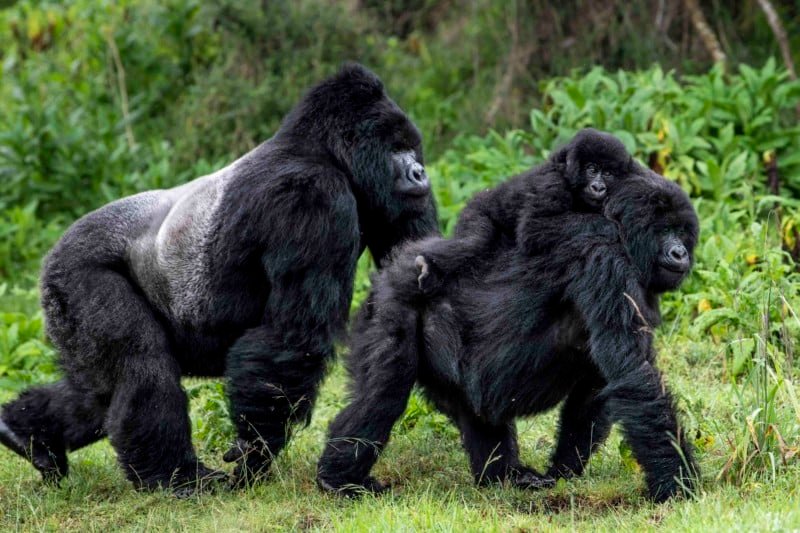
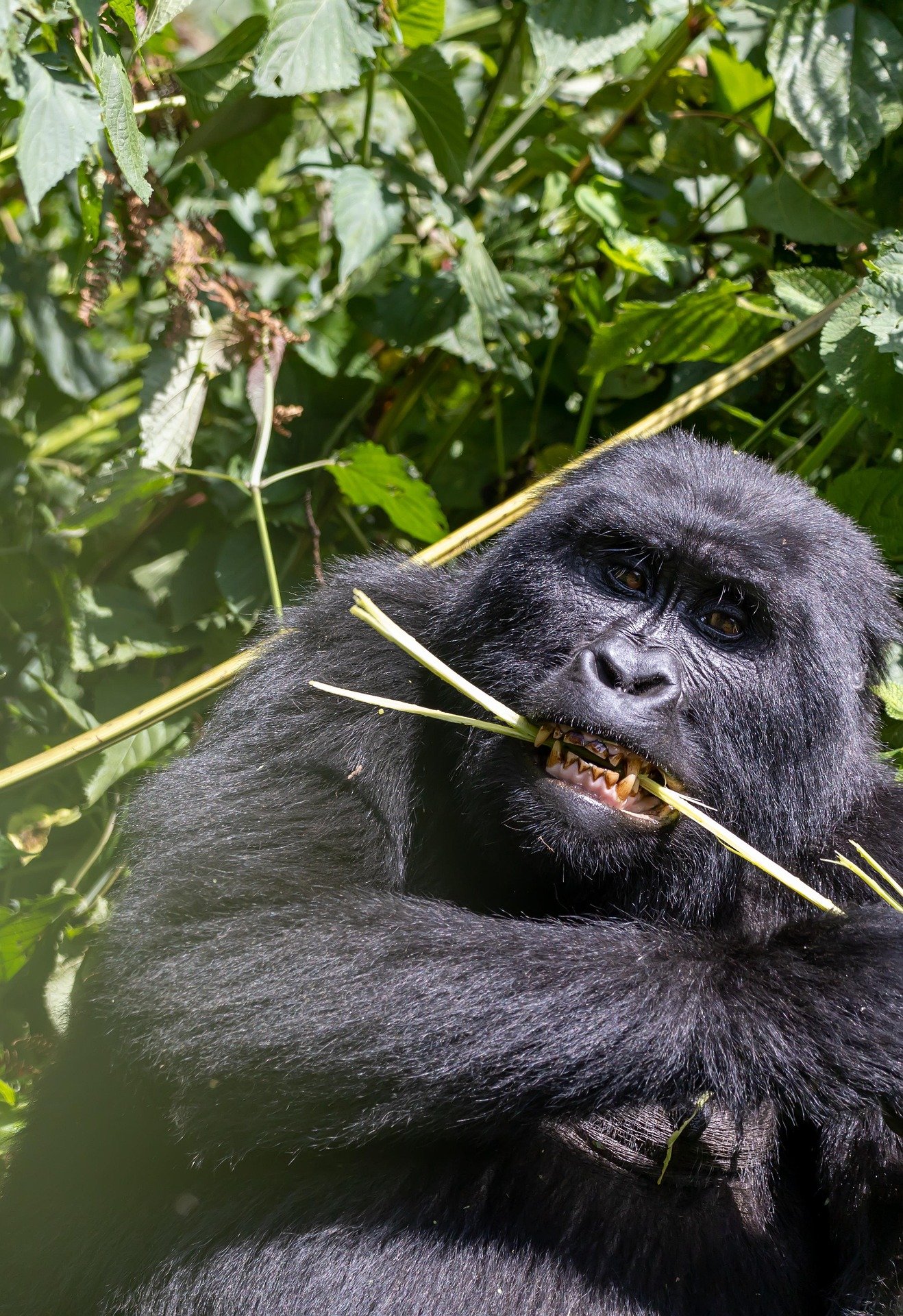
Roughly half the world’s remaining mountain gorilla population lives in Uganda’s Bwindi Impenetrable Forest and Mgahinga Gorilla National Park. Spending a permitted hour at close range with a habituated gorilla family, deep in equatorial rainforest, is not a wildlife sighting in the traditional sense it’s closer to an audience with something ancient and unknowable. There’s a reason people return from gorilla trekking with a dazed look in their eyes, struggling to articulate what they’ve just experienced.
Groups are capped at eight visitors per gorilla family per day, which means the exclusivity here isn’t manufactured for luxury marketing; it’s a conservation requirement that happens to produce one of the most exclusive wildlife experiences on the planet. You can’t buy your way into a larger group. You can’t pay for extra time. The permits are strictly limited, the encounter is strictly regulated, and the result is an experience that feels genuinely precious precisely because it cannot be scaled.
For travelers who want to go even further, Uganda offers a Gorilla Habituation Experience in the Rushaga sector of Bwindi a four-hour session with a family still being acclimated to human presence, limited to just four permits daily. This is the deep dive, the version of the experience that even fewer people will ever have, and it’s only available in Uganda. Nowhere else in the world offers this particular permit, which is exactly why serious safari travelers treat gorilla trekking as the anchor of any luxury safari Uganda itinerary.
The trek itself is part of the adventure a morning push through dense vegetation, following a trackers’ lead, the terrain sometimes steep and muddy, the air thick with humidity and the smell of damp earth. Then suddenly, a rustle in the bamboo, and you’re in their presence. The silverback’s calm gaze, the juveniles tumbling over each other, the mother cradling her infant it’s overwhelming in a way that photographs can never fully capture. And when the hour is up and you’re hiking back down, you realize you’ve just experienced something that exists in an entirely different category from any Big Five sighting.
Chimpanzee Tracking in Kibale: The Primate Capital Nobody Talks About
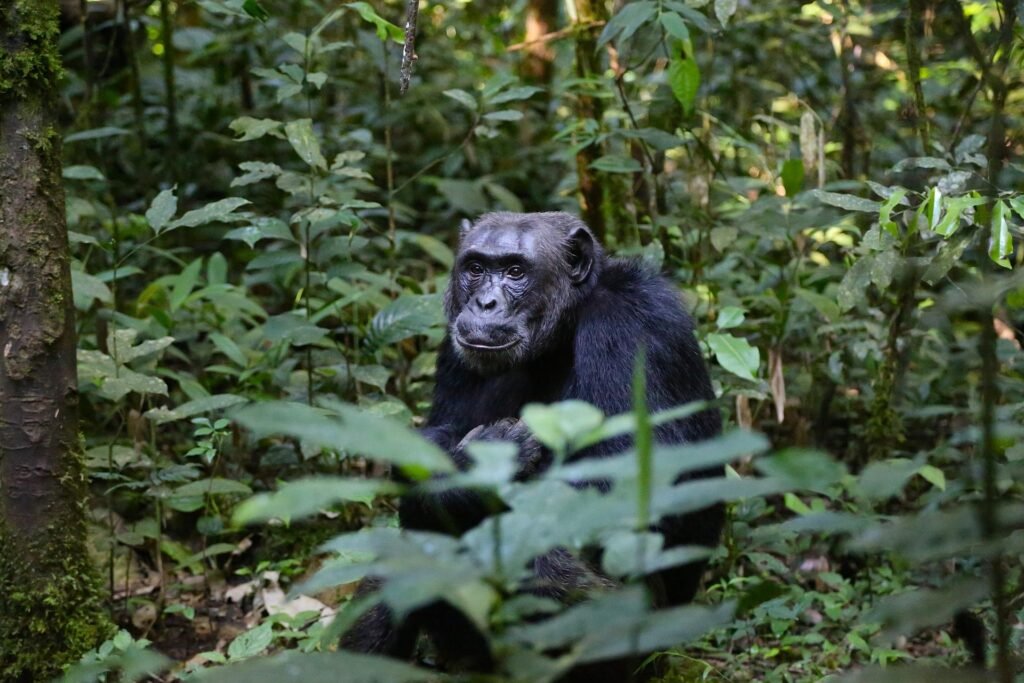
Kibale National Park has one of the highest primate densities on Earth and is widely regarded as the best chimpanzee-tracking destination on the continent, with habituation and sighting rates that outperform comparable parks elsewhere in East and Central Africa. The park’s forest is ancient, towering, alive with sound, and the chimpanzees here are so well habituated that sightings are nearly guaranteed.
Pair a morning chimp trek with an afternoon in the neighboring Bigodi Wetland Sanctuary and you can encounter eight primate species in a single day a diversity that simply doesn’t register on a standard Big Five itinerary. The red colobus monkeys are particularly striking, their coats a vivid russet against the green canopy, while the black-and-white colobus provide a dramatic contrast. This is what happens when you stop chasing a single checklist and start experiencing an entire ecosystem.
The chimps themselves are endlessly fascinating, their behavior so close to our own that it’s both captivating and slightly unsettling. Watching them forage, communicate, groom each other, and occasionally engage in dramatic displays of dominance, you’re reminded of how thin the line is between us and the rest of the primate world. For many travelers, this becomes the unexpected highlight of their trip not the experience they came for, but the one they’ll never forget.
Tree-Climbing Lions and the Genetic Quirk Almost No One Sees
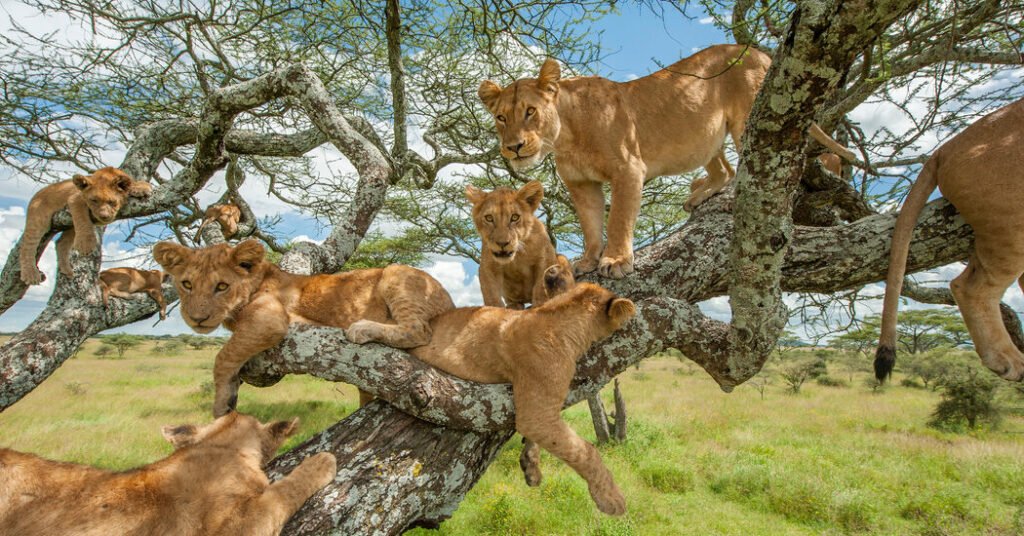
The Ishasha sector of Queen Elizabeth National Park is one of only two places on Earth where lions regularly climb trees, a behavioral quirk still debated by researchers. Is it to escape the heat? To avoid biting insects? To get a better view of prey? The answer is likely a combination of factors, but the result is extraordinary: spotting a lioness draped over a fig tree branch, legs dangling, mane swaying in the breeze, is the kind of image that shows up on very few travelers’ cameras not because it’s hard to find in Ishasha, but because so few travelers know to look for it here at all.
The drive through Ishasha is itself a pleasure, with the fig trees providing sculptural contrast to the open plains and the Rift Valley escarpment rising dramatically in the distance. When you do spot a lion in a tree, the experience is entirely different from a conventional savannah sighting. There’s an element of surprise, a sense of discovery, a reminder that wildlife doesn’t always behave the way we expect it to.
The Shoebill Stork: A Trophy Sighting for Serious Birders
If gorillas are Uganda’s headline act, the shoebill stork is its cult favorite, the animal that birders whisper about in hushed tones. This prehistoric-looking bird, with its enormous clog-shaped bill and near-motionless hunting style, is one of the most sought-after sightings among serious birders worldwide. It stands over four feet tall, its yellow eyes fixed intently on the water, waiting for lungfish or tilapia to surface. When it strikes, it does so with surprising speed, those massive jaws snapping shut like a trap.
Uganda’s wetlands particularly Mabamba Bay near Lake Victoria and the Nile Delta region are among the most reliable places on Earth to find one. Local guides navigate papyrus-lined channels in small wooden boats, calling out softly when they spot a shoebill’s characteristic silhouette against the reeds. For a segment of luxury travelers who collect rare experiences rather than souvenirs, a confirmed shoebill sighting carries a kind of bragging rights that no lion photo can match.
The experience of tracking shoebills is itself an adventure, a quiet journey through landscapes that feel completely untouched, the only sounds the splash of paddles and the distant call of waterbirds. It’s a world away from the jeep-packed savannahs of more famous parks.
Golden Monkeys and the Volcanic Frontier
Fewer travelers know Uganda is also one of only three countries where golden monkeys can be tracked, in the bamboo forests of Mgahinga Gorilla National Park along the Virunga volcanic range. These small, striking primates for your luxury safari secret, with their brilliant orange-gold coats and inquisitive faces, are a joy to observe as they leap through the bamboo, often in large troops that seem to fill the forest with movement and sound.
The location itself adds to the experience. Mgahinga sits at the foot of the Virunga volcanoes, a dramatic landscape of dormant giants that provide a breathtaking backdrop for any safari. The golden monkey trek is frequently combined with gorilla trekking as an add-on activity, giving travelers a second rare primate encounter within the same trip, in a landscape that few safari itineraries elsewhere can offer. The volcanic terrain, the mist that often clings to the peaks, the sense of standing at the edge of something ancient and powerful it all adds to the feeling of having discovered a place that remains off the beaten path.
Why This Adds Up to a Genuine Luxury Secret
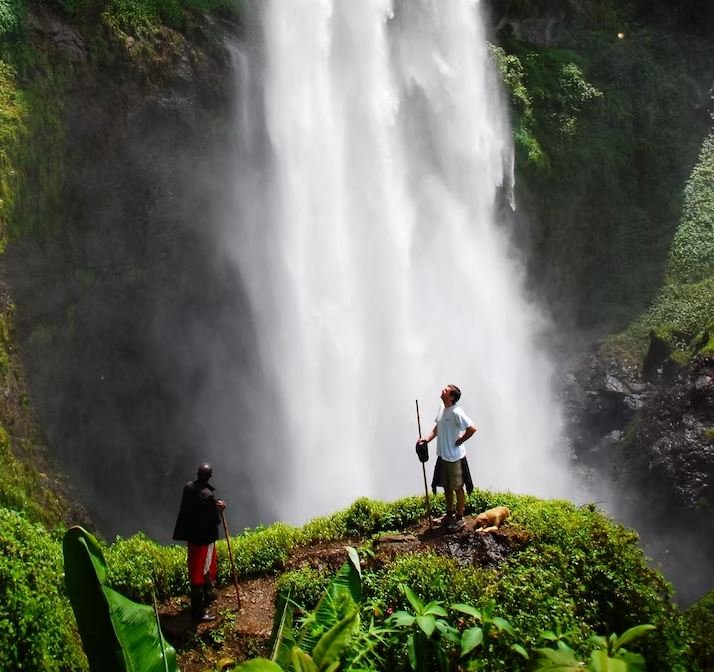
Individually, each of these experiences is remarkable. Together, they form something rarer: a single country where a traveler can encounter gorillas, chimpanzees, golden monkeys, tree-climbing lions, murchison falls and one of the world’s most elusive birds, all within a compact, easily connected geography.
That combination doesn’t exist anywhere else in Africa at this density. Kenya and Tanzania offer superior open-plains game viewing and migration spectacles, but neither has gorillas. Rwanda offers gorillas, but a far smaller range of parks and primate diversity. The Democratic Republic of Congo has both gorillas and chimpanzees, but lacks the tourism infrastructure and stability that luxury travelers require. Uganda is the only country that stacks all of it Big Five game, four primate species, a globally rare bird, and a genetic wildlife anomaly into a single, secure, well-connected itinerary.
This is the actual definition of a luxury safari secret: not an undiscovered destination in the sense of being completely unknown, but one that remains underbooked relative to what it genuinely offers. Uganda has all the elements of a world-class safari destination. It has the wildlife, the lodges, the guides, and the infrastructure. What it lacks is the name recognition, the marketing budget, the casual mention in dinner party conversations. And that gap between what Uganda is and how many travelers perceive it is exactly what makes it so valuable for those who go now.
Every year that Uganda stays off the mainstream safari radar is another year its luxury safari secret status holds, and travelers who book now are effectively getting ahead of a curve that other luxury destinations have already been priced past. The Kenya of twenty years ago, the Rwanda of a decade ago that’s where Uganda is today, and those who recognize it will look back on their trip with the satisfaction of having discovered something special before the crowds arrived.
How Uganda Compares to the Better-Known Safari Circuits
It’s worth being specific about how Uganda stacks up, because “secret” only means something in contrast to the alternatives. Let’s look at each of the major safari destinations and see where Uganda fits.
Kenya delivers the great migration spectacle and vast open plains, and there’s no denying the majesty of a million wildebeest crossing the Mara River. But its most famous reserves, particularly the Maasai Mara during peak season, are known for vehicle congestion around major sightings exactly the opposite of the private encounter luxury travelers are seeking. The experience becomes one of patience and positioning, of waiting for other vehicles to clear before you can get your shot. The lodges are excellent, the guides are knowledgeable, but the sheer number of visitors fundamentally changes the character of the experience.
Tanzania offers similar migration drama across the Serengeti and Ngorongoro Crater, with premium lodges but at premium crowd levels to match. The crater in particular can feel like a wildlife theme park, with dozens of vehicles descending into its depths each morning. Again, the wildlife is spectacular, the landscapes are iconic, but the sense of discovery has been largely replaced by a sense of routine.
Rwanda has positioned itself as the boutique gorilla-trekking destination, with excellent infrastructure around Volcanoes National Park. The permits are expensive, the lodges are luxurious, and the experience is well-managed. But for a longer trip, Rwanda offers a noticeably narrower range of parks and wildlife diversity once gorilla trekking is done. You can combine it with a trip to Akagera for Big Five game, but the country’s small size means you’re working with a limited palette of experiences.
Botswana and South Africa lead on private-conservancy luxury, offering exclusive-use lodges and exceptional game viewing across vast, wild landscapes. But they sit thousands of kilometers from any gorilla habitat at all, which means travelers must choose between the private wilderness experience and the primate encounters.
Uganda is the only country on that list offering gorillas, chimpanzees, golden monkeys, tree-climbing lions, and Big Five savannah game within a single, short, well-connected trip. That’s not a marginal advantage. It’s a structural one, an inherent feature of the country’s geography and biodiversity. And it’s the core reason a Uganda luxury safari keeps coming up in conversations among travelers who’ve already done the more obvious circuits and are looking for something truly different.
The Lodges Built for Travelers Who Already Know This
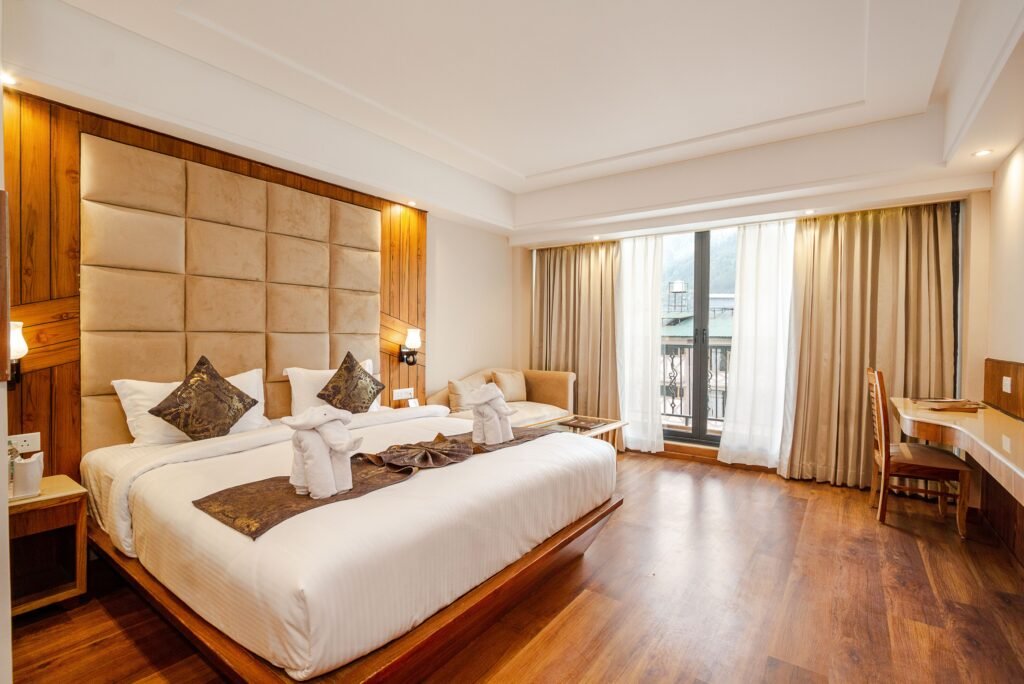
Uganda’s luxury lodge scene has developed specifically around this “beyond the checklist” traveler, and the results are genuinely impressive. Properties along the edges of Bwindi and Kibale are designed with forest-facing decks, private plunge pools, and low guest caps that prioritize immersion over scale. The architecture tends toward the organic, using local materials and colors that blend into the forest landscape, so that the experience of being at the lodge feels continuous with the experience of being in the wild.
Several operate exclusive-use models, where an entire lodge can be reserved for one group ideal for travelers who want their rare wildlife encounters matched by an equally private stay. These properties often include butler service, private chefs, and customized itineraries that adapt to the group’s interests and energy levels. The guide-to-guest ratio is often one-to-one or even less, ensuring that every guest receives personalized attention.
Private conservancies bordering Queen Elizabeth and Murchison Falls add night drives and off-road tracking not permitted inside the parks themselves, run by guides whose full-time job is knowing that single patch of land intimately. This level of specialization is difficult to replicate in busier, larger parks elsewhere, where guides must cover vast territories and encounter a wider range of wildlife conditions. Here, guides know individual animals, their habits, their favorite spots, their seasonal movements. It’s the difference between a guide who can find wildlife and a guide who knows the wildlife personally.
This is the infrastructure layer that turns a good wildlife encounter into a full luxury safari Uganda experience. The transport small aircraft flights between airstrips, private 4×4 transfers is seamless and comfortable. The meals are excellent, featuring fresh produce and skilled preparation. The service is attentive without being intrusive. All the elements that make luxury travel work are here, and they’re built out with a level of care that surprises travelers expecting a more rustic setup.
A Sample Itinerary Built Around the Secret, Not the Checklist
To make this concrete, here’s how a ten-day trip built around Uganda’s beyond-the-Big-Five strengths typically flows for a luxury traveler.
Days one and two focus on gorilla trekking in Bwindi Impenetrable Forest, based at a forest-edge lodge with private decks facing the trekking sector. The first day involves the trek itself, typically a morning venture into the forest with guides and trackers, followed by the hour of observation that transforms most visitors. The second day offers an optional second trek for those who want more time with the gorillas, or a rest day for those who prefer to recover and enjoy the lodge’s amenities.
Days three and four shift to Queen Elizabeth National Park, combining a Kazinga Channel boat cruise where elephants, hippos, and buffalo can be seen along the water’s edge with a game drive through Ishasha in search of tree-climbing lions. The contrast between the forested gorilla experience and the open savannah of Queen Elizabeth is striking, and it gives travelers a sense of the country’s remarkable geographic diversity.
Days five and six move to Kibale National Park for chimpanzee tracking and a Bigodi Wetland walk, staying at a lodge positioned directly against the forest boundary. The chimp trek typically happens in the morning, with the wetland walk in the afternoon offering a different perspective on the ecosystem. The primate density here means travelers are virtually guaranteed exceptional encounters.
Day seven is built around a shoebill stork excursion, typically via Mabamba Bay or a private wetland charter, depending on the traveler’s route back toward Entebbe. The excursion can be done as a half-day trip, leaving time for relaxation or exploration of the Entebbe area.
The remaining days allow for either an extension into Murchison Falls for a second Big Five park and river cruise, or a slower finish with a day or two in Kampala exploring the Kasubi Tombs and the city’s coffee culture before departure. Travelers who choose the extension get the full range of experiences; those who prefer a more relaxed pace have the luxury of time to absorb what they’ve already seen.
This is the structure that actually delivers on the promise of a luxury safari secret: not a single park visited quickly, but a sequence of rare, permit-controlled experiences stitched together with minimal wasted travel time. The logistics are handled by specialists who know the country intimately, and the pace is designed to match the interests of travelers who value quality over quantity.
Best Time to Experience Uganda’s Rarer Side
Unlike the migration-driven timing that dictates trips to Kenya and Tanzania, Uganda’s key experiences aren’t tied to a single seasonal window. Gorilla and chimpanzee trekking happen year-round, with the two dry seasons roughly December to February and June to September offering firmer forest trails and easier hiking conditions. The drier ground makes the treks less physically demanding, though even in wetter months, the trails are manageable with proper footwear and guidance.
The wetter months March to May and October to November bring their own advantages. Lower lodge rates, fewer travelers on the trails, and lush, dramatic scenery make them a legitimate option for travelers who prioritize privacy over guaranteed dry conditions. The forest is at its greenest, the skies often produce spectacular cloud formations, and the sense of isolation is heightened. Some travelers deliberately choose these months for the very qualities that would deter others.
Because permits for gorillas and golden monkeys are capped daily regardless of season, the real planning constraint isn’t weather it’s booking early enough to secure the exact dates and lodges that match the rest of the itinerary. Permits sell out months in advance for the peak seasons, and even in the shoulder periods, the most desirable permits are snapped up quickly. Travelers who know they want to go should start the planning process at least six months ahead, preferably more.
Conservation Is Part of the Secret, Too
Uganda’s gorilla tourism model is frequently held up as one of the most effective conservation-through-tourism programs in the world, and it’s worth understanding why. Permit revenue funds ranger patrols, veterinary monitoring for habituated gorilla families, and community projects around the parks. The money doesn’t disappear into a government general fund; it’s channeled directly into protecting the very animals visitors come to see.
This means a trip built around these rare encounters is also a direct, measurable contribution to one of the continent’s genuine wildlife recovery stories. Mountain gorillas were once critically endangered, with populations dropping . Today, thanks to conservation efforts and tourism revenue, their numbers have climbed to over 1,000 a remarkable success story that’s entirely dependent on continued tourism.
For luxury travelers increasingly weighing the ethics of where their travel spend goes, that’s not a minor detail; it’s often the deciding factor in choosing Uganda over a more conventional safari destination. There’s a satisfaction in knowing that your trip isn’t just a personal indulgence but also a contribution to something larger, something that will outlast your visit. The gorillas you see on your trek might be the descendants of gorillas seen by travelers a generation from now and your visit helps ensure that future.
Frequently Asked Questions
Does Uganda still have Big Five game, or is it only known for gorillas?
Uganda has lions, elephants, buffalo, and leopards across Queen Elizabeth and Murchison Falls National Parks, including the rare tree-climbing lions of Ishasha. Rhinos are present at Ziwa Rhino Sanctuary, where a reintroduction program is steadily rebuilding the population. The Big Five is a baseline here, not the main draw, but it’s absolutely present for travelers who want to check those boxes.
What makes Uganda rarer than Kenya or Tanzania for experienced safari travelers?
Uganda is the only country combining gorilla trekking, chimpanzee tracking, golden monkey tracking, and Big Five game viewing within one compact, well-connected itinerary. No other East African destination offers this particular combination, and the permit system ensures that the signature experiences remain genuinely exclusive.
How far in advance should gorilla permits be booked?
Several months ahead is strongly recommended, since daily permits are capped and demand consistently outpaces availability during peak trekking seasons. For high season dates, six months or more is ideal. Some operators can secure permits on shorter notice, but it’s a gamble.
Is a Uganda safari suitable for a first-time visitor to Africa, or only for repeat safari travelers?
Both. First-time visitors get the full range of experiences in one trip, with the classic savannah game viewing alongside the more unique primate encounters. Repeat safari travelers finally get the rarer encounters they’ve likely been missing on more conventional circuits. The country works equally well for both groups.
How long should a trip focused on Uganda’s rarer wildlife take?
Seven to ten days allows time for gorilla trekking, chimpanzee tracking, a Big Five park, and a shoebill excursion without rushing between them. This is the ideal length for experiencing Uganda’s full luxury safari secret rather than a rushed version of it. Longer trips can add Murchison Falls or extend time in each location for a more immersive experience.
Insider Travel Tips for the Discerning Traveler
Beyond the standard advice, here are some suggestions from experienced Uganda travelers that can elevate your trip from excellent to extraordinary.
Bring a good pair of binoculars. Uganda’s forests are dense, and many animals particularly birds and primates are easier to observe with optics. A high-quality set with good low-light performance makes a real difference, especially in the early morning when the forest is most active.
Pack light but layer wisely. The altitude varies considerably across Uganda, and temperature changes accordingly. A morning gorilla trek in Bwindi can be cool and misty, while an afternoon game drive in Queen Elizabeth can be hot and dusty. Layers that can be added or removed are the way to go.
Consider a camera with a versatile zoom. The range of wildlife and landscapes in Uganda is extraordinary, and you’ll want to capture everything from a silverback’s face to a distant lion in a fig tree. A camera with a good zoom will serve you better than multiple lenses that require constant changes.
Add a few extra days at the end. The pace of a Uganda safari can be intense, with early mornings, physical activity, and long drives. Adding a few days at a lake resort or in Kampala at the end of the trip allows for recovery and reflection. It’s the difference between a trip that exhausts you and one that rejuvenates you.
Book through a specialist. Uganda is not as straightforward as Kenya or Tanzania, and the logistics are more complex. A specialist operator who knows the country well can make the difference between a good trip and a great one. They’ll know which guides to request, which lodges fit your style, and how to sequence activities for the best experience.
Final Thought: Why Now?
The Big Five will always be the entry point into how most people imagine African wildlife travel, and there’s nothing wrong with that it’s a genuinely thrilling checklist to complete. But for travelers who’ve already completed it, or who simply want a trip that goes further than a checklist allows, Uganda offers something the more famous circuits can’t: a country where the rarest encounters in African travel are the standard itinerary, not the exception.
What makes this particularly compelling is the timing. Uganda is approaching a sweet spot in its development as a luxury destination. The infrastructure is in place the lodges, the aircraft, the guides but the crowds haven’t yet arrived. The country still feels discoverable, still feels like something you’ve uncovered rather than something you’ve simply booked. Every traveler who goes now is experiencing a destination at its most authentic, before the pressures of mass tourism inevitably change its character.
That’s not a marketing phrase. It’s the quiet, well-earned reason Uganda remains Africa’s best-kept luxury safari secret for now, while it’s still possible to have it largely to yourself.
The question isn’t whether Uganda deserves a place on your travel rather. The question is whether you’ll visit while it still feels like a secret, or whether you’ll wait until it’s been discovered by everyone else. For travelers who value rarity, authenticity, and the joy of real discovery, the answer should be clear.