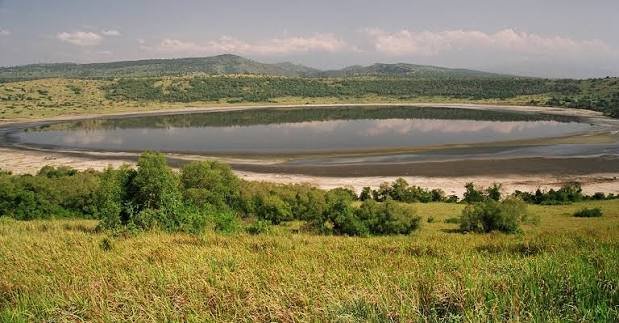

Tree Climbing Lions in Uganda live almost exclusively in Ishasha, one of only two places in Africa. Discover 5 facts before your safari.
Tree Climbing Lions in Uganda: 5 Ultimate Facts to Know Now
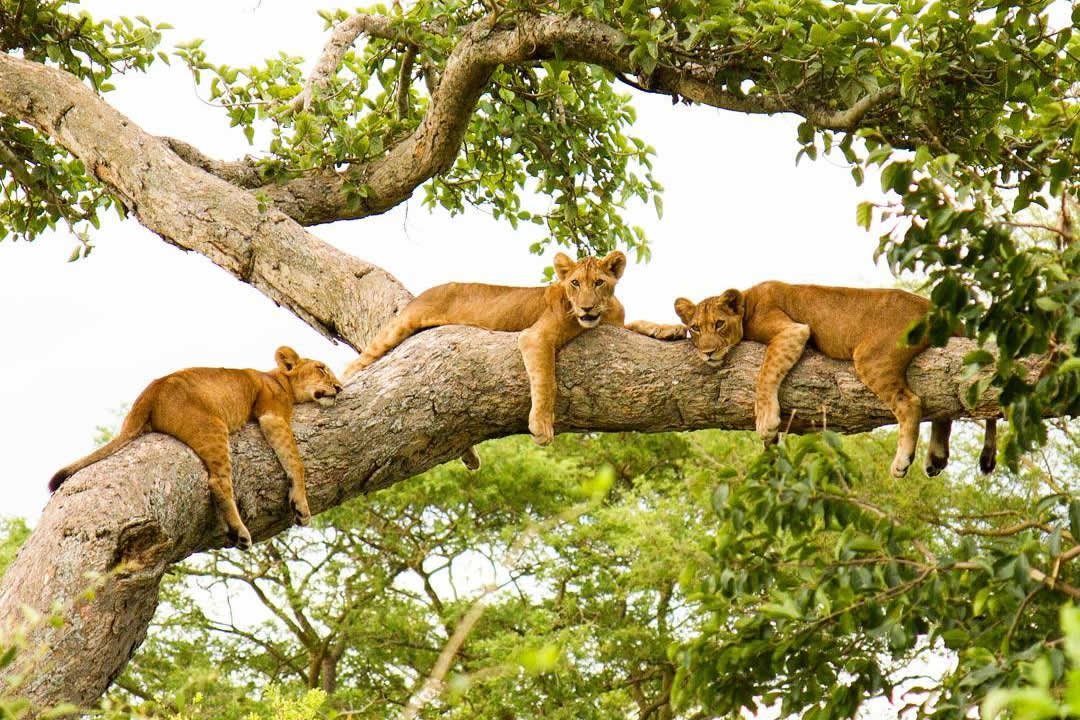
Lions are ground-dwelling predators almost everywhere in Africa, which makes what happens in Ishasha genuinely strange to witness. Tree Climbing Lions in Uganda spend their afternoons draped across the branches of fig and acacia trees, a behavior found in only one other place on the entire continent.
For photographers and wildlife enthusiasts, this sighting alone can justify an entire Uganda itinerary.
This guide covers five essential facts about Tree Climbing Lions in Uganda before you plan a visit. We’ll cover where to find them, why scientists believe this behavior exists, and what makes the sighting so rare.
By the end, you’ll understand exactly what makes Ishasha’s lions one of Africa’s most distinctive wildlife phenomena.
Most safari-goers arrive in East Africa expecting the classic image of lions lounging on open grassland, and for good reason, since that’s how the vast majority of the species behaves across the continent.
Discovering that an entire pride has instead claimed a fig tree as its afternoon perch tends to catch even experienced safari travelers off guard. That element of surprise is part of what makes this particular sighting so consistently memorable.
Tour operators across Uganda increasingly highlight this specific behavior in their marketing, recognizing that it offers something genuinely differentiated from the standard savannah safari experience sold elsewhere in East Africa.
For travelers who have already visited Kenya or Tanzania and seen conventional lion sightings, Ishasha offers a compelling reason to add Uganda to a repeat Africa itinerary. This guide exists to help you understand exactly what you’re looking at, and why it’s worth the detour.
Where to Find Tree Climbing Lions in Uganda
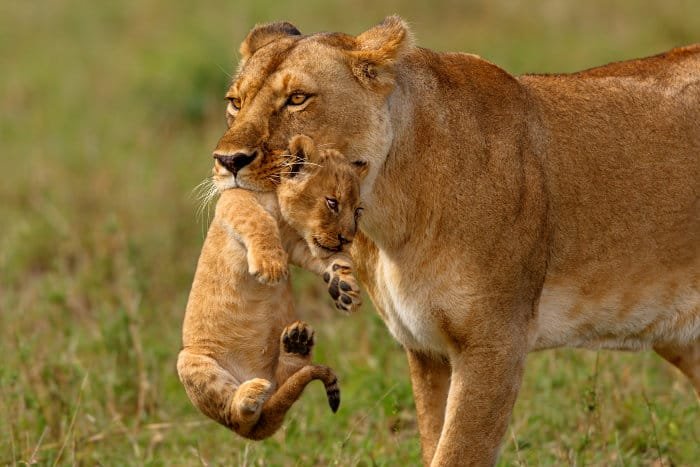
Tree Climbing Lions in Uganda live almost exclusively in the Ishasha sector, located in the remote southern portion of Queen Elizabeth National Park. This sector sits roughly two hours from the park’s main tourist circuit, offering a quieter, less crowded safari experience than the busier northern areas.
Roughly 20 to 35 lions currently inhabit this specific area, according to a Wildlife Conservation Society monitoring project.
Why Ishasha Specifically
The sector’s wide-branched sycamore fig and acacia trees provide exactly the kind of sturdy, horizontal limbs lions need to rest comfortably above ground. These candelabra-shaped trees create natural platforms wide enough to support a full-grown lion, and sometimes an entire pride at once.
This specific tree architecture is one reason the behavior concentrates so heavily in this particular sector rather than spreading evenly across the wider park.
Beyond its famous lions, Ishasha offers excellent broader game viewing, with Uganda kob, topi, buffalo, elephants, and abundant birdlife sharing the same savannah plains.
The sector’s relative remoteness compared to Queen Elizabeth’s main circuit also means fewer vehicles competing for the same sightings. This combination of rich wildlife and lower visitor density makes Ishasha rewarding even beyond its signature attraction.
Fact 1: Ishasha Is One of Only Two Places in Africa
Tree Climbing Lions in Uganda represent one of just two established populations on the entire continent, the other being Tanzania’s Lake Manyara National Park.
Occasional individual tree-climbing lions have been recorded elsewhere, including the Serengeti and South Africa’s Kruger National Park, but these remain rare, isolated incidents rather than a consistent pattern. This scarcity is exactly what makes Ishasha such a significant wildlife destination.
Why Ishasha Beats the Alternative
Sightings in Lake Manyara are considerably less reliable than in Ishasha, where entire prides routinely use trees as daytime resting spots. This consistency makes Uganda, rather than Tanzania, the more dependable destination for travelers specifically chasing this behavior.
Serious wildlife photographers increasingly recognize Ishasha as the superior location for a guaranteed, repeatable sighting.
Tanzania’s Lake Manyara lions tend to be more dispersed and harder to locate, often requiring considerably more searching and luck than a typical Ishasha game drive demands.
This difference in reliability has shifted growing attention toward Uganda among photographers and tour operators building itineraries specifically around this behavior. What was once considered a niche East African curiosity has increasingly become a genuine bucket-list target in its own right.
Fact 2: Nobody Knows for Certain Why They Do It
Despite decades of observation, scientists still debate the exact reason behind Tree Climbing Lions in Uganda, with several competing theories rather than one confirmed explanation.
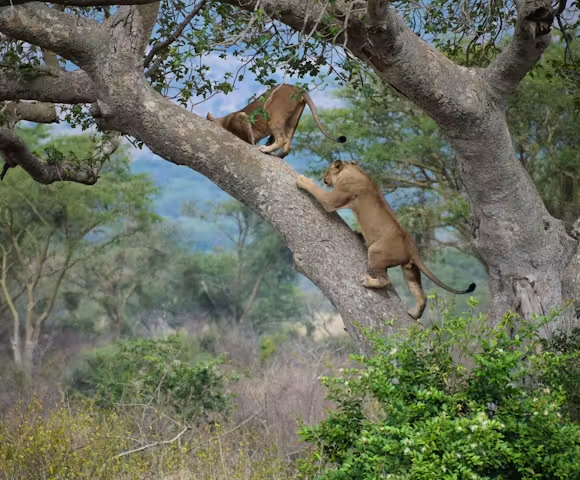
Research generally agrees this is a learned behavioral adaptation passed down through generations, rather than a genetic trait unique to this specific lion population. Cubs appear to learn the habit by observing and imitating adults within the same pride.
The Leading Theories
Escaping the midday heat is one of the most widely cited explanations, since tree branches offer welcome shade and cooler air compared to the scorching savannah floor below. A second theory points to insect avoidance, particularly tsetse flies and mosquitoes that concentrate near ground level, especially during Uganda’s rainy season.
A third theory suggests elevated branches simply provide a better vantage point for spotting prey and monitoring rival predators across the open plains.
None of these theories has been definitively proven over the others, and researchers generally accept that multiple factors likely combine to reinforce the behavior across generations.
What began as an occasional response to heat or insects may have simply become a habitual, comfortable resting pattern passed from mother to cub over time. This lack of a single confirmed answer is part of what keeps the phenomenon scientifically interesting even decades after it was first documented.
Ongoing behavioral studies continue to monitor Ishasha’s prides, tracking which trees get used most frequently and whether climbing patterns shift with seasonal changes in temperature or insect activity.
This kind of longitudinal data may eventually help researchers narrow down which theory carries the most explanatory weight. Until then, the mystery itself remains part of the appeal for visiting scientists and curious travelers alike.
Fact 3: Not Every Lion in the Park Climbs Trees
An important nuance often missed is that Tree Climbing Lions in Uganda are a localized behavior, not a trait shared across the entire species or even the entire park. The habit is most pronounced within specific Ishasha prides and considerably less common, or entirely absent, in other sections of Queen Elizabeth National Park.
In typical lion populations elsewhere in Africa, tree climbing is rare and usually limited to cubs or lions fleeing immediate danger.
What This Means for Your Safari
Because the behavior concentrates so specifically in Ishasha, visiting the correct sector matters enormously for anyone hoping to witness it firsthand.
Simply visiting Queen Elizabeth National Park doesn’t guarantee a sighting unless your itinerary specifically routes through Ishasha itself. This distinction trips up travelers who assume any part of the park offers equal odds.
Some visitors mistakenly plan their entire Queen Elizabeth itinerary around the northern sector, home to the Kazinga Channel and Kasenyi Plains, without realizing the tree-climbing lions live exclusively in the separate southern Ishasha sector.
This confusion is common enough that experienced operators specifically flag it when building itineraries for travelers who list tree-climbing lions as a priority. Confirming this detail directly with your safari operator before booking prevents a genuinely disappointing gap in an otherwise well-planned trip.
Fact 4: Male Lions Cross Freely Into Congo
A lesser-known detail about Tree Climbing Lions in Uganda involves their movement patterns beyond the park boundary itself. Research from the Wildlife Conservation Society found that male lions travel freely between Uganda and the Democratic Republic of Congo when leaving their birth pride around three to four years of age.
This cross-border movement reflects the shared ecosystem connecting Queen Elizabeth National Park with neighboring Virunga National Park in the DRC.
A Shared Regional Ecosystem
This border-crossing behavior underscores how conservation here extends beyond a single country’s protected area. Ishasha’s lion population is genuinely part of a broader transboundary ecosystem, not an isolated group confined strictly within Uganda.
Understanding this wider context adds depth to what might otherwise seem like a purely local wildlife curiosity.
This cross-border connectivity also means Uganda’s conservation efforts depend partly on cooperation with authorities managing Virunga National Park on the Congolese side of the boundary.
Poaching pressure, habitat loss, or political instability in one country can directly affect lion populations in the other, given how freely males move between the two protected areas. This interdependence is a reminder that wildlife conservation rarely respects the same borders humans draw on maps.
Fact 5: These Lions Generate Significant Tourism Value
Each lion in Queen Elizabeth National Park generates roughly $13,500 annually for Uganda’s economy through tourism revenue, according to a 2006 Wildlife Conservation Society estimate.
Tree Climbing Lions in Uganda rank as the second most sought-after wildlife sighting in the country, trailing only mountain gorillas in visitor demand. This economic value gives real weight to ongoing conservation efforts protecting the Ishasha population.
Conservation Pressures Worth Understanding
Despite their tourism value, Ishasha’s lions face genuine threats from the growing human population surrounding the park’s boundaries. Habitat pressure and occasional human-wildlife conflict remain ongoing concerns for wildlife authorities managing this relatively small, geographically concentrated population.
Responsible tourism, including permit and park fees, directly supports the ranger patrols and monitoring programs working to protect this rare behavior for future generations.
Community-based conservation initiatives around Ishasha increasingly involve local populations directly in protecting the lion population, recognizing that long-term survival depends on cooperation beyond park boundaries alone.
Programs that share tourism revenue with neighboring communities help offset the costs of living alongside a predator population, reducing incentives for retaliatory killings after livestock losses. This community dimension is often overlooked by visitors focused purely on the sighting itself, but it plays a genuine role in whether this behavior persists for future generations of travelers.
How to Plan Your Visit to See Them
Ishasha sits roughly two hours from Queen Elizabeth National Park’s main tourist areas, making it worth allocating dedicated time rather than treating it as a quick detour.
Early morning and late afternoon game drives offer the strongest odds of spotting lions in the trees, since this is when temperatures peak and the shade-seeking theory suggests climbing activity increases. Patient, slow scanning of fig and acacia canopies, rather than rushing through the sector, consistently produces better results.
Experienced guides know which specific trees have historically attracted resting lions, since certain trees seem to become favored spots returned to repeatedly across seasons.
Working with a guide familiar with these patterns considerably improves the odds of a sighting compared to a self-driven visit without local knowledge. This local expertise often makes the difference between a fleeting glimpse and an extended, satisfying observation.
Best Time to Visit
Dry season months, particularly June through September and December through February, tend to concentrate wildlife more predictably around Ishasha’s water sources and open plains. Hotter, drier conditions also align with the heat-avoidance theory behind the tree-climbing behavior itself.
That said, sightings occur throughout the year, so a dry-season visit improves odds without guaranteeing them outright.
Lodges near Ishasha, including properties like Topi Lodge, offer convenient access to the sector without the longer transfer required from the park’s main entrance.
Staying nearby allows for both early morning and late afternoon game drives within the same day, maximizing your chances across the two peak viewing windows. Combining Ishasha with the wider Queen Elizabeth circuit, including the Kazinga Channel and Kasenyi Plains, rounds out a complete park visit.
Many travelers combine an Ishasha detour with a broader journey between Queen Elizabeth National Park and Bwindi Impenetrable National Park, since the two destinations sit relatively close together in Uganda’s southwest.
This makes Ishasha a natural addition to a gorilla trekking itinerary rather than a separate, standalone trip. Building in a full day, rather than a rushed few hours, gives the best realistic chance of a memorable sighting.
Photography Tips for This Rare Sighting
Capturing a strong photograph of lions resting in trees presents different challenges than a typical ground-level sighting. Backlighting can become an issue during golden hour game drives, since lions positioned high in the canopy are often silhouetted against bright sky rather than evenly lit.
Positioning your vehicle to shoot with the sun behind you, rather than directly into it, generally produces cleaner, better-exposed images.
Working With Difficult Angles
A telephoto lens in the 200 to 400mm range helps isolate lions against busy branch and leaf backgrounds without needing to get uncomfortably close. Shooting from slightly below the tree, rather than at a flat, level angle, often produces more dynamic compositions that emphasize the unusual elevation itself.
Patience matters considerably here, since lions occasionally shift position, stretch, or yawn, moments that frequently produce the most compelling shots of the entire session.
Guides familiar with Ishasha’s specific trees can also help position vehicles for the best available angle before a lion becomes active.
This local knowledge, paired with technical preparation, considerably improves the odds of leaving with a genuinely memorable photograph. Even non-photographers benefit from this positioning advice, since better angles simply produce a more satisfying visual memory of the encounter.
Final Thoughts on Tree Climbing Lions in Uganda
Few wildlife behaviors anywhere in Africa combine this level of rarity, visual drama, and genuine scientific mystery. Tree Climbing Lions in Uganda offer a sighting found in essentially one other location on the entire continent, making Ishasha a genuinely bucket-list destination for serious safari travelers.
Understanding the science, the location, and the conservation stakes behind this behavior adds real depth to what would otherwise be simply a striking photograph.
Whether the heat, the insects, or the hunting vantage point ultimately explains the behavior, watching a lioness draped lazily across a fig tree branch remains one of Uganda’s most memorable safari moments.
Few other parks in Africa offer this exact combination of rarity and reliability in a single sighting. For travelers building a Uganda itinerary, Ishasha deserves a dedicated place on the route.
This phenomenon also serves as a reminder that even well-studied species like lions can still surprise researchers with genuinely unresolved behavioral questions.
That element of ongoing mystery, rather than a neatly settled explanation, is part of what makes a visit to Ishasha feel special. Few safari experiences combine spectacle and scientific curiosity in quite the same way.
For travelers still deciding where to prioritize their limited safari days, Ishasha’s tree climbing lions offer a strong, well-supported case for inclusion. The combination of rarity, photographic reward and genuine scientific intrigue is difficult to match elsewhere on a standard East African itinerary.
Few single sightings anywhere on the continent deliver quite this much value for the time invested reaching them.
Ready to see the tree climbing lions for yourself?
Tulambule Uganda Safaris can build an Ishasha focused itinerary with the right timing, lodges and game drive routes for the best possible sighting.