Every year, thousands of travelers fly into East Africa with one goal fixed firmly in mind: standing a few metres from a wild mountain gorilla. It is a magnificent goal, and rightly so. But tucked into the same misty Virunga slopes, moving through the bamboo at a pace no gorilla could ever match, lives a primate that too many itineraries mention only in passing. Golden Monkey Tracking is the safari activity that gets overlooked, underbooked, and underestimated, and it deserves far better than a footnote on your gorilla trekking day. If you are planning a trip to Uganda or Rwanda and have never heard of it, this is your introduction to one of the most joyful, least crowded, and most photogenic wildlife encounters left in Africa.
What Is Golden Monkey Tracking
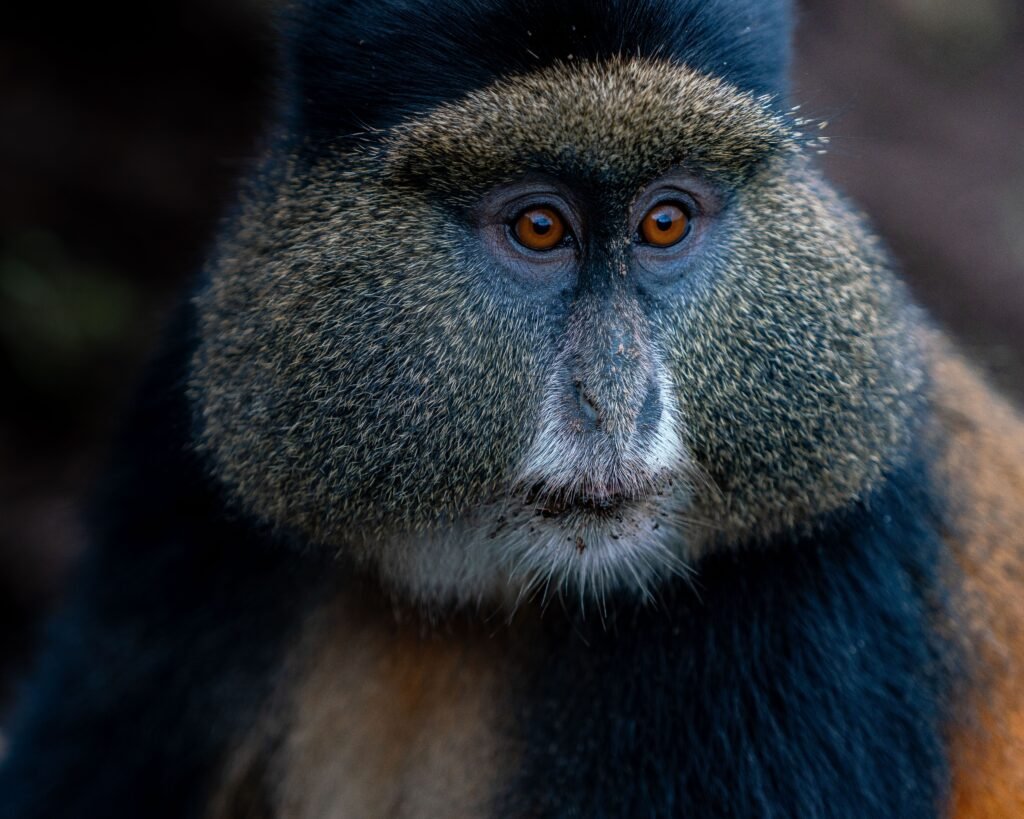
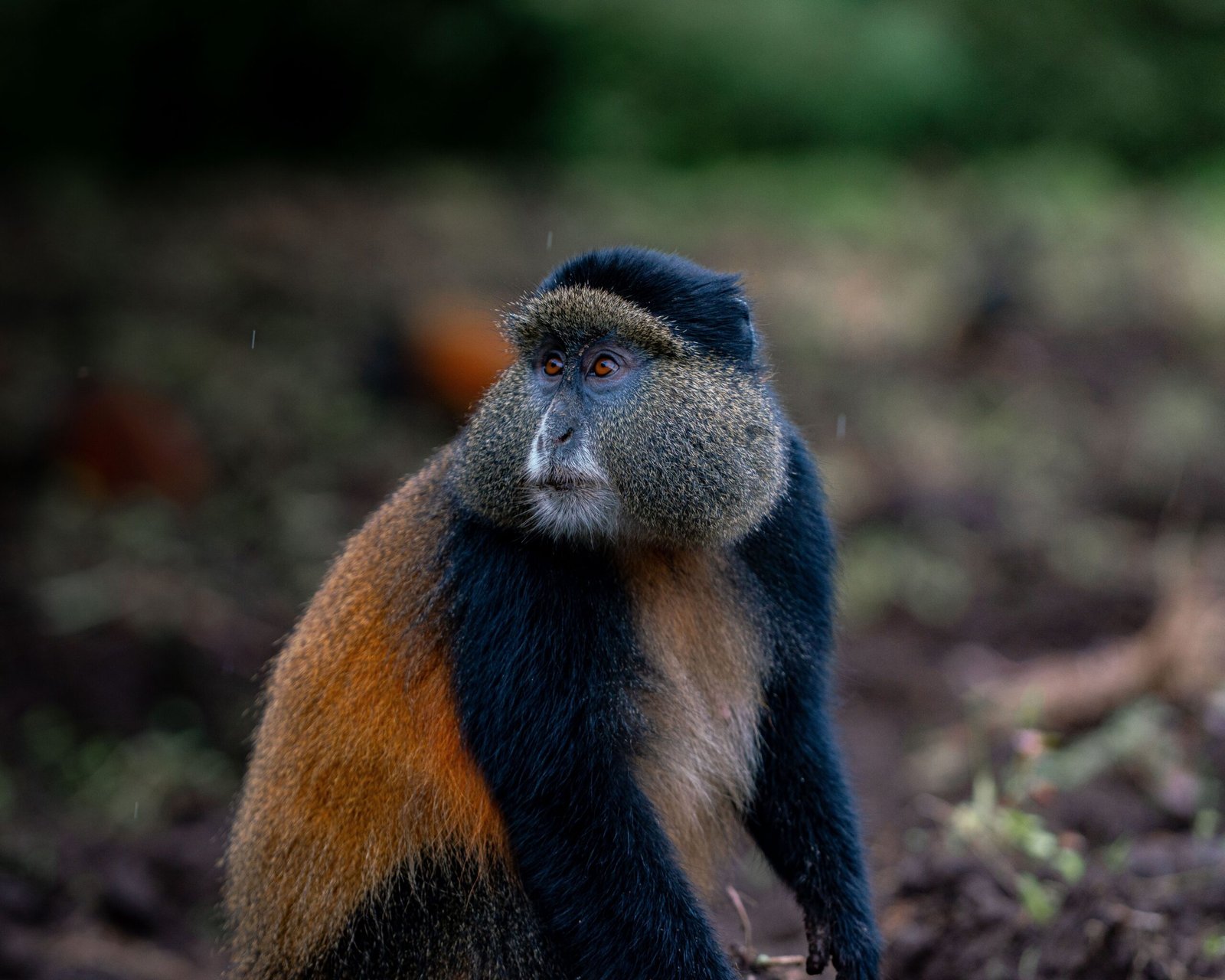
Golden Monkey Tracking is a guided forest walk in search of the golden monkey, a rare subspecies of the blue monkey found only in the Virunga Massif, the chain of volcanoes shared by Uganda, Rwanda, and the Democratic Republic of Congo. The species is instantly recognizable. A golden monkey has a bright orange-gold back and flanks that seem to catch fire in the dappled forest light, set against jet black limbs, a black cap, and a long black tail. Classified as endangered by conservationists, the golden monkey survives only in the bamboo belt of these volcanic slopes, nowhere else on earth.
Where a gorilla encounter is defined by stillness and quiet awe, this primate encounter is defined by motion. These monkeys live in troops that can number anywhere from thirty to well over a hundred individuals, and they spend their days leaping through the bamboo canopy, chasing each other along branches, and stuffing their cheeks with shoots and bamboo leaves. Watching them is closer to comedy than reverence, and that is precisely the charm.
The activity itself follows a simple, well organized format that will feel familiar to anyone who has done a primate trek in this region before. Rangers from the wildlife authority lead small groups into the forest along trails that change daily depending on where the habituated troop was last seen feeding. Because golden monkeys move fast and stay low in the bamboo rather than high in the canopy, sightings tend to happen sooner, and the walking is generally gentler than a gorilla trek. That makes this experience an appealing option for families, older travelers, or anyone short on time but not short on curiosity about East Africa’s forests.
Where to Go Golden Monkey Tracking: Uganda and Rwanda Compared
Golden Monkey Tracking is only possible in a handful of protected areas, and understanding the geography helps enormously when planning an itinerary. In Uganda, the only place to track golden monkeys is Mgahinga Gorilla National Park, tucked into the far southwestern corner of the country where Uganda, Rwanda, and Congo meet. In Rwanda, this experience takes place in Volcanoes National Park, the same park famous for Dian Fossey’s decades of gorilla research and for hosting a dozen habituated gorilla families. Both parks sit inside the same volcanic range, so the forest, the altitude, and the bamboo zones that golden monkeys favor are remarkably similar on either side of the border.
The real differences between Uganda and Rwanda for this activity come down to logistics, cost, and how it fits into a wider trip. Uganda’s Mgahinga is quieter, less developed, and easy to combine with a broader southwestern circuit that includes Bwindi Impenetrable Forest for gorilla trekking and Lake Bunyonyi for a relaxed few days by the water. Rwanda’s Volcanoes National Park is more polished, closer to Kigali, and better suited to travelers who want a shorter, more streamlined trip with luxury lodges close to the trailhead. Neither country holds a monopoly on quality sightings. What matters more is which side of the border fits naturally into the rest of your route through the region, since Golden Monkey Tracking rarely stands alone as the sole reason for a trip.
Mgahinga Gorilla National Park: Uganda’s Golden Monkey Tracking Base
Mgahinga Gorilla National Park is Uganda’s smallest national park, and it sits beneath three dramatic extinct volcanic cones, Muhabura, Gahinga, and Sabyinyo, that dominate the skyline for miles around. It is also the only park in the country where this primate encounter is possible, since the golden monkey’s range is tied specifically to the bamboo forests of the Virunga volcanoes rather than the broader forests of Bwindi. A morning of tracking golden monkeys in Mgahinga begins with a briefing at the park headquarters, after which rangers guide small groups into the lower bamboo zones where the troop has been most recently recorded.
What makes Mgahinga special is the sheer quiet of the place. Because Uganda’s tourism numbers are still concentrated around Bwindi’s gorilla families, Mgahinga sees a fraction of the visitor traffic, and Golden Monkey Tracking here often feels close to a private experience. Travelers frequently pair a morning of golden monkey trekking with an afternoon hike toward the Sabinyo summit or a visit to the Batwa community trail, turning a single day in Mgahinga into a rich, varied outing rather than a single activity ticked off a list. For anyone who has already trekked gorillas in Bwindi and wants a genuinely different primate story to tell, Mgahinga’s golden monkeys deliver it.
Volcanoes National Park: Rwanda’s Golden Monkey Tracking Experience
Across the border, Rwanda’s Volcanoes National Park offers its own version of this primate encounter, and it tends to be the more convenient choice for travelers with limited time. The park sits close to the town of Musanze and roughly two and a half hours from Kigali by road, which means Golden Monkey Tracking can realistically be added to a trip without adding an extra travel day. The habituated troop in Volcanoes National Park is famously large, often numbering well over a hundred individuals, and the density of bamboo here means sightings tend to come quickly once the trek begins.
Rwanda has also invested heavily in the infrastructure around its Virunga parks, and travelers doing this activity in Volcanoes National Park will find some of the finest lodges in East Africa within a short drive of the park gate. Because gorilla trekking permits in Rwanda are priced well above Uganda’s, many visitors use golden monkey trekking as a way to spend more time in the Virunga forest without the steep cost of an additional gorilla permit. It is a smart way to extend a Rwanda safari, add another full day of forest activity, and still keep the budget reasonable.
What Happens During Golden Monkey Tracking
A day of Golden Monkey Tracking begins early, with registration and a briefing at the park headquarters between seven and eight in the morning. Rangers explain the rules of the encounter, the day’s likely search area, and what to expect once the troop is located. From there, a small group of trekkers sets out with an armed ranger guide and, in Uganda especially, the option of hiring a porter to help with the walk. Unlike gorilla trekking, where the search can occasionally run for hours through steep, dense forest, this experience is usually a shorter and gentler affair, with most groups locating the troop within one to two hours.
Once the monkeys are found, the pace of the encounter changes completely. Gorilla families tend to sit, feed, and rest, giving trekkers long stretches of calm observation. Golden monkeys almost never stop moving. They leap between bamboo stems, chase juveniles through the undergrowth, and dart in and out of view so quickly that photographers often find tracking them more technically demanding than gorilla photography, despite the shorter overall time in the forest. Visitors are permitted one hour with the troop, mirroring the rules for gorilla trekking, and during that hour the golden monkeys rarely sit still long enough to get bored of. It is loud, fast, and full of movement, closer in spirit to watching a troop of playful children than to the hushed reverence of a gorilla encounter.
Because the bamboo zones where golden monkeys live sit at a slightly lower altitude than the deeper gorilla habitat, the terrain during a Golden Monkey Tracking tends to be less steep and the walking pace more forgiving. This is one of the reasons the activity works so well for families traveling with children, for older visitors who may find a full gorilla trek physically demanding, or for anyone who simply wants a shorter, energetic forest walk that still delivers a genuine wildlife encounter.
Golden Monkey Tracking Permits, Costs and Booking
Compared with gorilla trekking permits, Golden Monkey Tracking is remarkably affordable, which is part of why it deserves more attention from budget-conscious travelers. In Uganda, a golden monkey permit costs sixty US dollars for foreign non-residents, fifty US dollars for foreign residents, and forty thousand Ugandan shillings for East African citizens, issued through the Uganda Wildlife Authority. In Rwanda, permits are issued through the Rwanda Development Board and are typically priced around one hundred US dollars, still a fraction of the cost of a gorilla trekking permit in either country.
Because permit numbers are limited to protect the habituated troops from overcrowding, booking this experience in advance is strongly recommended, particularly during the June to September and December to February dry seasons when visitor numbers rise across both Uganda and Rwanda. Working with an established tour operator takes the stress out of this process entirely, since permits, transport, and accommodation near the trailhead can all be arranged together rather than chased individually. Golden Monkey Tracking is often bundled into broader gorilla safari itineraries precisely because the permit is inexpensive enough to add on without dramatically changing a trip’s budget, yet the encounter it delivers stands entirely on its own merit.
It is worth booking through a reputable local operator rather than arranging permits independently, since availability shifts quickly during peak months and a good operator will already know which days the habituated troop has been easiest to find. A well planned booking also means your golden monkey trek can be scheduled either before or after a gorilla trekking day, giving your legs a rest between the two very different kinds of walking.
Best Time for Golden Monkey Tracking
Golden Monkey Tracking is possible year round in both Mgahinga and Volcanoes National Park, since golden monkeys do not migrate and remain within their bamboo territory throughout the year. That said, the two dry seasons, June through September and December through February, offer the most comfortable trekking conditions, with firmer trails and less rainfall to contend with during the walk. The wetter months bring lush, vivid greenery to the Virunga slopes and thinner crowds, which some travelers actually prefer, so long as they come prepared for muddy trails and the occasional downpour.
Because this activity involves less strenuous walking than a full gorilla trek, it remains an enjoyable outing even in the rainy season, when a longer gorilla trek might feel considerably harder underfoot. This flexibility is another reason golden monkey trekking works so well as a spontaneous add-on to an itinerary that was originally built around gorilla trekking alone.
Golden Monkey Tracking Versus Gorilla Trekking
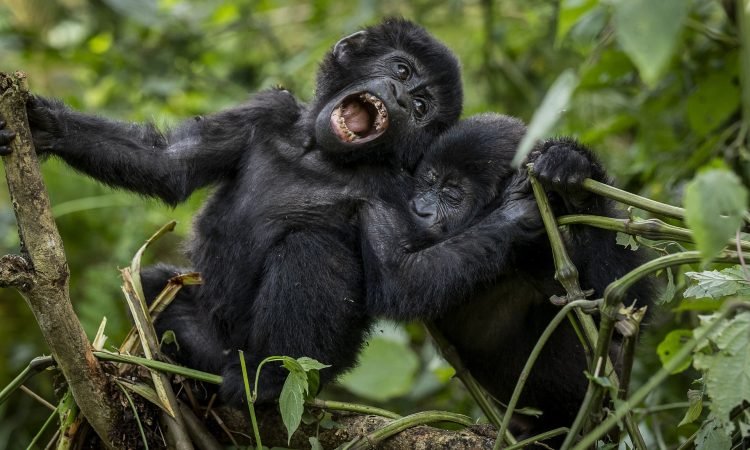
It is worth being honest about how these two experiences differ, because they are not competing versions of the same activity. Gorilla trekking is about proximity to an enormous, powerful, and deeply intelligent animal that shares roughly ninety eight percent of human DNA. The encounter is quiet, intimate, and often emotional, built around long silent minutes spent watching a silverback groom its family or a young gorilla tumble through the undergrowth. Golden Monkey Tracking is a different kind of thrill entirely. It trades stillness for energy, and the emotional weight of the gorilla encounter for pure, infectious entertainment.
Many travelers who do both activities on the same trip describe this experience as the perfect counterbalance to gorilla trekking, a lighter, faster, and cheaper outing that rounds out a primate safari without repeating it. Because the permit cost is so much lower and the walking so much gentler, tracking golden monkeys also works well as a first forest activity for travelers easing into the physical demands of trekking in the Virunga volcanoes, before attempting a longer gorilla trek later in the same trip. Neither activity should be seen as a substitute for the other. Together, they form one of the most complete primate safari experiences available anywhere on the continent.
Combining Golden Monkey Tracking With Other Experiences
Because both Mgahinga and Volcanoes National Park sit within the same Virunga volcanic range, this activity pairs naturally with a number of other experiences available in the same area. Volcano hiking up peaks like Muhabura, Gahinga, Bisoke, or Sabyinyo rewards trekkers with sweeping views across three countries at once. The Batwa cultural trail on the Uganda side introduces travelers to the indigenous forest community that once called this landscape home. On the Rwanda side, a visit to the Dian Fossey research site or the Kigali Genocide Memorial rounds out a trip with historical depth alongside the wildlife.
For travelers building a longer itinerary, golden monkey trekking also connects easily to gorilla trekking in nearby Bwindi Impenetrable Forest on the Uganda side, or to a broader Rwanda circuit that includes chimpanzee tracking in Nyungwe Forest and a savannah safari in Akagera National Park. A well planned route can deliver golden monkeys, mountain gorillas, chimpanzees, and Big Five game viewing within a single two week trip across Uganda and Rwanda, and this experience is very often the activity that ties the itinerary together at minimal extra cost.
Why Golden Monkey Tracking Deserves More Attention
Part of the reason this activity remains so overlooked is simple: gorillas dominate the marketing, the guidebooks, and the social media feeds of anyone who has ever visited the region, leaving little room for a smaller, faster relative to make its case. Yet ask travelers who have actually done both activities which one made them laugh out loud in the forest, and golden monkey trekking wins more often than you might expect. There is something disarming about watching a troop of thirty or more monkeys tumble through bamboo canopy just metres away, entirely unbothered by the humans standing below with cameras raised. It is wildlife encounter as pure entertainment, not just as bucket list achievement, and that distinction matters more than most itineraries give it credit for.
Conservation is another reason to give this experience its due. Every permit fee contributes directly to protecting one of the rarest primates in Africa, a species confined to a shrinking pocket of bamboo forest shared by three countries. Choosing to spend a morning with the golden monkeys is a small but meaningful way to support the wider conservation efforts that also protect the mountain gorillas sharing the same volcanic slopes.
Common Questions About Golden Monkey Tracking
Travelers researching Golden Monkey Tracking for the first time tend to ask the same handful of questions, and the answers usually settle any hesitation quickly. How long does it take? Most groups find the troop within one to two hours of walking, and the full outing, briefing included, rarely stretches beyond half a day, which is considerably shorter than a typical gorilla trekking morning. Is it physically demanding? Compared with gorilla trekking, Golden Monkey Tracking is gentler, since the bamboo zones sit at lower altitude and the trails are less steep, making it accessible to a wider range of fitness levels and ages.
Can it be combined with gorilla trekking on the same trip? Yes, and it is one of the most popular pairings in the region, since Golden Monkey Tracking and gorilla trekking use the same park infrastructure in both Mgahinga and Volcanoes National Park, meaning permits and transport can be arranged together with minimal extra planning. Is Golden Monkey Tracking suitable for children? It generally is, given the shorter duration and gentler terrain, though park rules on minimum age still apply and are worth confirming with your operator before booking. Finally, is it worth doing on its own, without gorilla trekking? Absolutely. Plenty of travelers now build entire long weekends around Golden Monkey Tracking alone, drawn by the lower cost, the lighter walking, and the sheer entertainment value of watching a troop of golden monkeys move through the bamboo.
Practical Tips for Golden Monkey Tracking
A few simple preparations make a real difference to how much you enjoy this activity. Wear sturdy, closed hiking boots and long trousers, since bamboo stems and undergrowth can scratch bare skin even on a relatively gentle walk. Bring a rain jacket regardless of season, since weather in the Virunga volcanoes can shift quickly at altitude. A telephoto lens or a zoom function on your camera will serve you far better than a wide angle setup, since golden monkeys move constantly and rarely pose at close range for long.
Book your permit well ahead of your travel dates, ideally through a licensed operator who can coordinate this experience alongside your gorilla trekking permits, accommodation, and transport between parks like Tulambule Uganda Safris . Pack water, a light snack, and gardening gloves if you have them, since grabbing bamboo stems for balance on the trail is common. Above all, arrive with realistic expectations about pace. Golden Monkey Tracking rewards quick reflexes and patient camera settings more than patience with stillness, and travelers who embrace that energy tend to walk away with some of the most entertaining wildlife photographs of their entire trip.
For travelers weighing up how to spend a limited number of days in Uganda or Rwanda, Golden Monkey Tracking offers a rare combination: a short time commitment, an affordable permit, gentle terrain, and an encounter that is every bit as memorable as the more famous primate experiences it is so often paired with. Whether you choose Mgahinga in Uganda or Volcanoes National Park in Rwanda, spending a morning with these golden-coated acrobats of the bamboo forest is an experience that deserves a place on your itinerary in its own right, not simply as an afterthought to your gorilla trekking day. Reach out to Tulambule Uganda Safaris to build golden monkey trekking into your next Uganda or Rwanda adventure.