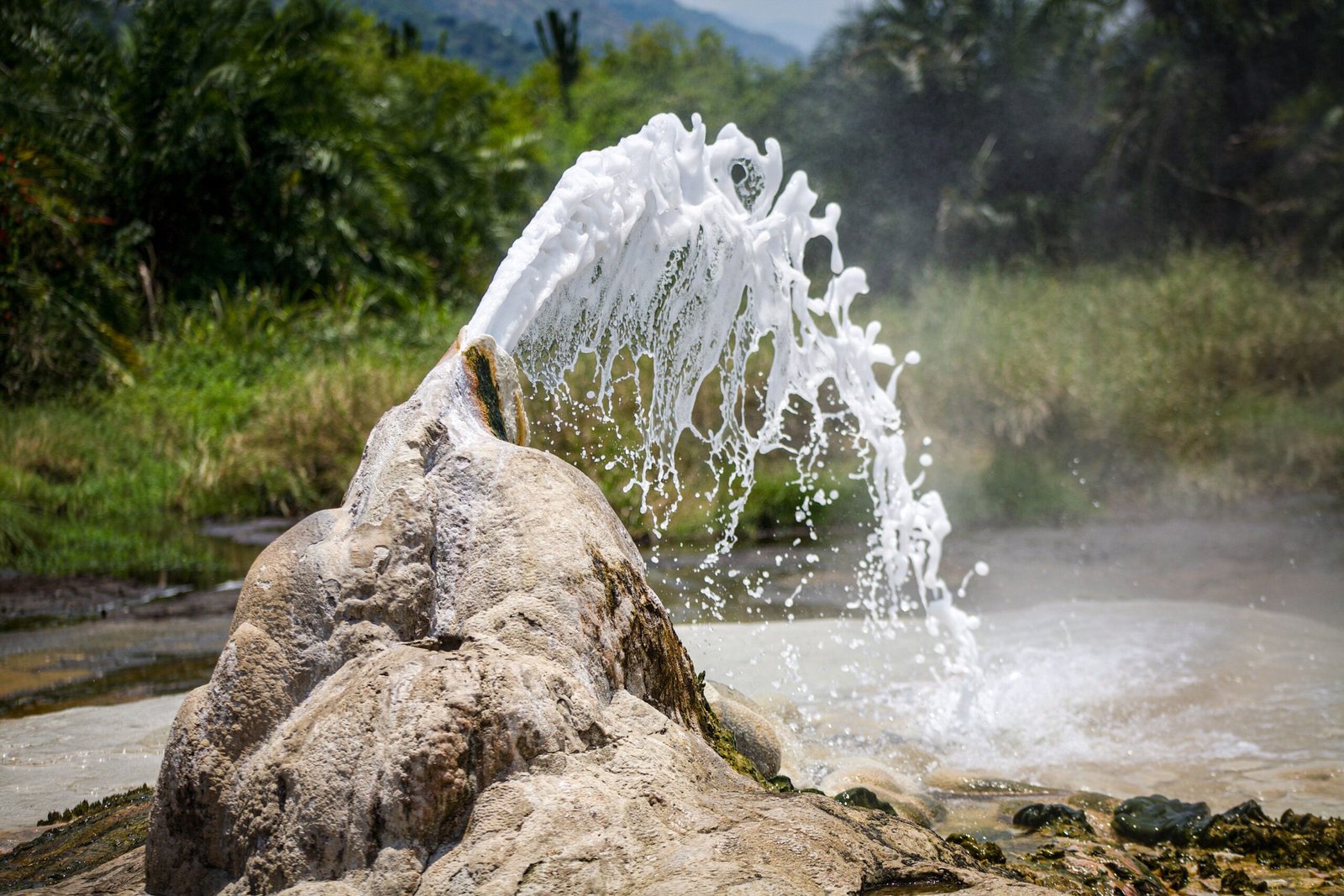
Sempaya Hot Springs is the kind of place that makes visitors laugh out loud with surprise. You walk through a humid rainforest on the western edge of Uganda, round a corner, and suddenly the ground is steaming, water is bubbling out of the earth at almost boiling point, and your guide is handing you an egg to cook. Sempaya Hot Springs sits inside Semuliki National Park in Bundibugyo District, right on the border with the Democratic Republic of Congo, and it ranks among the most unusual natural attractions anywhere in East Africa.
Few experiences are as simple, as surprising or as memorable as boiling your own egg in a spring that is heated by the planet itself.
Beyond the novelty of a boiled egg, Sempaya Hot Springs offers a window into a very special corner of Uganda. The surrounding Semuliki forest is an eastern extension of the great Central African Ituri rainforest, with birds, primates and plants that you will not find anywhere else in the country. This guide explains what the springs are, how they formed, the legends that surround them, how to boil eggs safely, how to reach the park, the best time to visit and how to combine the springs with other activities on a longer western Uganda safari.
What Are Sempaya Hot Springs?
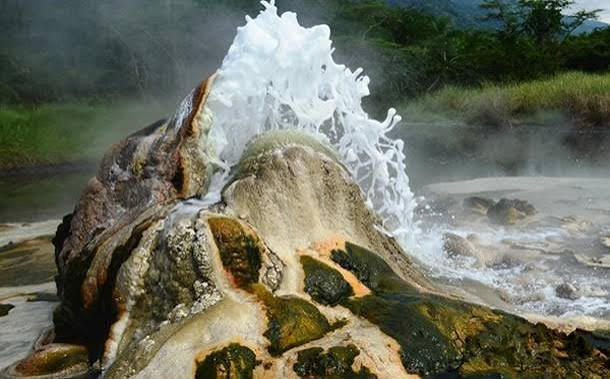
Sempaya Hot Springs are a pair of geothermal springs found near the Sempaya gate of Semuliki National Park. Water emerges from deep underground at temperatures close to boiling, bubbling and steaming through the surface in two separate locations that local tradition calls the male and female springs. The male spring is known as Bintente and the female spring is called Nyansimbi. Together they form the best known attraction in the park and one of the most photographed geothermal sites in Uganda.
The water at Sempaya Hot Springs is among the hottest of any natural spring in the country, with temperatures commonly described at around one hundred degrees Celsius and some published readings slightly higher. At that heat, an egg left in the water cooks in roughly five to ten minutes, and green bananas or other foods can also be prepared. This simple demonstration is why so many people describe Sempaya Hot Springs as a living science lesson, one that lets you see and feel geothermal energy rather than just read about it.
Where Are Sempaya Hot Springs Located?
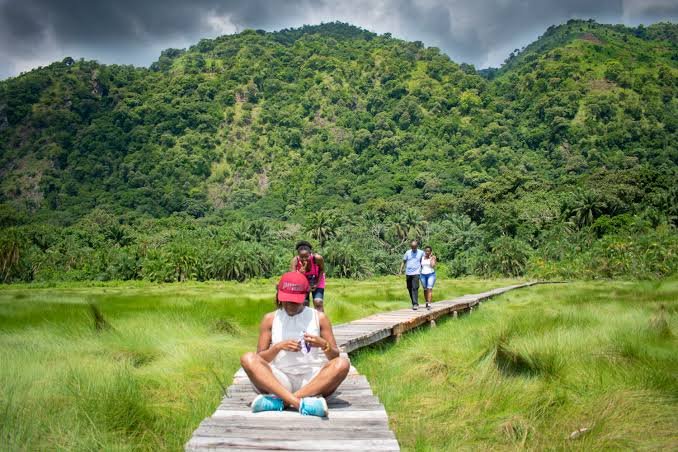
Sempaya Hot Springs lies in Semuliki National Park, a lowland park in the Albertine Rift Valley in far western Uganda. The park covers about two hundred and twenty square kilometres on the shores of the great Lake Albert basin, and its elevation is low, between roughly 670 and 760 metres above sea level, which makes it hotter and more humid than most other Ugandan parks. You can read more about the park in the overview of Semuliki National Park.
The location is one of the reasons the springs feel so special. You are far from the busy tourist circuits of the south west, in a quiet region where the Rwenzori Mountains rise to the east and the Congo basin stretches to the west. Water from the springs flows into a stream, joins the Semuliki River and eventually reaches Lake Albert, linking the hot springs to the wider Nile system. Getting there takes some effort, but the remote setting is precisely what makes a visit rewarding.
How Sempaya Hot Springs Formed
The springs are the result of the dramatic geology of the Albertine Rift, a deep valley created where the African continent is slowly pulling apart. Along this rift, the crust is thin and fractured, which allows heat from deep within the earth to rise closer to the surface. Rainwater and groundwater sink through cracks, are heated by hot rocks far below, then rise again through fault lines and emerge as hot springs. In simple terms, Sempaya Hot Springs are a natural kettle powered by the movement of the earth.
Local guides often explain that the water has travelled a long way underground before reaching the surface, and that the process has continued for an extraordinarily long time. The result is a steady flow of mineral rich hot water that creates pale deposits around the vents and a thick plume of steam above the pools. Exact temperatures vary with the weather and the vent, so treat every figure as an approximation and let your guide show you which areas are safe to approach.
The Legend of Bintente and Nyansimbi
The names of the two springs come from a story told by the Bamaga people, who live near the park and have long regarded the springs as a sacred place. According to the traditional account, a man and his wife disappeared in the forest and were never seen again. The villagers later found the husband’s belongings near one spring, and the wife’s clothes near the other. They named the first spring Bintente, the male spring, and the second Nyansimbi, the female spring, and the springs have carried those names ever since.
The Bamaga continue to honour their ancestors at the hot springs, and rituals are performed there with the permission of the park authorities. Many visitors find that learning this story changes how they see the place, because the springs become not just a geological feature but a living piece of local culture. When you visit, respect the area, listen to your guide’s explanations and ask questions with curiosity rather than treating the site purely as a photo stop.
Boiling Eggs at Sempaya Hot Springs: How It Works
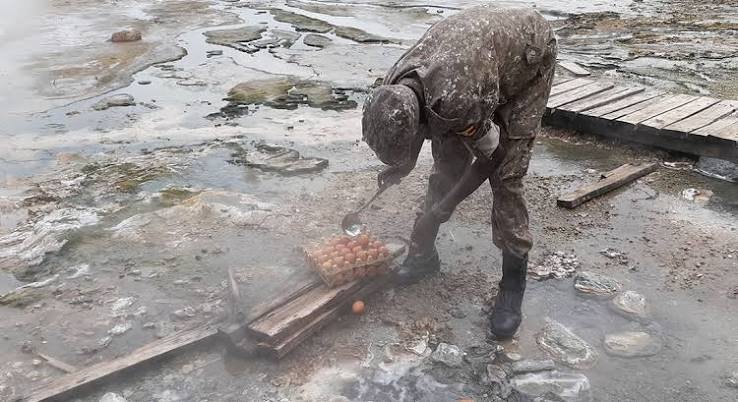
The highlight of any visit is boiling eggs at Sempaya Hot Springs, a tradition that has become the signature experience of Semuliki National Park. Park guides usually sell eggs at the springs, and you can also bring your own or carry green bananas, which are used locally as matoke. Here is how the experience typically unfolds.
Step One: Walk to the Springs
You begin with a guided walk from the Sempaya gate through lowland rainforest, following a trail that leads to the first spring. The walk is short and easy, passing through shaded forest with giant trees, thick vines and plenty of birdsong. A guide from the Uganda Wildlife Authority accompanies you throughout, pointing out plants, insects and animal signs while also making sure the group stays on the safe path.
Step Two: Meet the Boiling Water
When you arrive, you see steam rising from the earth and water bubbling in a pool. The air feels warm and damp, and you may notice a mild mineral smell. Your guide will explain which areas are safe to approach and demonstrate how to lower the egg gently into the water, usually using a small container or a stick. Do not touch the water itself, because it can cause serious burns.
Step Three: Wait and Watch
Once the egg is in the water, you wait for roughly five to ten minutes. This is a perfect moment to ask questions, take photographs and chat about the geology. Many groups turn the wait into a small celebration, with people guessing whether the egg will be soft or hard boiled and joking about who will peel it first.
Step Four: Eat Your Egg
After the waiting time, your guide removes the egg and lets it cool. The shell cracks easily and the egg inside is usually perfectly cooked. Many visitors say it is the most memorable egg they have ever eaten, and a few add a pinch of salt for the full experience. Do not forget to dispose of the shells properly and leave the area clean.
Walking the Sempaya Nature Trail
The springs are the main reason people come, but the walk itself deserves attention. The Sempaya Nature Trail extends for about eight kilometres through lowland forest and swamp, and the most popular section leads to the hot springs and back. Walks are usually offered in the morning and the afternoon, and the unhurried pace gives you time to look at details that you might otherwise miss.
Along the trail you may spot monkeys, forest birds, butterflies, ancient trees and the damp, shady undergrowth of a true equatorial rainforest. The trail is not steep, but the humidity can be intense, so bring water, take your time and let your guide set the pace. Photographers will enjoy the contrast between the dark green forest and the pale steam rising from the pools.
Other Things to Do in Semuliki National Park
Sempaya Hot Springs may be the star, but Semuliki offers much more than a single attraction. For serious hikers, the Kirumia Trail runs for about thirteen kilometres through the heart of the forest toward the Semuliki River, while the Red Monkey Track follows the eastern edge of the park for around eleven kilometres. Both trails give a deeper look at the forest and its wildlife, though they require more time and energy than the short walk to the springs.
Birdwatching is another major draw. Semuliki is considered one of the best birding destinations in Africa because its habitat is so close to the Congo basin, and it holds many Central African species that are very hard to see elsewhere in Uganda. Keen birders often look for specialties such as the Nkulengu rail, the red-billed dwarf hornbill and the Hartlaub’s duck, and it is worth hiring a good bird guide for the best chances. The wider area also offers cultural experiences and, in the neighbouring Toro Semuliki Wildlife Reserve, game drives and chimpanzee activities that suit a longer stay.
How to Get to Sempaya Hot Springs
Most travellers reach Sempaya Hot Springs from Fort Portal, the main tourism hub of western Uganda. The drive from Kampala to Fort Portal takes around five to six hours on good tarmac, and from Fort Portal the road to the Sempaya gate winds over the Rwenzori foothills for about fifty to sixty kilometres, usually taking two to three hours. The route passes through lush hills, banana plantations and small trading towns, and the final stretch descends into the hot, forested lowlands.
You can also approach from Queen Elizabeth National Park, which makes it easy to link the springs with a classic western Uganda circuit. A four wheel drive vehicle is recommended, especially in the rainy seasons, and your driver guide should check the road conditions in advance. If you want a stress free trip, arrange transport and permits through a trusted Ugandan operator, and confirm the latest park information with the Uganda Wildlife Authority before you travel.
Best Time to Visit Sempaya Hot Springs
You can visit Sempaya Hot Springs throughout the year, but the dry seasons are far more comfortable. The best months are generally June to September and December to February, when the trails are drier, the roads are easier and the forest is less muddy. Rain can make the path slippery and the journey slower, and because the park is low and humid, wet season weather feels particularly heavy.
Early morning and late afternoon walks are cooler and offer better light for photography. If you are planning to combine the springs with chimpanzee tracking or bird watching, arrive early so you can complete the walk before the day becomes too hot. Visitors who are sensitive to heat should carry extra water and plan breaks, since the combination of high humidity and geothermal steam can be tiring.
What to Bring to Sempaya Hot Springs
Come prepared with light, breathable clothing, long trousers and a long sleeved shirt to protect against insects and plants, plus sturdy walking shoes with good grip. A hat, sunscreen and insect repellent are essential, and a lightweight rain jacket is wise in any season. Bring plenty of drinking water, a small daypack and a camera or phone with a protective cover because steam and humidity can affect electronics.
Eggs are often sold on site, but you can bring your own if you prefer, and a few green bananas make an interesting addition. A small towel helps with the humidity, and binoculars are valuable for birds. Leave valuables at your lodge, carry your permit, and keep a respectful attitude, because the springs are both a protected natural site and a place of cultural meaning.
Safety Tips Around the Hot Springs
The water at Sempaya Hot Springs is hot enough to cause severe burns, so safety must come first. Always follow the instructions of your Uganda Wildlife Authority guide, stay on marked paths and boardwalks, and never touch the water or the ground near the vents. Children should be supervised closely, and anyone who is not steady on their feet should take particular care near the edge.
Never lean over the pools for a better photograph, and avoid wearing loose sandals or dangling items that could catch. The surrounding soil can be hot and unstable, and wet surfaces can be slippery. If you follow the guide’s directions, the experience is perfectly safe and a great deal of fun. Treat the springs with respect and they will reward you with one of the most unforgettable moments of your trip.
Combining Sempaya Hot Springs with Other Western Uganda Attractions
One of the best features of Sempaya Hot Springs is how well it fits into a wider journey. The springs sit between several of Uganda’s finest destinations, so you can build a rewarding multi stop itinerary. From Fort Portal you can reach Kibale National Park, which is renowned for chimpanzee tracking and has a high concentration of primates. Further south lies Queen Elizabeth National Park, with its game drives, tree climbing lions and the Kazinga Channel boat cruise.
The Rwenzori Mountains also invite hikers, with trails of different lengths and difficulties, and the crater lakes near Fort Portal offer peaceful scenery and walking. You can read more about the nearby mountains in the overview of Rwenzori Mountains National Park. A typical combination might include Fort Portal, Kibale, Semuliki and Queen Elizabeth National Park in a week to ten days, giving you forest, savanna, mountain and geothermal experiences in a single trip.
Other Hot Springs in Uganda
Sempaya Hot Springs is the most famous geothermal site in Uganda, but it is not the only one. Several other hot springs exist across the country, including Kitagata in Sheema District, which is locally believed to have healing properties, along with Rwagimba, Kibiro near Lake Albert and Ihimba in the Bwindi region. Each has its own character and level of development, and some are used by local communities for bathing and traditional practices.
Still, travellers who want a safe, guided, well organised geothermal experience tend to choose Sempaya because it sits inside a national park and is managed by trained rangers. The ability to boil an egg in a protected rainforest while learning about local legends and geology makes it stand out from the rest. If you have extra time, a visit to another spring can complement Sempaya, but it should not replace it.
Where to Stay Near Sempaya Hot Springs
Accommodation near the park includes simple campsites, budget guesthouses and comfortable lodges set along the forest edge. Many visitors choose to stay in or near Fort Portal, which has a wider range of hotels, restaurants and shops, then make the journey to Semuliki as a long day trip or a one night excursion. Staying closer to the park saves time and allows you to start your walk fresh and early.
When choosing a lodge, consider the climate, because the lowlands are hot and humid, so air circulation, fans or well shaded rooms matter. Ask whether meals are provided, how far the lodge is from the gate and whether the staff can arrange guides for birdwatching or other walks. Booking ahead is wise in the peak seasons, because rooms near the park are limited.
Supporting Conservation and Local Communities
Every ticket sold at Semuliki helps fund the protection of one of Uganda’s most distinctive ecosystems. The revenue supports rangers, trail maintenance and community projects, and the park works with neighbouring communities such as the Bamaga to ensure that people benefit from tourism. Visiting Sempaya Hot Springs therefore contributes to the long term survival of the forest and its wildlife.
You can multiply that impact by making thoughtful choices. Hire local guides, buy crafts from community cooperatives, tip rangers fairly and avoid leaving any rubbish. Choose a tour operator that respects the environment and pays staff properly. If you want broader information on responsible travel, the Uganda Tourism Board provides helpful guidance for visitors.
Frequently Asked Questions About Sempaya Hot Springs
Where are Sempaya Hot Springs?
Sempaya Hot Springs lies inside Semuliki National Park in Bundibugyo District, western Uganda, close to the border with the Democratic Republic of Congo.
How hot is the water at Sempaya Hot Springs?
The water is commonly described as being close to one hundred degrees Celsius, hot enough to boil an egg in about five to ten minutes. Exact readings vary between vents, so always follow your guide’s instructions.
Can you really boil eggs at Sempaya Hot Springs?
Yes. Boiling eggs is the signature activity, and guides usually sell eggs on site. You can also bring your own eggs or green bananas to cook in the spring.
How long does the visit take?
The guided walk to the springs, including time at the water and the return, usually takes a couple of hours, though you can spend longer if you add birdwatching or other trails.
Is Sempaya Hot Springs safe for children?
Yes, with careful supervision. The water is dangerously hot, so children must stay close to an adult and follow the guide’s rules at all times.
When is the best time to visit?
The dry months of June to September and December to February are the most comfortable, but the springs can be visited all year.
Can I visit Sempaya Hot Springs in one day from Fort Portal?
It is possible, but the journey is long and the road can be rough. Many travellers prefer to stay overnight near the park so they can start early and enjoy the forest without rushing.
Plan Your Sempaya Hot Springs Safari with Tulambule Uganda Safaris
Sempaya Hot Springs is proof that Uganda’s wonders are not limited to gorillas and game drives. Here, in a steaming corner of the Albertine Rift, you can cook an egg in water heated by the earth, walk through rainforest that links East and Central Africa and hear a legend that has been told for generations. It is short, simple and unforgettable, and it adds a completely different dimension to any western Uganda itinerary.
If you would like help planning a trip that includes Sempaya Hot Springs, the team at Tulambule Uganda Safaris can design a journey that fits your budget and timing, from transport and permits to lodging and guides. Whether you want a short escape from Fort Portal, a combined route with Kibale and Queen Elizabeth National Park or a longer tour across Uganda, we will arrange everything so you can focus on the adventure. Contact us today and let us help you plan your visit to Semuliki National Park.