Understanding Mountain Gorilla Behavior
Mountain gorillas are among the most fascinating primates in the world, not only because of their impressive appearance but also because of their complex social lives. Mountain Gorilla Behavior includes a wide range of activities such as communication, feeding, grooming, playing, resting, protecting the group and caring for young ones. Observing these behaviours can give travellers a deeper appreciation of these remarkable animals.
Mountain gorillas live in close-knit family groups where individual members have different roles and relationships. Their daily activities are influenced by the presence of the dominant silverback, adult females, juveniles and infants. Understanding Mountain Gorilla Behavior helps visitors appreciate that gorillas are not simply large forest animals but highly social creatures with fascinating personalities.
Mountain Gorilla Behavior in Family Groups
One of the most interesting aspects of Mountain Gorilla Behavior is their strong family structure. A typical gorilla group may contain a dominant silverback, several adult females, younger males, juveniles and infants. Members of the group spend much of their time together, creating strong social bonds.
The dominant silverback usually provides leadership and protection for the group. He may decide where the family travels, where it rests and how it responds to potential threats. Other members generally remain close to the group, although individual relationships and interactions can vary.
Mountain Gorilla Behavior and Silverback Leadership
Silverbacks play a central role in understanding Mountain Gorilla Behavior. A mature silverback is usually one of the most powerful individuals in the group and has important responsibilities. He may protect the family from threats, maintain order and intervene when conflicts occur between group members.
Silverbacks also demonstrate behaviours that are not simply aggressive. They may rest with the group, interact with younger gorillas and remain close to females and infants. Their leadership therefore involves protection, social organisation and maintaining the stability of the family.
Mountain Gorilla Behavior During Feeding
Feeding takes up a significant portion of a gorilla’s daily routine. Mountain Gorilla Behavior during feeding is generally calm and focused because these animals spend considerable time searching for and consuming vegetation. Their diet consists largely of leaves, stems, shoots, fruits and other plant materials available within their habitat.
Gorillas often move through the forest while feeding, selecting suitable vegetation as they travel. Watching them feed can be fascinating because their powerful hands allow them to manipulate plants efficiently. Their feeding patterns also influence how far a family travels during the day.
Mountain Gorilla Behavior and Communication
Communication is another fascinating part of Mountain Gorilla Behavior. Gorillas use different vocalisations, body movements, facial expressions and physical interactions to communicate with one another. These signals help members of the group maintain social relationships and respond to different situations.
Some vocalisations can indicate excitement, reassurance, irritation or alarm. Body posture can also communicate important messages. A silverback may display his strength when he feels threatened, while other members may use softer behaviours during peaceful social interactions.
Understanding these signals makes observing gorillas even more interesting. During a trek, an experienced guide can help visitors interpret some of the behaviours they see.
Mountain Gorilla Behavior and Grooming
Grooming is another important part of Mountain Gorilla Behavior. Although gorillas do not spend as much time grooming as some other primates, social grooming can help strengthen relationships between individuals.
Grooming may occur between adults and can contribute to trust and social bonding. It provides an opportunity for gorillas to interact peacefully and remain connected to other members of their family.
For visitors, observing these quiet interactions can be particularly rewarding because they reveal the gentle and social side of mountain gorillas.
Mountain Gorilla Behavior When Playing
Young gorillas are energetic and playful, making play behaviour one of the most entertaining examples of Mountain Gorilla Behavior. Infants and juveniles may chase one another, climb, wrestle, roll on the ground or interact with vegetation.
Play is more than entertainment. It can help young gorillas develop physical strength, coordination and social skills. Through interactions with other youngsters, they learn how to communicate and understand social boundaries.
Watching young gorillas play can also remind visitors of the similarities between gorillas and humans. Their curiosity, energy and social interactions can be surprisingly familiar.
Mountain Gorilla Behavior and Mother-Infant Bonds
The relationship between mothers and infants is another important element of Mountain Gorilla Behavior. Gorilla mothers provide care, protection and close physical contact during the early stages of an infant’s life.
Young gorillas depend heavily on their mothers and gradually learn how to move, feed and interact with other members of the group. As they grow older, they become increasingly independent while continuing to remain connected to the family.
Observing a mother carrying or caring for an infant can be one of the most memorable moments during a gorilla trekking experience.
Mountain Gorilla Behavior During Resting
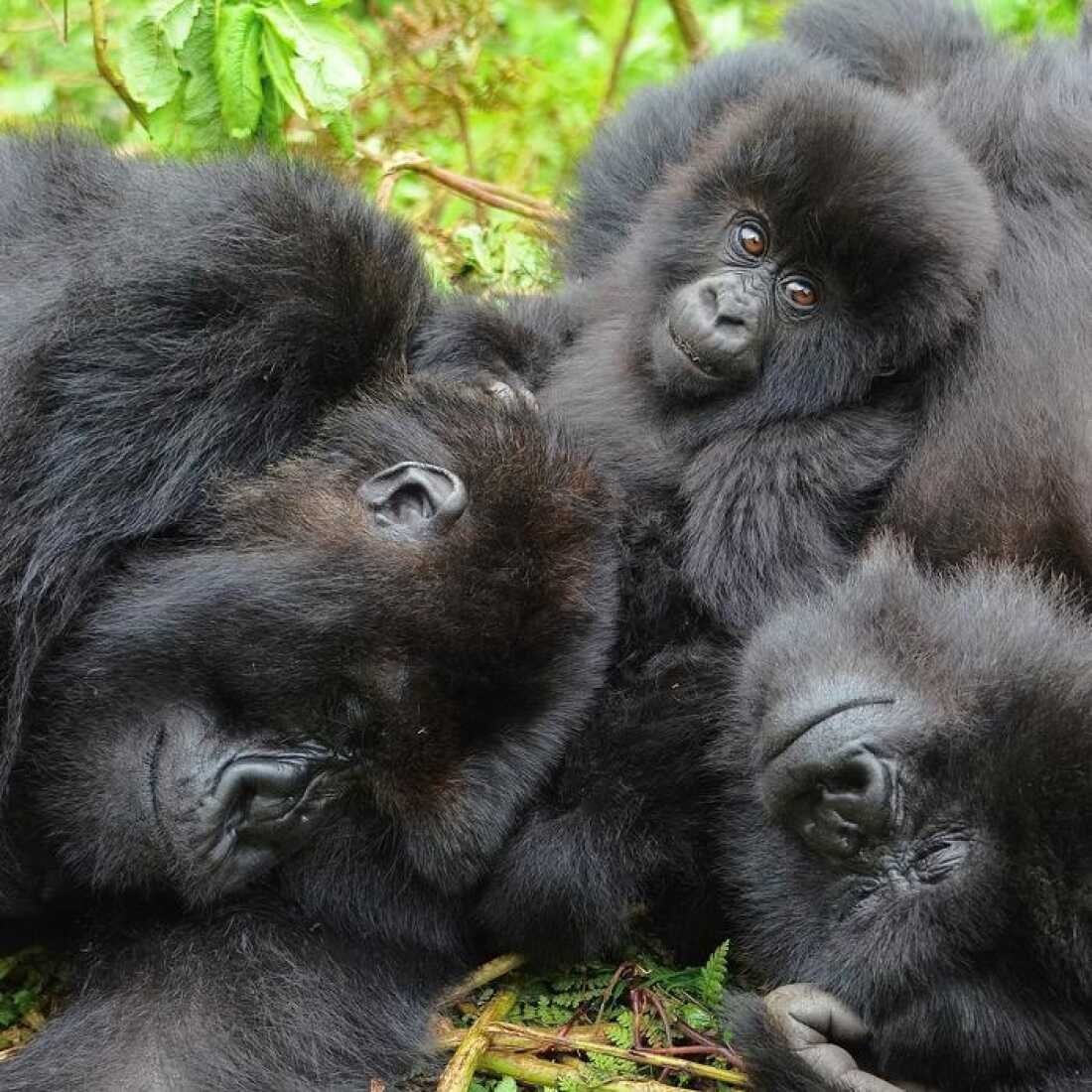
Although mountain gorillas are active for part of the day, resting is also an important aspect of Mountain Gorilla Behavior. After feeding and moving through the forest, gorillas may settle down to rest in comfortable locations.
Silverbacks may sit or lie down while monitoring the surrounding area, while other members of the family may rest nearby. Infants and juveniles may use these quiet periods to remain close to adults or engage in occasional play.
These peaceful moments demonstrate that gorilla life is not always dramatic. Much of their daily routine consists of feeding, resting and maintaining social relationships.
Mountain Gorilla Behavior and Territorial Protection
Protective behaviour is an important part of Mountain Gorilla Behavior, particularly among mature silverbacks. When a group perceives a potential threat, the silverback may position himself between the threat and other members of the family.
He may display his size and strength through vocalisations, chest beating, movement or other intimidating behaviours. These displays are often intended to communicate rather than immediately result in physical confrontation.
For visitors, it is important to remain calm and follow the instructions of experienced guides. Understanding gorilla behaviour helps ensure that encounters remain respectful and safe for both humans and animals.
Mountain Gorilla Behavior During Social Conflicts
Like humans, gorillas can experience disagreements within their social groups. Mountain Gorilla Behavior includes different ways of dealing with tension between individuals. Conflicts may arise over food, space, social relationships or other interactions.
Not every disagreement becomes aggressive. Gorillas can use vocalisations, body language and other signals to communicate displeasure before a situation develops further. Dominant individuals may also intervene when necessary.
These interactions demonstrate the complexity of gorilla society and show why observing them in their natural habitat can be such an educational experience.
Mountain Gorilla Behavior and Chest Beating
Chest beating is probably one of the behaviours most strongly associated with mountain gorillas. It is an important example of Mountain Gorilla Behavior, particularly when silverbacks are displaying their size, strength or excitement.
The dramatic sound of a gorilla beating its chest can be unforgettable. However, chest beating does not always mean that a gorilla is preparing to attack. It can serve different communication purposes depending on the circumstances.
Understanding the context surrounding chest beating is therefore important. Guides can help visitors interpret what is happening rather than assuming that every display is aggressive.
Mountain Gorilla Behavior During Gorilla Trekking
Observing Mountain Gorilla Behavior in the wild is one of the main attractions of gorilla trekking in Uganda. Unlike watching gorillas in captivity, trekking allows visitors to observe them within their natural forest environment.
During the allocated viewing time, visitors may witness feeding, resting, grooming, playing, parenting or communication. Because gorillas are wild animals, the behaviour you see cannot be guaranteed, making every trekking experience unique.
This unpredictability is part of what makes gorilla trekking so special. You are not watching a performance; you are observing real animals continuing their natural daily lives.
Why Understanding Mountain Gorilla Behavior Matters
Learning about Mountain Gorilla Behavior makes a gorilla trekking experience much more meaningful. When visitors understand why gorillas communicate, play, feed, groom and interact with one another, they can appreciate what they are seeing instead of simply taking photographs.
It also encourages responsible wildlife tourism. Visitors who understand the importance of giving gorillas space and respecting their behaviour are more likely to follow conservation guidelines.
Ultimately, understanding Mountain Gorilla Behavior helps create a stronger connection between people and wildlife. It reminds us why protecting mountain gorillas and their forest habitat is so important.
Discover Mountain Gorilla Behavior in Uganda
Mountain Gorilla Behavior offers a fascinating window into the lives of one of the world’s most remarkable primates. From silverback leadership and family relationships to playful youngsters, caring mothers, communication, feeding and resting, every behaviour tells part of the gorilla story.
For travellers planning a gorilla trekking experience in Uganda, observing these behaviours can transform a simple wildlife encounter into a deeper and more memorable experience. The forest becomes more than a destination; it becomes a place where visitors can witness complex social lives unfolding naturally.a gorilla trekking experience in Uganda, contact us so that we can prepare for you an encounter that may become one of the most unforgettable wildlife experiences of your life.