The Case for Murchison Falls
Every safari destination makes a pitch for itself, gorillas for intimacy, the Serengeti for scale, Zanzibar for rest after the road. Murchison Falls makes a different kind of pitch entirely, one built on raw, physical power. This is not a subtle argument. Stand at the top of Murchison Falls and watch the entire Victoria Nile, a river that has already traveled thousands of kilometers from its source, get forced through a gap barely seven meters wide before exploding into the gorge below, and the case for Murchison Falls as Uganda’s ultimate powerhouse safari destination makes itself.
This is an argument, not a brochure. Murchison Falls is not simply good at several things the way a well-rounded park might be. It is Uganda’s largest national park, its most powerful natural spectacle, and arguably its most complete single-location safari, combining savanna game viewing, a major river system, and some of the country’s best birding within one connected landscape.
The question this piece sets out to answer is not whether Murchison Falls is worth visiting, that much is well established, but why it deserves to be considered the single most compelling safari destination in Uganda, ahead of parks with arguably more famous individual attractions.
The Falls Themselves
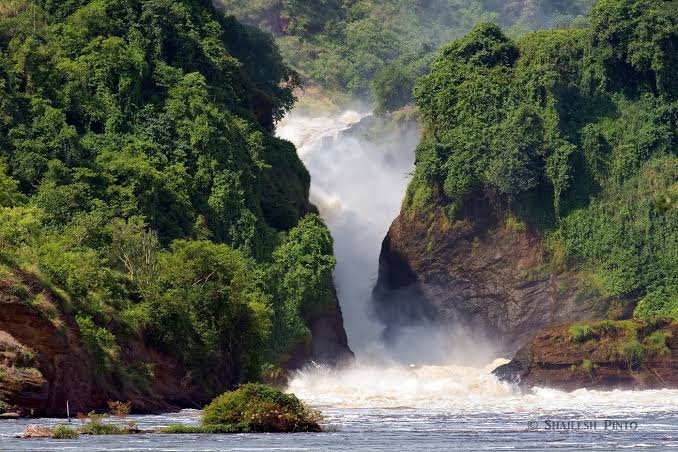
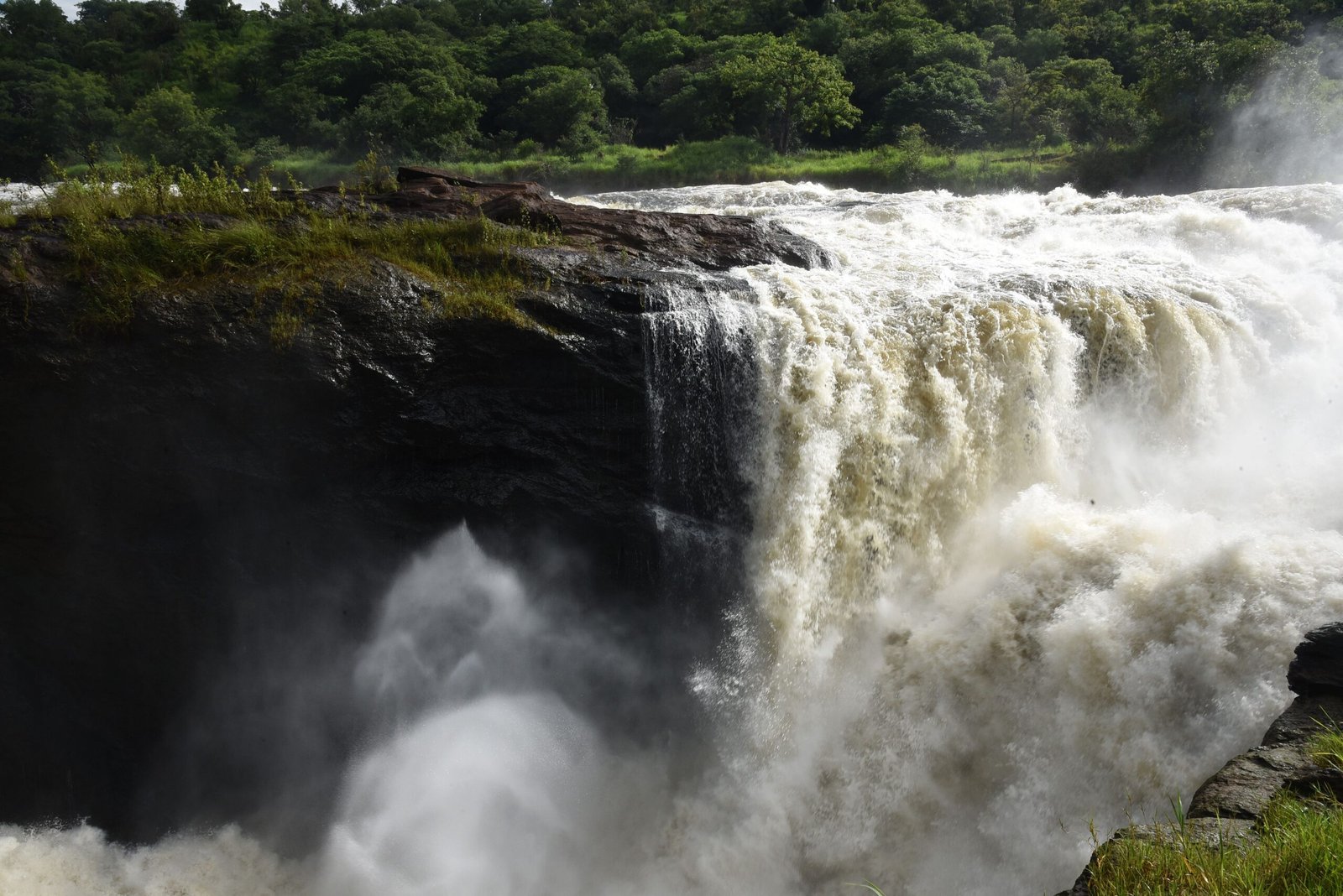
Start with the obvious, because it earns the attention it gets. Murchison Falls is widely regarded as the most powerful waterfall on the African continent, not the tallest, not the widest, but the most powerful, a measure of sheer hydraulic force rather than scenic height. The entire volume of the Victoria Nile, already one of the world’s great rivers by the time it reaches this point, is compressed through a rock gorge so narrow that the water’s speed and pressure through the gap defy what most visitors expect from a river they have just spent days following across open savanna.
Standing at the top of Murchison Falls, close enough that the spray reaches the viewing platform and the ground itself seems to vibrate with the force of the water below, is a genuinely different kind of safari experience than a wildlife sighting, however impressive. Few natural spectacles anywhere in East Africa deliver this particular combination of proximity and raw physical power. Murchison Falls does not ask visitors to imagine its significance from a distance; it puts the full force of one of the world’s great rivers directly in front of them, close enough to feel it.
A River Safari Unlike Anywhere Else in Uganda
Most of Uganda’s safari identity is built around game drives, vehicles moving across savanna in search of wildlife. Murchison Falls offers something structurally different: a true river safari, centered on a boat journey up the Victoria Nile toward the base of the falls themselves. This is not a brief add-on cruise. The launch trip from Paraa toward Murchison Falls runs roughly three hours round trip, passing some of the densest concentrations of hippo and Nile crocodile found anywhere in the country, along with elephants that wade directly into the shallows to drink and bathe within clear view of the boat.
What separates the Murchison Falls boat cruise from river trips elsewhere in Uganda is its destination. This is not simply a wildlife-viewing float; it builds toward a specific, dramatic endpoint, the base of Murchison Falls, where the boat draws as close as safely possible to the thundering gorge, mist rising around the final approach. No other single activity in Uganda combines sustained wildlife viewing with this kind of built-in natural climax, and it is this combination, wildlife plus spectacle, that gives Murchison Falls its particular edge over parks offering boat cruises without an equivalent destination at the end of the journey.
Uganda’s Largest Protected Wilderness
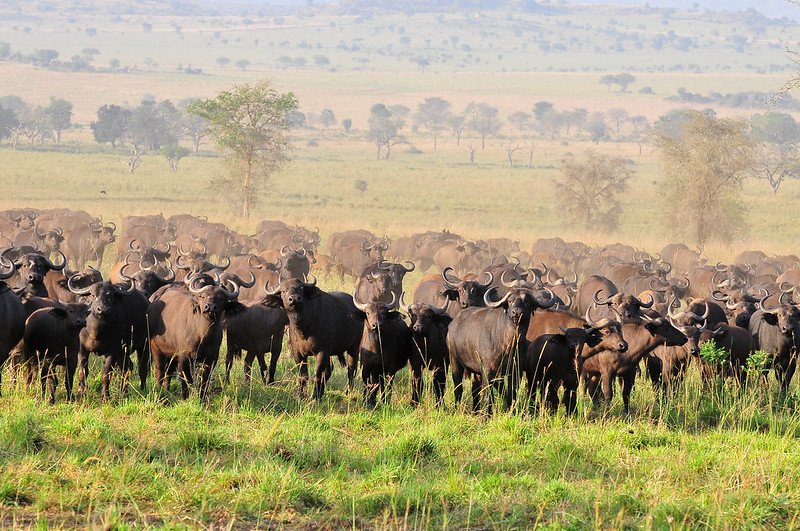
Numbers alone do not make a safari destination compelling, but Murchison Falls National Park’s scale deserves genuine attention. At nearly 3,900 square kilometers, Murchison Falls is comfortably Uganda’s largest national park, encompassing savanna, woodland, riverine forest, and wetland within a single connected protected area. This scale translates directly into wildlife diversity, with the park hosting more than seventy mammal species and over four hundred and fifty recorded bird species, numbers that place Murchison Falls among East Africa’s genuinely significant wildlife areas rather than simply a scenic stop built around one waterfall.
Scale also means Murchison Falls avoids the crowding that smaller, more concentrated parks can struggle with during peak season. Game drives across the park’s northern sector routinely cover long stretches of open savanna with few other vehicles in sight, a genuine contrast to the more compressed wildlife-viewing circuits found in some of Uganda’s smaller reserves. For travelers who want both abundant wildlife and a sense of genuine space, Murchison Falls delivers a scale that few other single destinations in the country can match.
Big Game Density and the Rothschild’s Giraffe
Murchison Falls carries real weight on the Big Five front, hosting elephant, buffalo, lion, and leopard across its northern game-viewing sector, with only rhino absent from the park itself, an absence addressed by a stop at nearby Ziwa Rhino Sanctuary en route. Lion sightings across Murchison Falls’ open plains are consistently strong, and the park’s elephant population, recovering steadily over recent decades, now ranks among the healthiest in the country.
What genuinely sets Murchison Falls apart on the wildlife front, though, is the Rothschild’s giraffe, a critically endangered subspecies found in only a handful of locations across East Africa and present here in numbers that make sightings close to guaranteed on a typical game drive. Few other Uganda parks offer giraffe viewing on this scale, and for travelers building a Big Five itinerary, the combination of strong predator numbers, a significant elephant population, and this rare giraffe subspecies gives Murchison Falls a wildlife portfolio that genuinely rivals Uganda’s more heavily marketed parks further south.
Ziwa Rhino Sanctuary: Completing the Picture En Route
Part of what makes Murchison Falls such a complete safari experience is what sits directly on the road toward it. Ziwa Rhino Sanctuary, roughly halfway between Kampala and the park entrance, is the only place in Uganda to see rhinos in the wild, following their local extinction decades ago and a subsequent, carefully managed reintroduction program. A guided walking tracking experience here, approaching white rhinos on foot rather than from a vehicle, adds a genuinely different kind of wildlife encounter to a Murchison Falls itinerary without requiring any significant detour.
This positioning matters more than it might first appear. Most travelers heading to Murchison Falls already pass directly by Ziwa Rhino Sanctuary, meaning the journey itself becomes part of the safari rather than simply transit time between Kampala and the park gate. Few other Uganda itineraries offer this kind of built-in bonus experience positioned so conveniently along the route, and it strengthens the broader case for Murchison Falls as a safari built around more than the park’s own boundaries alone.
Ecosystem Diversity Within a Single Park
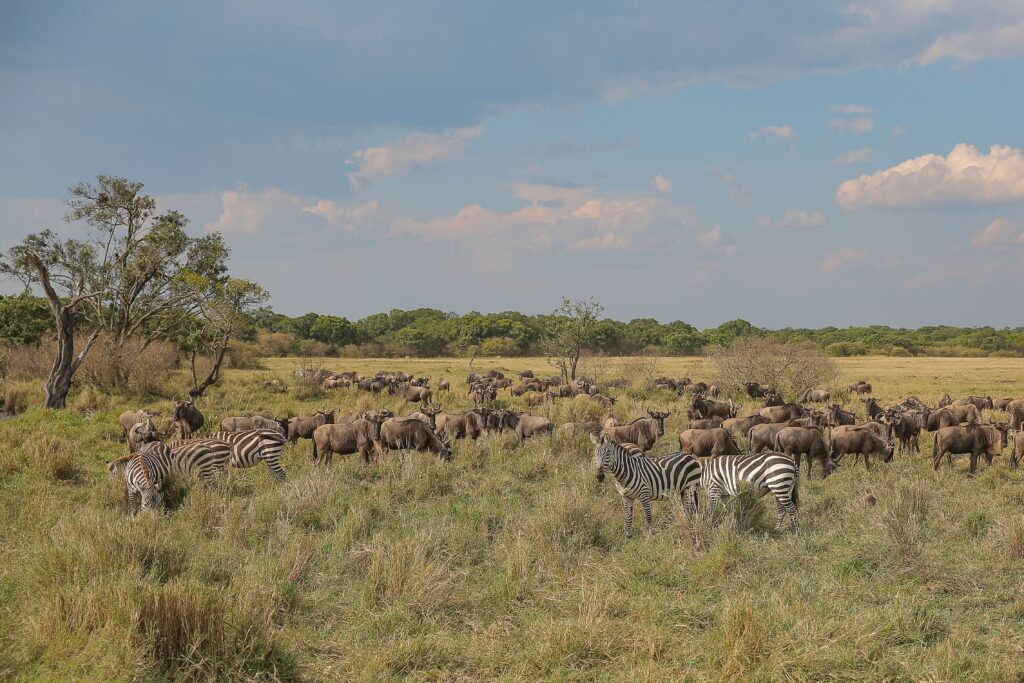
Where many Uganda parks specialize in one dominant habitat, savanna at Lake Mburo, forest at Kibale, Murchison Falls genuinely spans several distinct ecosystems within one connected protected area. The park’s northern sector offers classic open savanna game viewing, the Victoria Nile and its delta support extensive wetland and riverine habitat, and Budongo Forest, bordering the park’s southern edge, adds a significant stretch of tropical forest hosting its own chimpanzee population and a rich birding list distinct from the open plains further north.
This ecosystem range means a single Murchison Falls itinerary can combine savanna game drives, a major river safari, and forest-based primate tracking without leaving one connected area, a genuine logistical advantage over itineraries requiring separate transfers between distinct parks to cover the same ground. For travelers with limited time who still want to experience Uganda’s full range of habitats, Murchison Falls offers a condensed version of the country’s ecological diversity within a single, well-connected safari base.
Accessibility Without Sacrificing Scale
A powerhouse destination is only as good as a traveler’s ability to actually reach it, and Murchison Falls manages a genuinely useful balance here. Despite its size and the wildness of its northern reaches, the park remains comfortably accessible from Kampala, roughly a four to five hour drive, or a much shorter domestic flight into one of several airstrips serving the park directly. This accessibility stands in contrast to Uganda’s more remote wilderness destinations, which typically demand significantly more time and logistical effort to reach.
This combination, genuine scale and wildness paired with reasonable accessibility, is part of what makes Murchison Falls such a strong anchor for a wider Uganda itinerary. Travelers do not need to sacrifice convenience to experience a destination with real wilderness credentials, and the park’s well-developed network of lodges, ranging from comfortable mid-range properties to genuine luxury riverside lodges, means that accessibility does not come at the cost of comfort either.
An Honest Note on Change
No case for Murchison Falls would be complete without acknowledging that the park sits at a genuine crossroads. Oil development within and around Murchison Falls National Park, part of a broader regional energy project, has raised real questions about the long-term balance between conservation and extraction in this landscape, and travelers researching the park will inevitably encounter this debate. This is worth stating plainly rather than glossing over, since an honest case for any destination should acknowledge its complications alongside its strengths.
What this development has not changed, at least to date, is the fundamental safari experience Murchison Falls currently offers: the falls themselves, the river safari, the wildlife density, and the ecosystem diversity described throughout this piece remain fully intact for visitors today. Conservation organizations and the Uganda Wildlife Authority continue to monitor the situation closely, and travelers with specific concerns about this issue can and should raise them directly with their tour operator when planning a visit. The power of Murchison Falls, in every sense of the word, remains the park’s defining feature for now, and that is the case this piece has set out to make.
How Murchison Falls Compares to Uganda’s Other Headline Parks
Make the comparison honestly and the case for Murchison Falls strengthens further. Queen Elizabeth National Park offers its own boat cruise along the Kazinga Channel and the novelty of tree-climbing lions in Ishasha, but lacks a single natural spectacle to match the falls themselves, and its wildlife density, while strong, does not exceed what Murchison Falls now offers following decades of recovering elephant and lion populations. Kidepo Valley National Park rivals Murchison Falls for wilderness character and predator density, but its remoteness demands a significantly greater logistical commitment, and it lacks any equivalent to the Nile or the falls that define a Murchison Falls safari.
Bwindi and Kibale remain in a category of their own, built around primate trekking rather than classic game viewing, and the comparison there is less about which park is stronger and more about which kind of experience a traveler is seeking. Measured specifically as a complete, self-contained safari combining a major natural spectacle, strong Big Five wildlife, river-based game viewing, and genuine ecosystem diversity within one connected park, Murchison Falls has no direct equivalent anywhere else in Uganda.
This is precisely the basis on which Murchison Falls earns its claim to powerhouse status, not by being good at everything, but by combining raw spectacle with genuine breadth in a way no other single Uganda park currently matches.
Best Time to Experience Murchison Falls at Full Force
Murchison Falls can be visited year-round, but timing shapes the experience in ways worth understanding before booking. The dry seasons, roughly December through February and June through September, offer the easiest game viewing conditions across the park’s northern sector, with drier tracks and better visibility as vegetation thins out. These months also tend to concentrate wildlife more predictably around remaining water sources, improving the odds of strong sightings on a Murchison Falls game drive.
The volume of water flowing over Murchison Falls itself varies with the season as well, and travelers specifically drawn to the raw power described throughout this piece should note that the falls run at their most dramatic during and shortly after the wetter months, when the Nile carries significantly more water through the narrow gorge. This creates a genuine trade-off: the driest months offer the best game viewing conditions, while the wetter months deliver Murchison Falls at its most visually and physically overwhelming. Neither choice is wrong, and a good travel consultant can help weigh this trade-off against a traveler’s specific priorities when planning the timing of a Murchison Falls visit.
Planning Your Murchison Falls Safari
Most well-built itineraries allocate at least two to three nights at Murchison Falls, enough time to properly combine a northern sector game drive, the Nile launch cruise to the base of the falls, a stop at Ziwa Rhino Sanctuary en route, and, for travelers with additional time, a chimpanzee trek or forest walk in neighboring Budongo Forest. Shorter visits are possible and still deliver the park’s core highlights, but rushing Murchison Falls risks missing the ecosystem diversity that forms a significant part of its case as Uganda’s most complete single safari destination.
Accommodation options at Murchison Falls range from comfortable tented camps to genuine riverside luxury lodges, many positioned to take advantage of views directly over the Victoria Nile. Travelers arriving by road should budget a full day for the journey from Kampala, while those flying in can reach the park in under two hours, leaving more time on the ground for the activities that make Murchison Falls worth the trip in the first place. Whichever pace a traveler chooses, booking the launch cruise and any Budongo Forest activities in advance through a reputable operator ensures these core elements of a Murchison Falls itinerary are secured before arrival.
The Experience of Being There
Numbers and comparisons only carry an argument so far, and the real case for Murchison Falls is ultimately made on the ground rather than on paper. Travelers who have stood at the top viewpoint, close enough to feel spray on their skin and hear conversation become nearly impossible over the roar of water forcing itself through the gorge, consistently describe the moment as one of the most physically intense experiences of their entire trip, safari or otherwise. This is not a passive scenic viewpoint; Murchison Falls demands a visceral reaction from nearly everyone who encounters it at close range.
The launch cruise toward the base of Murchison Falls builds this experience gradually, wildlife sightings giving way slowly to mounting anticipation as the boat draws closer to the gorge, the sound growing louder well before the falls themselves come into full view. Guides on this route have made the same approach hundreds of times and still note genuine excitement in first-time visitors as the boat reaches its closest point, a reaction that speaks to how effectively Murchison Falls delivers on its reputation rather than simply trading on marketing language.
Evenings at a riverside lodge within Murchison Falls National Park offer a different, quieter register entirely, elephants sometimes visible across the water at dusk, hippos calling through the night, a stark contrast to the overwhelming physical presence of the falls themselves earlier in the day. This range, from the raw power of the gorge to the calm of a Nile-side sunset, is part of what makes a stay at Murchison Falls feel complete rather than built around a single highlight alone.
The Verdict: Uganda’s Ultimate Powerhouse Safari
Taken together, the raw physical power of the falls themselves, a river safari with no real equivalent elsewhere in the country, genuine scale and ecosystem diversity within one connected park, strong Big Five credentials anchored by the rare Rothschild’s giraffe, and a built-in rhino tracking stop at Ziwa en route, Murchison Falls makes a case that few other single destinations in Uganda can match point for point. This is not an argument that Murchison Falls is better than gorilla trekking in Bwindi, a fundamentally different kind of experience, but rather that as a complete, self-contained safari destination, Murchison Falls has a legitimate claim to being Uganda’s single most powerful offering.
For travelers building a Uganda itinerary and weighing where to invest the most time, the case for Murchison Falls rests on this combination of scale, power, and completeness rarely matched in one place. A good travel consultant can help position Murchison Falls appropriately within a wider trip, whether as the dramatic centerpiece of a shorter safari or as one strong chapter within a longer circuit including Uganda’s primate trekking further south. Either way, the argument stands: for sheer, undeniable power, matched by genuine breadth of experience, Murchison Falls remains Uganda’s ultimate powerhouse safari.
Other parks will always have their own passionate case made for them, and rightly so; Uganda’s safari strength lies precisely in not having to choose only one kind of experience. But when the question is which single destination best demonstrates everything Uganda’s wilderness can deliver in one place, the falls, the river, the wildlife, the scale, Murchison Falls answers it more completely than anywhere else in the country, and that is a claim worth making directly rather than leaving implied.