Every November, the quiet farmland above Kalagala Falls on the Nile transforms into one of Africa’s most talked about gatherings. Sound systems rise where cattle once grazed, thousands of tents appear along the riverbank overnight, and for four days the town of Jinja becomes the centre of gravity for underground music lovers from six continents.
This year’s edition marks the eleventh chapter of the festival, and if you have ever wondered whether it is worth building a trip around, this guide walks through everything you need to know, from the dates and lineup to where to stay and how to turn a few days of music into a full Uganda adventure.
What Is Nyege Nyege festival
Nyege Nyege 2026 takes place from the nineteenth through the twenty second of November at Adrift Overland Camp on the banks of Kalagala Falls, a short drive from Jinja town in eastern Uganda. Founded in 2015 by Derek Debru and Arlen Dilsizian, the festival grew out of a small underground gathering of Kampala based musicians into what is now widely considered East Africa’s defining platform for electronic, experimental, and African underground music. The name itself comes from the Luganda phrase for an irresistible urge to dance, a fitting description for four days that rarely let up from sunset to sunrise.
This year’s edition carries particular weight. It follows directly on from the festival’s tenth anniversary celebration, and organizers have promised something different for the eleventh year, describing the festival as mutating into a Wakaliwood inspired setting, drawing on Uganda’s homegrown action film scene for inspiration. Whatever shape it ultimately takes, the fundamentals remain unchanged: six stages, more than three hundred artists from over forty countries, and four days of continuous sound set against the raw, unpolished landscape of the Nile.
The Lineup and What to Expect
Nyege Nyege 2026 draws headline acts that would not look out of place at any major festival in Europe or North America, alongside a deep bench of African artists who rarely get billing this prominent anywhere else. Confirmed names for this year’s edition include Skrillex, Flowdan, Pierre Kwenders, and Yosa, joining a lineup that spans singeli, gqom, amapiano, kuduro, dancehall, and experimental electronica across genres that rarely share a stage outside Kalagala Falls. The festival has always positioned itself as Pan-African in spirit even while staying proudly Ugandan at its core, and Nyege Nyege 2026 continues that tradition by giving equal weight to Ugandan DJs and international headliners alike.
Beyond the music, this year’s edition includes art installations, fashion showcases, and a genuinely immersive cultural programme that runs throughout the festival grounds rather than confining itself to a single stage. Interactive sculptures and light installations transform the riverside setting after dark, while daytime hours bring workshops and smaller performances that reward festivalgoers willing to wander beyond the main stages. Food stalls serve Ugandan staples like rolex, grilled tilapia straight from the Nile, and roasted gonja, giving the festival a genuinely local flavour that sets it apart from more commercialized international events.
The Atmosphere at Kalagala Falls
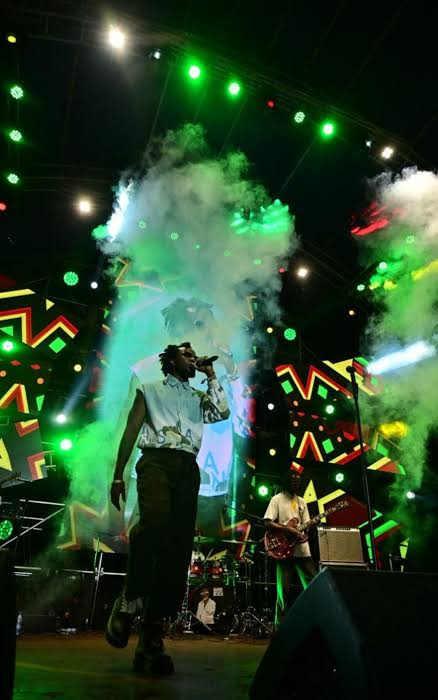
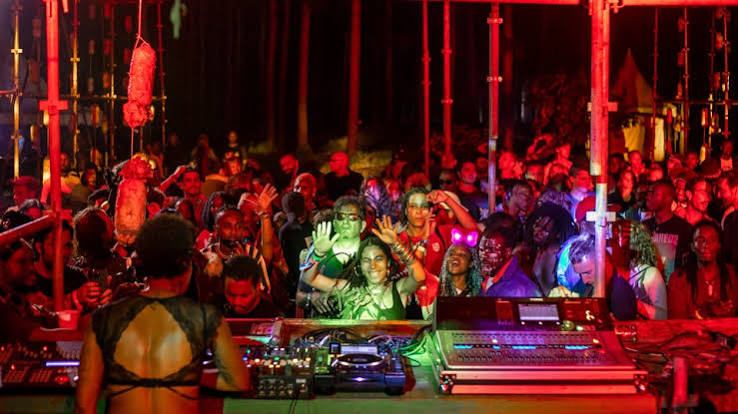
Part of what makes this festival so difficult to describe to first timers is the setting itself. The festival grounds sit directly above the whitewater of Kalagala Falls, with the sound of rushing water audible between sets even at the loudest stages, and the surrounding terrain of forest, red earth, and open farmland gives the entire event a raw, untamed backdrop unlike almost any other festival site in the world.
Local folklore around Kalagala Falls speaks of spirit rocks and ancestral rituals once held along the water’s edge, and organizers have leaned into that sense of place rather than smoothing it over with generic festival infrastructure.
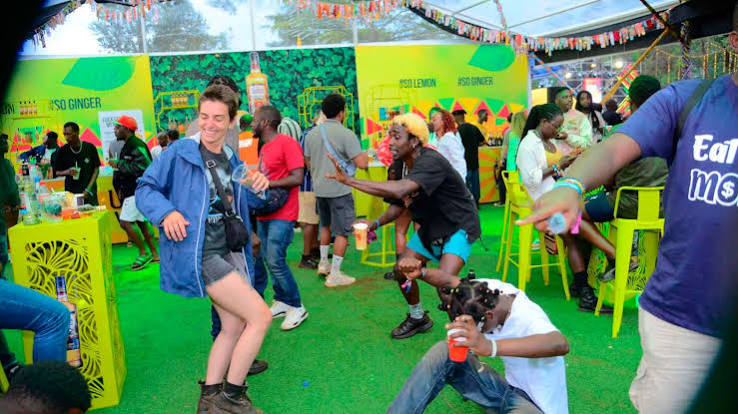
Fashion plays a genuine role here too, with attendees arriving in bold, colourful outfits that turn the grounds themselves into a kind of moving runway between stages. The crowd mixes Kampala locals, members of the African diaspora returning for the atmosphere, and first time international visitors drawn by word of mouth, and that blend gives the festival a texture that more homogenous events struggle to replicate. As night deepens and the smoke from grills and outdoor kitchens mixes with the sound systems, the boundary between performer and audience tends to dissolve entirely, which longtime attendees describe as the defining feeling of the whole experience.
Why Nyege Nyege Stands Apart From Other Festivals
Comparing Nyege Nyege 2026 to major festivals elsewhere in the world quickly reveals why it has built such a devoted following. Where many international festivals feel polished, corporate, and increasingly predictable, Nyege Nyege trades comfort for something rawer and more immediate.
The terrain is wild, the infrastructure is basic by Western festival standards, and the crowd is a genuine mix of Kampala locals, the African diaspora, and international travelers rather than a homogenous festival circuit crowd. That unpredictability is precisely the point, and travelers who arrive expecting the manicured experience of a European festival often find Nyege Nyege 2026 either frustrating or exhilarating depending on how much they are willing to embrace the chaos.
The setting itself is another major differentiator. Few festivals anywhere position themselves directly above whitewater rapids on one of the world’s most storied rivers, and the option to go bungee jumping or white water rafting between sets is not something most festivalgoers can say about their weekend. The festival also carries genuine cultural weight beyond the music, having grown into a significant contributor to Uganda’s tourism economy, with the 2025 edition alone drawing an estimated twenty six thousand attendees and injecting roughly two million US dollars into the local economy around Jinja.
Where to Stay for Nyege Nyege 2026
Accommodation options around Nyege Nyege 2026 range from on-site camping at Adrift Overland Camp itself to hotels and lodges scattered throughout Jinja town, roughly a twenty to thirty minute drive from the festival grounds. Camping directly at the venue puts travelers in the thick of the action, with easy access to stages at any hour and none of the transport logistics that come with staying further away, though conditions are basic and travelers should expect dust, crowds, and limited privacy in exchange for proximity.
For those who prefer a proper bed and a hot shower to retreat to between sets, Jinja town offers a range of options from budget, midrange and luxury guesthouses to more comfortable riverside lodges positioned along the Nile. Booking well in advance is essential, since accommodation across Jinja fills quickly once festival dates are confirmed, and prices tend to rise sharply in the weeks immediately before the festival. Working with a local operator to secure both tickets and accommodation together removes much of the stress of last minute scrambling, particularly for international travelers unfamiliar with the logistics of getting between Jinja and the festival site each day.
Getting to Nyege Nyege 2026
Most international travelers fly into Entebbe International Airport before making the journey east to Jinja, a drive of roughly two to three hours depending on traffic through Kampala. Shuttle services and organized transport options typically run during festival week specifically for Nyege Nyege 2026, ferrying attendees between Entebbe, Kampala, and the festival grounds, which removes much of the uncertainty around navigating unfamiliar roads during a busy travel period. Travelers arriving independently should budget extra time for the drive, since traffic around Jinja intensifies considerably as festival dates approach.
For those already in Uganda on a longer safari itinerary, reaching the festival is straightforward given Jinja’s central location along the main route east from Kampala, making it easy to build the festival into a broader trip rather than treating it as an isolated destination requiring separate travel arrangements.
Combining Nyege Nyege 2026 With Other Uganda Activities
One of the most compelling reasons to build a trip around Nyege Nyege 2026 is how naturally it combines with Jinja’s other attractions and Uganda’s wider safari circuit. Jinja itself is East Africa’s adventure capital, and travelers attending the festival frequently spend a day or two before or after the main event white water rafting on the Nile’s famous rapids, bungee jumping from a platform directly above the river, or taking a gentler boat cruise out to the Source of the Nile. Quad biking and horseback riding through the surrounding countryside offer a calmer alternative for festivalgoers who want to recover between nights of dancing without leaving the area entirely.
For travelers with more time, the festival pairs naturally with a broader Uganda safari, since Jinja sits within reasonable driving distance of several major destinations. Murchison Falls National Park lies roughly six to seven hours northwest, offering powerful waterfalls and classic savannah game drives, while Queen Elizabeth National Park and Bwindi Impenetrable Forest, further southwest, open up the possibility of combining festival nights with gorilla trekking on the same trip.
Sipi Falls and Mount Elgon, closer to the Kenyan border, make for an easy add-on for travelers heading further east after the festival wraps up. Building Nyege Nyege 2026 into a longer itinerary transforms what could be a single weekend of music into a full, unforgettable Uganda adventure that few other festivals anywhere in the world can offer.
Practical Tips for Attending Nyege Nyege 2026
A little preparation goes a long way toward enjoying Nyege Nyege 2026 without unnecessary stress. Tickets go on sale through the festival’s official ticketing platform, with early bird pricing typically available months in advance, and booking early is strongly recommended given how quickly demand has grown in recent editions. Comfortable, sturdy footwear matters enormously here, since the terrain around Kalagala Falls is uneven, dusty in dry weather, and prone to mud after rain, making flip flops or delicate shoes a poor choice for four days of walking between stages.
Packing for the festival means preparing for genuine unpredictability. Bring a rain jacket regardless of the forecast, sun protection for long daytime hours, a reusable water bottle, and a portable charger, since power access can be limited across the festival grounds. Cash in small denominations is useful for food stalls and local vendors, and travelers should keep valuables secured at all times given the size and density of the crowds. Travel insurance is worth arranging in advance, both for the festival itself and for any adventure activities added onto the trip, since white water rafting, bungee jumping, and similar activities typically require proof of coverage.
A tent, sleeping mat, and headlamp are essential for anyone camping on-site, since nights along Kalagala Falls can turn cool despite the heat of the day, and reliable lighting makes navigating the grounds considerably easier once the main stages go dark between sets. Earplugs are worth packing too, particularly for lighter sleepers, given how close camping areas sit to the loudest stages during peak hours.
Basic first aid supplies, motion sickness tablets for the drive from Kampala, and a small dry bag for phones and cash during any water based activities round out a sensible packing list for anyone treating this trip as both a festival and an adventure holiday. Vaccination requirements for Uganda, including a valid yellow fever certificate, should be confirmed well ahead of travel, since this is typically required for entry regardless of festival plans.
Nyege Nyege 2026 vs Other African and International Festivals
Travelers weighing Nyege Nyege 2026 against other festival options often want to know how it actually compares, beyond the obvious differences in lineup and location. Against East Africa’s other major cultural events, such as the Rwenzori Marathon or Kenya’s various music festivals, Nyege Nyege stands apart simply through scale and international reach, drawing artists and attendees from dozens of countries rather than functioning primarily as a regional or domestic event.
Where many African festivals lean heavily on a single genre or a national audience, Nyege Nyege 2026 deliberately programs across singeli, gqom, amapiano, dancehall, and experimental electronica simultaneously, giving it a genre range that few festivals on the continent attempt to match.
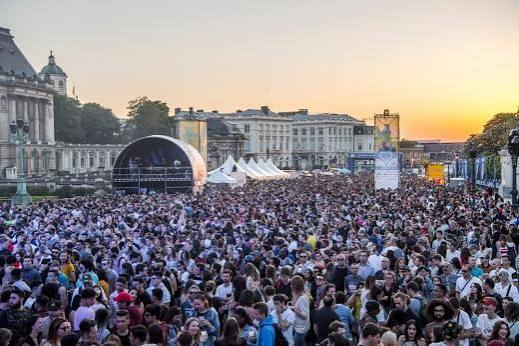
Set against major international festivals like Tomorrowland or Coachella, the comparison shifts entirely. Those events offer polish, predictability, and infrastructure built over decades, with manicured campgrounds, extensive amenities, and a festival experience engineered for comfort. This festival offers almost the opposite: a genuinely raw setting, minimal infrastructure beyond the essentials, and an atmosphere shaped as much by the unpredictability of camping beside the Nile as by the lineup itself.
Neither approach is objectively better, but travelers who have found large Western festivals to feel increasingly corporate or sanitized often describe Nyege Nyege as a return to something closer to a festival’s original spirit, built by a small collective rather than a global events conglomerate.
Cost is another meaningful point of comparison. Nyege Nyege 2026 remains considerably more affordable than most major international festivals once flights are excluded, with ticket prices, camping, and daily costs in Uganda running a fraction of what a comparable festival weekend costs in Europe or North America. Combined with Uganda’s broader affordability for food, transport, and accommodation outside the festival grounds, Nyege Nyege 2026 offers genuine value for travelers willing to trade five-star infrastructure for an experience that few festivals anywhere else can replicate.
Common Questions About Nyege Nyege 2026
Travelers planning their first trip tend to ask a similar set of questions before booking. Is Nyege Nyege 2026 safe for international visitors? The festival has run for a decade without major security incidents, and organizers work alongside local authorities to manage the large crowds, though standard festival precautions around valuables, alcohol consumption, and staying with a group at night apply here just as they would anywhere else. Do you need to speak Luganda or Swahili to enjoy the festival? Not at all, since English is widely spoken throughout Uganda and the festival itself attracts a genuinely international crowd, with signage, vendors, and staff generally comfortable communicating in English.
Is Nyege Nyege 2026 family friendly? The festival is overwhelmingly geared toward an adult audience, with late night sets, alcohol service, and a party atmosphere that runs until sunrise most nights, making it a better fit for travelers without young children in tow.
What should first-time attendees prioritize? Most seasoned festivalgoers recommend arriving a day early to settle into camp before the crowds peak, staying hydrated given Uganda’s heat, and setting a loose personal schedule rather than trying to catch every act, since the sheer size of the event makes it genuinely impossible to see everything across six simultaneous stages.
Can tickets be purchased at the gate? While gate sales have historically been available, demand for Nyege Nyege 2026 has grown substantially in recent years, and buying tickets in advance through the official platform is the safer, more reliable option, particularly for international travelers who cannot easily adjust their travel plans if tickets sell out.
Building a Complete Uganda Trip Around Festival Week
For travelers coming from outside East Africa, the cost and effort of the flight alone makes it worth extending a trip well beyond the four days of Nyege Nyege 2026 itself.
A common approach pairs a week in Uganda with the festival positioned roughly in the middle, allowing a few days of safari or gorilla trekking beforehand followed by the high energy of festival week, or the reverse structure for travelers who want to recover from festival nights with a slower paced safari afterward. Because Jinja sits centrally along Uganda’s main travel routes, building Nyege Nyege 2026 into a two week circuit through Murchison Falls, Queen Elizabeth National Park, and Bwindi Impenetrable Forest is entirely feasible without excessive backtracking.
Shorter trips work equally well for travelers with limited time. A five to six day itinerary might pair the full festival with a single add-on activity, such as a day of white water rafting immediately before the festival begins or a short gorilla trekking excursion to Bwindi in the days following.
Whatever the shape of the itinerary, working with an experienced local operator to coordinate festival tickets, accommodation, transport, and any additional safari activities in a single booking removes much of the logistical complexity that can otherwise make planning a festival trip feel overwhelming from abroad.
Why Nyege Nyege 2026 Deserves a Spot on Your Travel Calendar
For travelers who want more from a festival than polished stages and predictable lineups, Nyege Nyege 2026 offers something genuinely rare: four days of boundary pushing African music set against one of the continent’s most dramatic natural backdrops, with world class adventure activities and a full Uganda safari circuit within easy reach. Few events anywhere combine underground electronic music, Pan-African cultural exchange, and access to gorilla trekking, white water rafting, and savannah wildlife into a single trip.
Whether you are coming purely for the music or building an entire Uganda holiday around festival week, Nyege Nyege 2026 rewards travelers willing to embrace a little chaos in exchange for an experience genuinely unlike anything else on the international festival calendar. Reach out to Tulambule Uganda Safaris to start planning your trip to Nyege Nyege 2026, combined with white water rafting in Jinja, gorilla trekking in Bwindi, or a full Uganda safari built around festival week.