Nyungwe Forest National Park offers East Africa’s only canopy walkway, chimp trekking and colobus super-troops. Discover 5 reasons to visit.
5 Ultimate Reasons to Visit
Rwanda’s gorillas draw most of the international attention, but tucked into the country’s far southwest sits an ancient rain forest most travelers never make time for.
Nyungwe Forest National Park protects one of Africa’s oldest and best-preserved montane rain forests, a cloud-wrapped wilderness that survived the last Ice Age and still blankets the mountains along the Congo-Nile divide. For travelers willing to venture beyond the standard gorilla circuit, it offers something genuinely different.
This guide covers five reasons Nyungwe Forest National Park deserves serious consideration on your Rwanda itinerary.
We’ll cover the canopy walkway, the primates, the birding, and the practical details for planning a visit. By the end, you’ll understand why this forest consistently surprises travelers who arrive expecting just another rainforest stop.
Most first-time Rwanda visitors build their entire itinerary around a single gorilla trekking day, understandably drawn by the country’s global reputation for that experience.
Few realize that a longer drive southwest delivers an entirely different rainforest encounter, one built around ancient forest, rare primates and genuine adventure. This guide makes the case for why that extra distance is worth the effort.
What Makes Nyungwe Forest National Park Different
Nyungwe Forest National Park spans over 1,000 square kilometers of primary rainforest, making it one of the largest and oldest montane forests remaining anywhere on the continent. Its ridges straddle the Congo-Nile divide, feeding streams toward both river systems, with one spring here considered among the most remote sources of the Nile itself.
This geographic significance, paired with genuine biodiversity, sets the park apart from more straightforward wildlife destinations.
A Forest of Superlatives
The park protects thirteen primate species, more than 300 recorded bird species including nearly 30 Albertine Rift endemics, and roughly 1,000 plant species alongside countless orchids, butterflies, and frogs.
This density of biodiversity within a single, relatively compact park is genuinely rare, even by East Africa’s high standards. Few forests anywhere combine this much ecological richness with the accessibility Nyungwe offers travelers.
This combination of scale and diversity reflects the forest’s remarkable age and stability over geological time, having survived climatic shifts that reshaped much of the surrounding landscape.
Species here have had unusually long, uninterrupted periods to specialize and diversify, producing endemic richness typically found only in isolated island ecosystems. This deep history adds real context to what might otherwise feel like just another rainforest stop.
Reason 1: East Africa’s Only Suspended Canopy Walkway
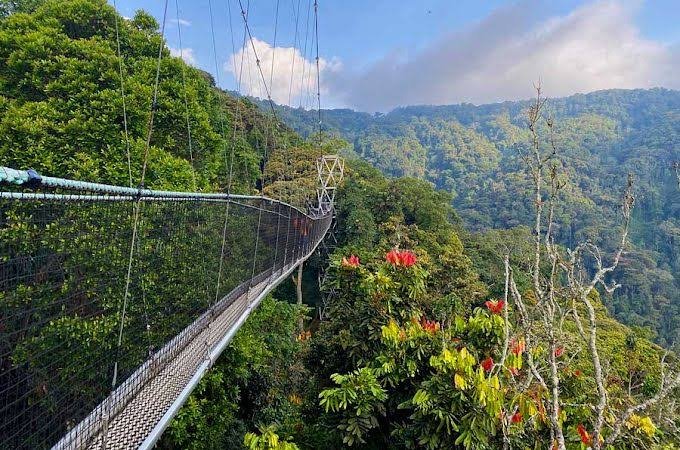
Nyungwe Forest National Park is home to the only suspended canopy walkway anywhere in East Africa, a chain of bridges suspended roughly 50 to 70 meters above the forest floor.
Stretching around 160 meters in length, the walkway offers a genuinely rare perspective on rainforest life, looking down into the canopy rather than up from the forest floor. For many visitors, this single activity alone justifies the detour to Nyungwe.
What the Walk Actually Feels Like
Accessed via the gentle Igishigishigi Trail, the walkway sways noticeably as you cross, adding a genuine, if mild, sense of adventure to what is otherwise an accessible activity suitable for most fitness levels. The experience typically takes around two hours including the approach hike and offers close sightings of colobus monkeys, L’Hoest’s monkeys, and forest birds moving through the surrounding canopy.
Fixed departure times throughout the day mean the walkway suits travelers wanting a genuine rainforest experience without committing to a full chimpanzee trek.
The elevated vantage point also offers a rare opportunity to observe canopy-dwelling species that rarely descend to ground level, giving photographers a genuinely different angle on rainforest life.
Morning crossings tend to coincide with peak primate and bird activity, since many species forage most actively in the cooler hours after dawn. This timing is worth discussing with your guide, particularly if sightings matter more to you than simply crossing the bridges.
Reason 2: Chimpanzee Trekking Among the Densest Populations in Africa
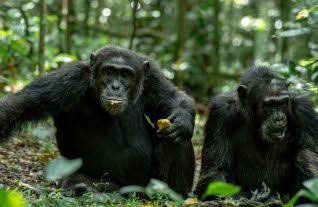
Nyungwe Forest National Park hosts one of the largest chimpanzee populations anywhere on the continent, with habituated troops tracked daily by experienced guides.
Setting out at dawn to follow their calls through dense, dripping forest delivers a genuinely thrilling, unpredictable encounter with one of our closest living relatives. Watching chimpanzees feed, groom, and swing through the canopy here rivals the experience found in Uganda’s more famous Kibale Forest.
Standard Trekking Versus the Full Habituation Experience
Standard chimpanzee trekking follows the same basic structure found elsewhere in East Africa, with guides tracking a habituated troop until visitors locate the group.
For travelers wanting considerably more depth, a full-day habituation experience is available in the park’s northern Gisovu area, limited to a maximum of four visitors at a time. This smaller, more intensive option offers extended access to chimpanzee behavior rarely seen during a standard one-to-two-hour trek.
Because Nyungwe’s terrain is considerably steeper and more densely forested than Kibale’s more accessible trails, chimpanzee trekking here demands somewhat greater physical stamina.
Rangers assign groups based on fitness level, matching pace and route difficulty to the visitors present that morning. This added challenge is part of what gives a Nyungwe chimp trek its genuinely wild character.
Reason 3: Super-Troops of Angolan Colobus Monkeys
Nyungwe Forest National Park protects some of the largest Angolan colobus troops found anywhere in Africa, with groups sometimes numbering 400 individuals or more moving together through the canopy.
Watching a super-troop of this size ripple through the treetops is a genuinely spectacular sight, distinct from the smaller family groups typical of most primate encounters. This is one of the park’s signature wildlife experiences, alongside chimpanzee trekking and the canopy walkway.
Tracking a Super-Troop
Colobus tracking typically begins from the Uwinka Visitor Centre, where the largest troop is most reliably found, while a smaller group of around 50 can be tracked from Gisakura.
The black-and-white patterning of these monkeys, paired with their dramatic leaps between trees, makes for compelling photography even without specialized equipment. Many visitors rank this experience alongside chimpanzee trekking as a genuine highlight of their time in the park.
Reason 4: World-Class Birding With Albertine Rift Endemics
Nyungwe Forest National Park hosts more than 300 recorded bird species, including nearly 30 endemic specifically to the Albertine Rift region and found almost nowhere else on Earth.
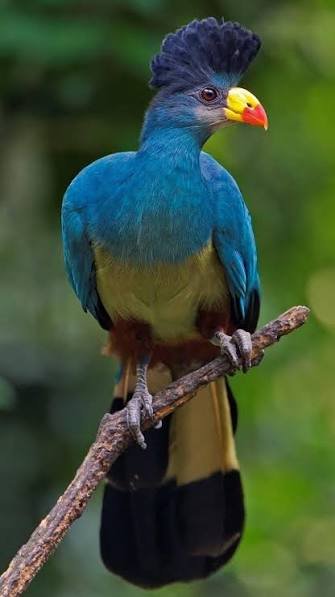
The Great Blue Turaco, flashing blue and crimson through the canopy, serves as something of a flagship species for birders visiting the park. This concentration of range-restricted species places Nyungwe among the finest montane-forest birding destinations on the entire continent.
What Serious Birders Come For
Dedicated guided birding excursions focus specifically on locating Albertine Rift endemics, moving at a slower, more deliberate pace than a standard nature walk. Hornbills, sunbirds, and turacos appear regularly throughout the park’s varied habitat zones, from dense primary forest to bamboo thickets and swamp margins.
For birders building a life list, Nyungwe offers a genuinely strong return on a dedicated day or two spent exploring its trail network.
Early morning departures tend to produce the strongest birding results, since forest activity peaks before the midday heat settles over the canopy.
Experienced local guides can identify species by call alone long before any visual confirmation, considerably speeding up the pace of a productive outing. Combining a dedicated birding morning with an afternoon primate activity makes efficient use of a single day for travelers balancing multiple interests within a tight schedule.
Reason 5: Extensive Trails for Every Fitness Level
Nyungwe Forest National Park maintains an extensive network of hiking trails covering well over 100 kilometers of rainforest terrain, ranging from short, gentle walks to demanding full-day treks.
The Igishigishigi Trail offers an easy, family-friendly route to the canopy walkway, while the Bigugu Trail climbs steeply to the park’s highest point, rewarding hikers with sweeping panoramic views. This range means Nyungwe suits both casual visitors and serious trekkers within the same park.
Waterfalls and Longer Adventures
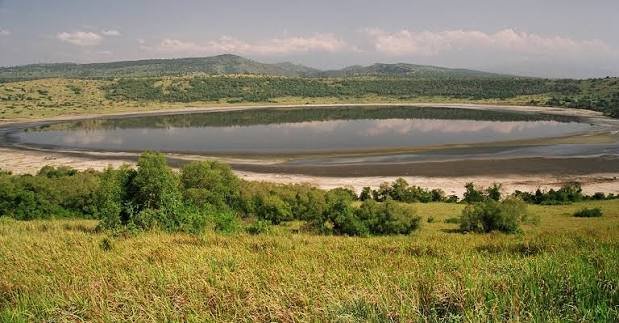
The Kamiranzovu Marsh Trail winds through a caldera depression, offering sightings of water birds and unique swamp vegetation for travelers willing to tackle its moderate-to-difficult terrain.
Scattered waterfalls throughout the park, including the Kamiranzovu and Ndambarare falls, add scenic rest points along longer routes. One of Africa’s longest ziplines also operates within the park, giving adventure-focused travelers an additional adrenaline option beyond hiking and primate trekking.
Planning Your Visit to Nyungwe Forest National Park
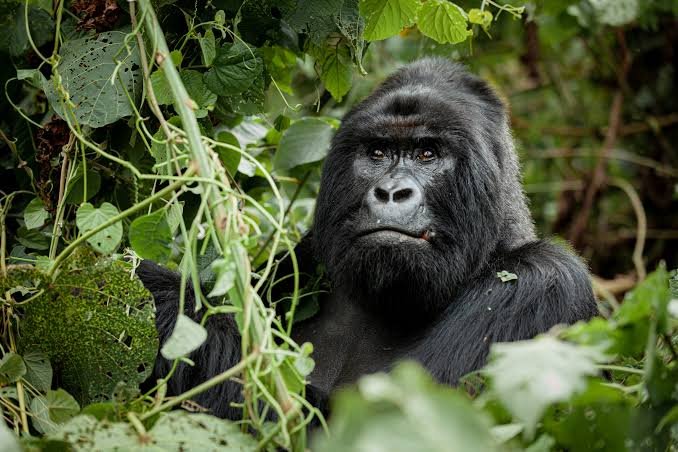
Most travelers reach Nyungwe Forest National Park via a five-to-six hour drive southwest from Kigali, making it a considerably longer journey than a straightforward gorilla trekking trip to Volcanoes National Park. Given this distance, most itineraries fold Nyungwe into a longer Rwanda route, often combining it with gorilla trekking and a relaxing stopover at Lake Kivu.
Two nights represents a practical minimum, allowing one full day for chimpanzee trekking and a second for the canopy walkway plus a shorter nature or colobus walk.
The drive itself passes through some of Rwanda’s most scenic tea-growing country, with terraced hillsides and rolling green plantations lining much of the route.
Many travelers break the journey with a stop at a working tea estate, adding a cultural and agricultural dimension to what would otherwise be a long transit day. Building this drive into the itinerary as a scenic experience, rather than simply tolerating it, changes the overall feel of the trip considerably.
Making the Most of a Longer Stay
Three nights allows visitors to add dedicated colobus tracking, focused Albertine Rift birding, or the full-day chimpanzee habituation experience without feeling rushed.
Accommodation options span from the luxury One&Only Nyungwe House, set on a tea estate at the forest edge, to more modest guesthouses near the park headquarters at Gisakura. Staying close to the main trailheads matters considerably, since chimpanzee treks begin early and a long drive from distant towns eats directly into valuable morning tracking time.
Best Time to Visit
The canopy walkway and most trails remain accessible year-round, though the dry seasons, roughly June through September and December through February, offer the most comfortable hiking conditions. Wetter months bring lush, vivid scenery and can make chimpanzee tracking slightly more challenging given muddier trail conditions.
Either season delivers strong wildlife viewing, so timing often comes down to how this leg fits within a broader Rwanda itinerary.
Final Thoughts on Nyungwe Forest National Park
Few destinations in East Africa combine this much genuine biodiversity, adventure, and sheer ecological significance within a single accessible park.
Nyungwe Forest National Park offers a rainforest experience distinct from anything else in Rwanda, built around chimpanzees, colobus super-troops, endemic birds, and East Africa’s only suspended canopy walkway.
For travelers willing to add the extra travel time, the reward is a forest unlike any other on a typical Rwanda circuit.
Whether the canopy walkway’s swaying bridges, a dawn chimpanzee trek, or the sight of hundreds of colobus monkeys moving together through the treetops leaves the strongest impression, Nyungwe delivers something genuinely memorable.
Pairing this ancient forest with gorilla trekking and a stop at Lake Kivu builds a complete, varied picture of what southwestern Rwanda has to offer. Few single parks anywhere combine this much depth in one visit.
For travelers who’ve already experienced Rwanda’s gorillas and wonder what else the country offers, Nyungwe answers that question decisively.
Its combination of ancient forest, genuine adventure and world-class primate and bird diversity places it firmly among Africa’s underrated rainforest destinations. The extra hours on the road southwest from Kigali consistently prove worthwhile once travelers actually arrive.
Ready to add Nyungwe to your Rwanda itinerary?
Tulambule Uganda Safaris can arrange your chimpanzee trek, canopy walk and a seamless route connecting Nyungwe with gorilla trekking and Lake Kivu.