Walking with Giants: The Ultimate Guide to Uganda’s Ziwa Rhino Sanctuary
There is a profound stillness that falls over you when you step out of the safari vehicle and onto the sun-baked, red-earth soil of Ziwa. It is not the silence of emptiness, but the silence of deep, breathless respect. You are no longer a spectator peering through a camera lens from a distant vehicle; you are an intruder, a quiet guest stepping into the ancient, untamed world of one of Earth’s most magnificent creatures, the southern white rhino. There is no vibrating vehicle between you and the animal, no engine to mask the sound of your own heartbeat. From this close, a rhino’s size is overwhelming, yet its calm is disarming. Nothing ever prepares you for a walking safari that brings you within metres of endangered wildlife.
In a country that once mourned the loss of its rhinos to the cruelty of civil war and poaching, the Ziwa Rhino Sanctuary is not merely a tourist attraction. It is a miracle. It is the defiant, beating heart of Ugandan conservation. And it offers an experience so intimate, so raw, that it will permanently alter the way you see the natural world.
A Story of Resurrection: From Extinction to Hope
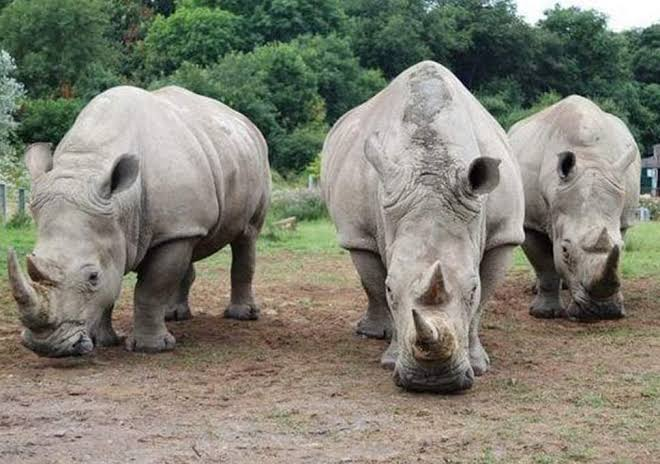
To truly appreciate Ziwa, you must first understand its sorrow. Uganda was once home to healthy populations of both Northern white rhinos (Ceratotherium simum cottoni) and Eastern black rhinos (Diceros bicornis michaeli). By 1965, Ajai Wildlife Reserve supported about 60 of Uganda’s remaining 80 rhinos. But following decades of political instability, particularly during the rule of Idi Amin, and relentless poaching, the last native rhino was tragically killed in 1983. For over two decades, the country was rhino-less, a national tragedy that felt like a permanent scar on the landscape. The extinction was devastating, wiping out both black and white rhino populations completely.
The revival began in 1997 with the founding of Rhino Fund Uganda. In 2001, two southern white rhinos arrived at the Uganda Wildlife Education Centre (UWEC) in Entebbe. But the real turning point came in 2005 when the Ziwa Rhino Sanctuary was established. It was a private, 7,000-hectare (70-square-kilometre) former cattle ranch transformed into a safe breeding ground. Between 2005 and 2006, six more rhinos arrived: four from Kenya’s Solio Game Reserve and two from Disney’s Animal Kingdom in Florida. The sanctuary was secured with 2-metre-high electric fences and 24/7 armed protection.
Today, that dream is a roaring success. With the importation of eight rhinos from South Africa in late 2025 to strengthen genetic diversity, Uganda’s rhino population has now risen to 61 individuals. Since 2006, over 40 babies have been born on Ugandan soil. In 2025, Uganda marked a historic milestone with the country’s first-ever Rhino Naming Ceremony at Ziwa, where 17 rhino calves were named through sponsorships of $10,000 to $50,000 each. Every calf born here is a victory lap for humanity. When you visit, you aren’t just watching wildlife; you are witnessing a resurrection.
The Main Event: Rhino Tracking on Foot at Ziwa
Forget the bumpy game drives where you observe animals from a distance. At Ziwa, you earn your encounter.
What to Expect
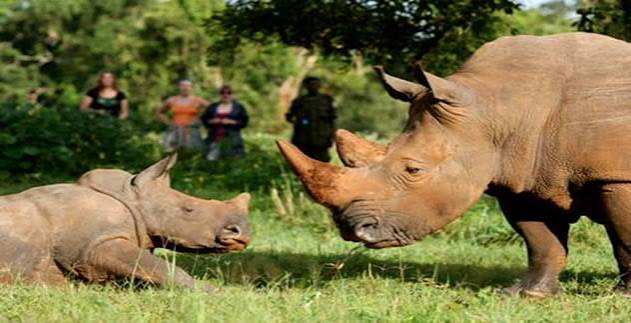
The sanctuary’s signature activity is a guided walking safari to track rhinos. This is a more intimate and deeply personal experience than a typical game drive. It is the only place in Uganda where visitors can come face-to-face with the southern white rhino on foot. An armed, highly trained ranger accompanies every group, leading you through the bush to locate rhino families. Groups are kept small, a maximum of six people per tracking session, ensuring an intimate, unhurried experience.
Your rhino tracking adventure begins with a briefing from your ranger guides, who explain the wide range of animals that live on this 70-square-kilometre former cattle ranch. The terrain is flat, making it an easy tracking experience; however, closed shoes are recommended to avoid the occasional thorn. Gum boots are available to borrow on site too.
Rangers radio one another to establish rhino locations before you set off, but the final approach still happens on foot through the landscape. You move slowly, guided by fresh spoor, bent grass and the occasional mound of dung still warm in the morning sun. Your senses heighten with every step. You scan the horizon, looking for a hint of grey among the green.
The Encounter
And then, you see them. It starts as a flicker of movement behind a thicket of acacia. The ranger signals for silence. You crouch lower. And suddenly, the bush parts to reveal a colossal, prehistoric beast, a rhino bull, grazing peacefully, completely unbothered by your presence.
The proximity is breathtaking. You typically close to within 7 to 10 metres of the animals. Southern white rhinos are generally calm around habituated humans and continue feeding while you watch and photograph from a safe distance. You can hear the deep, resonant huff of their breath. You can see the dust caked into the folds of their thick, armoured skin. You watch the delicate, almost gentle, way their lips curl around the grass. A rhino needs to eat a whopping 80 to 100 kilograms of grass every day. If you are lucky, you will witness a tiny calf, still clumsy on its feet, nudging its mother for milk.
Standing there, heart pounding in your throat, you are struck by a profound sense of humbleness. To look into the eye of a rhino is to look into the eye of a survivor. It is a moment of pure, unadulterated magic that no photograph can ever truly capture.
Learning from the Rangers
Rangers explain how rhinos cool themselves by wallowing in mud. They cannot control their body temperature, so as the day heats up, they retire to the shade. They communicate through scent, and mothers keep calves positioned safely beside them. A keen sense of smell and sharp hearing make up for rhinos’ poor eyesight. You know when you are being observed as the rhino’s ears will face in your direction, scanning for sound.
The rangers know each rhino by name and temperament, including the famous Obama, the first rhino born in Uganda in decades. Some are tolerant of people, others more reserved. Bulls patrol wide territories. Mothers keep calves close. These details, shared quietly during the walk, turn animals into individuals rather than spectacles.
The tracking experience typically lasts between one and two hours. Some groups locate rhinos within 20 minutes; others trek for 90 minutes across the sanctuary’s varied terrain. The experience feels genuinely wild despite the sanctuary setting.
When to Go
The best viewing is early morning (7:30 to 10 AM) or late afternoon (4 to 6 PM), when the rhinos and other wildlife are most active. Cooler temperatures mean the rhinos remain active throughout your time with them. For the most comfortable walking trails and clearer views, visit during the dry seasons (June to September and December to February).
Beyond the Rhinos: A Sanctuary of Surprises
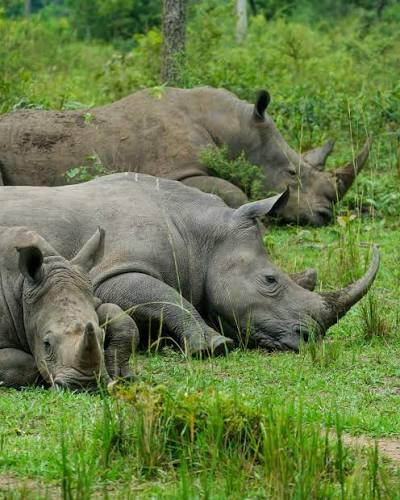
While the rhinos are the undisputed headliners, Ziwa is a sanctuary for many souls. The sanctuary harbours seven species of antelope: Uganda kob, bushbuck, Bohor reedbuck, oribi, common grey duiker, waterbuck and the shy sitatunga. Iconic species such as the aardvark, porcupine and the honey badger call Ziwa home. Leopards, genets, African golden cats and serval cats are some of the furry felines. Hippos are resident in the swamps and crocodiles live in the valley dams, which are important watering holes for the sanctuary’s wildlife.
The Elusive Shoebill Stork
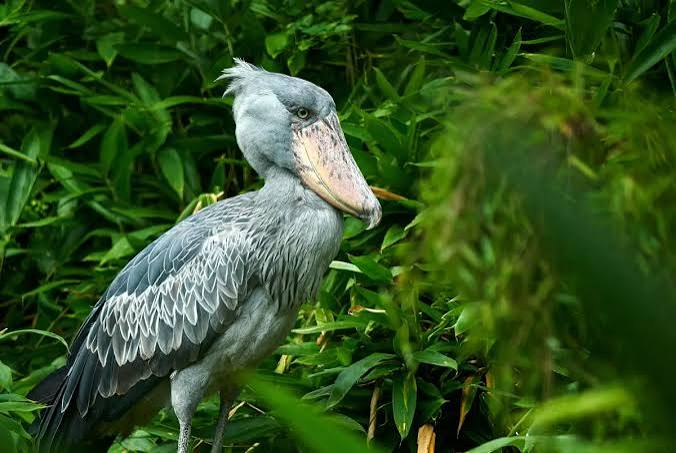
For the avid birdwatcher, this is a slice of paradise, boasting over 350 recorded bird species. The sanctuary hosts these species across its wetlands, grasslands, and woodland habitats. One of the most sought-after birds is the rare shoebill stork, a prehistoric-looking, 1.2-metre-tall fishing bird with a distinctive hooked bill. It is one of Africa’s most sought-after birding sightings.
The shoebill trek starts at 6:00 AM, which is the best time to see these birds. The canoe trip through the Lugogo Swamp provides the highest chance of spotting them. You have a 75 percent chance of seeing one on the Shoebill Canoe Ride, and it is also a great opportunity to witness the sunrise over the wetlands. The swamp canoe session produces 20 to 30 bird species in addition to the shoebill, including several papyrus specialists. Because the swamp is privately managed and sees fewer crowds than other sites, you often get a much longer and quieter encounter with this prehistoric bird. Since the activity starts early in the morning, visitors must stay overnight at Ziwa, as the ranch gates do not open until 7:30 AM.
Night Tracking and Nature Walks
For those who stay overnight, the sanctuary offers a unique night tracking experience starting at 8 PM. You follow the ranger by torchlight and often hear rhinos before you see them. These night nature walks offer a rare chance to see nocturnal species such as leopards, porcupines, aardvarks, and various owl species. Guided nature walks are also available, offering immersive experiences with the sanctuary’s diverse flora and fauna.
Birding Tours
The Ziwa sanctuary features four distinct birding trails through woodlands and savannahs, where you can find the Great Blue Turaco and the African Grey Parrot. With over 350 species recorded, birding safaris at Ziwa are exceptionally rewarding. A productive birding stop including the Lugogo shoebill canoe (2 hours) and a short rhino walk (2 hours) takes 4 to 5 hours, allowing a midday departure to reach Murchison Falls National Park by late afternoon.
Where to Stay: Accommodation at Ziwa
To fully immerse yourself in the experience, you can choose to stay overnight at the sanctuary. All options are secure, with 24/7 ranger patrols and electric fencing for peace of mind.
Amuka Lodge (Inside the Sanctuary)
Amuka Lodge is the premier, mid-to-luxury lodge located inside theZiwa sanctuary. Tucked away in pristine woodlands within Ziwa, just a short walk from rhino trails, this eco-lodge features 10 unfenced chalets named after resident rhinos, built from hardwood timber and stone for an authentic safari vibe.
Standard chalets (6 units) offer one bedroom with an en-suite bathroom, ideal for singles or couples. Family chalets (4 units) have three bedrooms, providing plenty of space for groups. Amenities include a sparkling swimming pool with a bar, a restaurant serving Ugandan and international cuisine, a well-stocked bar, and spacious verandas for stargazing. Electricity runs 24/7 via solar and generators, and Wi-Fi is available in common areas. Wake to the distant calls of rhinos and antelopes roaming freely nearby. It is like living in a nature documentary. The unfenced design means occasional wildlife visitors, adding thrill without compromising safety.
Rates for standard chalets start at $150 to $200 per night (full board), while family chalets range from $250 to $300. A 50 percent deposit is required for bookings, and it is cashless, accepting cards or transfers only.
Ziwa Rhino Sanctuary Guesthouse (Near the Sanctuary Gate)
For budget travelers, the guesthouse offers simple, clean rooms in two guesthouses with en-suite bathrooms, verandas, and solar-powered lighting. Shared lounges provide a communal vibe, plus access to the on-site restaurant. Hot showers and flush toilets are standard, with emergency generators for reliability. It is no-frills but welcoming, with friendly staff sharing rhino conservation stories over evening bonfires.
Camping
For the adventurous, camping is available at $10 to $15 per person per night. It often comes with perks like a free guided ranger walk.
Practical Information: Planning Your Visit
Location and How to Get There
The Ziwa sanctuary is conveniently located in the Nakasongola District, about 176 kilometres north of Kampala along the well-paved Kampala-Gulu highway.
By road, the journey takes about 3 to 4 hours by car from Kampala or Entebbe. The sanctuary entrance sits right on the main highway, making it a popular stopover for travellers heading to Murchison Falls National Park. Visitors turn off at Nakitoma Trading Center and follow a short 7-kilometre dirt road to the sanctuary entrance. A standard 2WD car can manage in good weather, but a 4×4 is recommended for comfort.
By public transport, visitors travelling independently can board public buses from Kampala heading toward Gulu or Masindi and request to be dropped at the Nakitoma junction. From there, you can hire a motorcycle taxi (boda boda) to take you to the sanctuary entrance.
Opening Hours
The Ziwa sanctuary opens daily from 6:00 AM to 7:00 PM. Rhino tracking operates throughout opening hours. Night tracking begins at 8 PM.
Fees (2026)
Ziwa sanctuary has revised its entry and activity rates to better support conservation efforts.
Entry and rhino trekking fees are as follows. Foreign non-resident adults pay $60, while children pay $30. Foreign resident adults pay $50. East African citizens pay 50,000 UGX. For other activities, night rhino tracking costs $60 per person. The Shoebill Canoe Ride is $30 for international visitors. Birding walks are $20 per person.
Please note that the sanctuary operates as a cashless business, so ensure you have a credit card or mobile money options prepared for payments at the gate. Rates are subject to change.
The Cost of Conservation: What Your Visit Supports
Behind the spectacle lies an expensive and relentless effort. Rhino conservation does not come cheap. According to Uganda Wildlife Authority’s Executive Director, James Musinguzi, the bill to keep one rhino alive and thriving is staggering. He states that you are looking at not less than 80 million shillings per year per rhino. That covers ranger patrols, veterinary care, fuel for vehicles, and infrastructure like electric fencing. Multiply that by 40 rhinos, and you understand why financial support is critical.
Unlike antelopes or buffalo, rhinos need 24-hour surveillance. Their horns make them lucrative targets for poachers, fetching up to $60,000 per kilogram on the Asian black market. Musinguzi asserts that it is like guarding a bank vault in the middle of a forest. Veterinary costs are another burden. A single tranquilliser dart for medical procedures can cost more than $500. Transporting a rhino in case of an emergency requires cranes, trucks, and a specialised team, running into millions of shillings. And because Ziwa lies in a semi-arid region, water supply requires boreholes, solar pumps, and regular maintenance.
Ziwa is protected around the clock by trained wildlife rangers, who patrol on foot, by vehicle and at night. Their work is steady, disciplined and often unseen. Visitors meet them briefly during tracking, but their presence is constant, long after tourists have gone.
To bridge the funding gap, Ziwa has leaned heavily on tourism. Rhino tracking remains its star attraction. On a good month, the sanctuary may welcome 3,000 visitors. But tourism is unpredictable. The COVID-19 pandemic reduced visitor numbers to near zero, throwing Ziwa into a financial crisis. Even in good seasons, revenues rarely meet half of the sanctuary’s annual budget. Every visit to Ziwa directly funds the rangers, anti-poaching patrols and veterinary care that keep these animals safe.
A Conservation Triumph: Looking to the Future
For the Uganda Tourism Board (UTB), the return of rhinos represents one of Uganda’s most important conservation milestones. Ms Juliana Kagwa, the UTB Chief Executive Officer, has highlighted rhinos as proof that conservation and tourism can reinforce each other. Speaking during a rhino naming ceremony, Ms Kagwa emphasised that protecting the species is central to destination competitiveness, noting that Uganda’s appeal lies in authentic, conservation-led experiences rather than mass tourism.
Today, plans are in final stages to re-introduce rhinos into the natural wild. In January 2026, four southern white rhinos were successfully translocated from Ziwa to Ajai Wildlife Reserve, marking the first in-country rhino translocation in Uganda. A second phase involving 16 more rhinos is planned. Critical infrastructure has been installed across the reserve, including an electric fencing system, ranger outposts, and a water supply network.
On 17th March 2026, the first two of an initial phase of eight southern white rhinos arrived from Ziwa and were released into Kidepo Valley National Park, the landscape where the country’s last rhinos were sighted in Narus Valley in 1983. Mr John Makombo, Commissioner for Biodiversity Management, described the significance. He noted that Kidepo Valley National Park is one of Uganda’s most intact savannah ecosystems, and the reintroduction of Southern White Rhinos restores a key component of that ecosystem.
With two sites receiving rhinos in quick succession, conservationists have their sights set on other protected areas such as the famous Murchison Falls National Park, which itself had a population of Northern white rhinos until the early 1980s. If all goes well, the initial releases will be boosted by the reintroduction of at least 20 Eastern black rhinos.
Uganda’s rhino recovery program, which began in 2005 with just six rhinos at Ziwa, has grown the country’s rhino population from zero to 61 individuals today. It is a measured, meaningful milestone, one shaped by patience, long-term vision and close partnership.
A Pilgrimage of Hope
A visit to Ziwa Rhino Sanctuary is more than just a checkmark on a safari bucket list; it is a pilgrimage. It serves as a powerful, emotional reminder that when humans choose to protect rather than destroy, nature possesses an incredible capacity to heal. It is an experience that will stay with you as you watch wildlife feeding as rangers confidently share their knowledge and expertise.
For travellers who care less about ticking boxes and more about what a journey leaves behind, this is where the meaning settles, gently and for good. You walk away understanding that conservation has footprints, names, patrol routes and people behind it. At the rhino naming ceremony, Ms Kagwa described it as a way of creating emotional ownership, turning supporters into long-term partners in conservation rather than passive observers.
A visit to Ziwa also allows you to complete the iconic Big Five (lion, leopard, rhinoceros, elephant, and buffalo) in a setting that carries real significance. It is one of the few countries in the world where the Big Five can be spotted.
Whether you are taking a refreshing day trip from the bustling streets of Kampala, or pausing en route to the roaring waterfalls of Murchison Falls National Park, take the time to stop at Ziwa. Lace up your boots, silence your phone, and walk with the giants of Ziwa.
Because to stand beside a rhino is to stand beside hope itself. And in a world that often feels chaotic, that is a feeling worth chasing across the globe.
Ready to plan your walk with giants? The sanctuary is open year-round, but for the best tracking conditions, aim for the dry seasons (June to September or December to February). Don’t forget your camera, a good pair of walking shoes, and plenty of curiosity. The rhinos are waiting.
This blog post was updated in August 2026 to reflect the latest information on Uganda’s rhino population, translocation efforts, and sanctuary fees.