Why Go Off the Beaten Path in East Africa
Gorilla trekking in Bwindi, the Masai Mara, the Serengeti migration, Zanzibar’s beaches: East Africa’s headline attractions earn their reputation honestly, and most first-time visitors are right to build a trip around them. But travelers who have already done the classic circuit, or who simply prefer their adventures with fewer other vehicles in the frame, are increasingly looking for something genuinely off the beaten path, destinations that deliver the same sense of discovery the region’s famous parks offered before they became famous at all.
Going off the beaten path in East Africa does not mean sacrificing quality. It means trading a certain amount of infrastructure and predictability for landscapes, cultures, and wildlife encounters that most travelers never see, often at a fraction of the crowds and cost of the headline circuit. This list pulls together ten destinations across Uganda, Kenya, Rwanda, and Tanzania that genuinely earn the off the beaten path label, each offering a distinct kind of adventure for travelers willing to go a little further to find it.
1. Karamoja, Northeastern Uganda
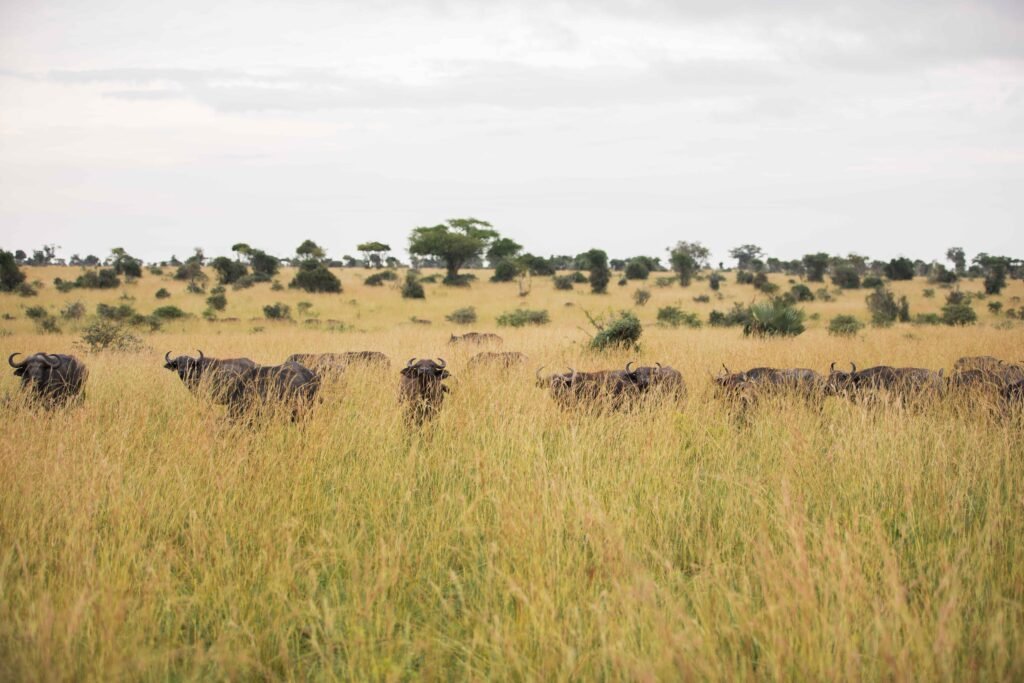
Few regions anywhere in East Africa feel as genuinely remote as Karamoja, a vast, semi-arid stretch of northeastern Uganda bordering Kenya and South Sudan. Home to the Karamojong, a traditionally pastoralist people whose cattle-centered culture has changed relatively little over generations, Karamoja remains well off the beaten path East Africa for the simple reason that reaching it requires real commitment: long drives over rough roads or a charter flight into one of the region’s small airstrips.
That remoteness is exactly the draw. Karamoja pairs naturally with a visit to Kidepo Valley National Park, Uganda’s most remote and arguably most dramatic park, where predator density rivals anything found in the Serengeti-Mara ecosystem, without the crowds. Travelers who make the journey to Karamoja describe an adventure that feels fundamentally different from anywhere else on a standard Uganda itinerary, one built around genuine cultural exchange with Karamojong communities alongside wildlife viewing in a landscape that still feels largely undiscovered by mainstream tourism.
Few other regions in East Africa reward the extra travel time quite like this one. Because Karamoja sees so few visitors relative to its size, local guides have time to properly introduce travelers to manyatta homesteads, cattle-keeping traditions, and the region’s distinctive beadwork, rather than rushing through a scripted cultural stop. Anyone serious about going off the beaten path in East Africa should put Karamoja near the top of the list.
2. The Ssese Islands, Lake Victoria, Uganda
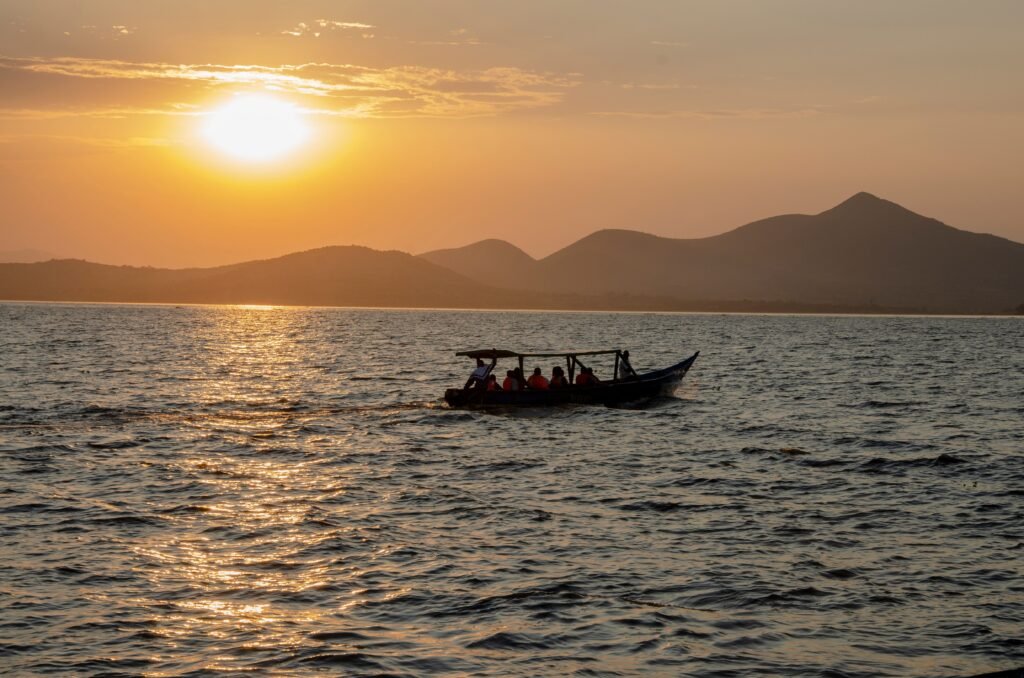
Scattered across the Ugandan waters of Lake Victoria, the Ssese Islands offer a kind of adventure most visitors never associate with landlocked Uganda: genuine island travel. Reached by ferry or speedboat from Entebbe, the eighty-four islands that make up the archipelago range from busy, palm-fringed Kalangala to tiny, uninhabited outcrops that see barely any visitors at all, giving travelers real flexibility in how far off the beaten path they want to venture.
Activities across the Ssese Islands lean toward relaxed adventure rather than adrenaline: kayaking between islands, forest walks in search of vervet monkeys and otters, fishing trips with local boat crews, and simply swimming in waters considerably calmer than Lake Victoria’s mainland shoreline suggests. Because the Ssese Islands remain genuinely under-visited relative to their beauty, travelers willing to make the ferry crossing consistently describe them as one of the more unexpected highlights of an otherwise conventional Uganda trip, a rare chance to add island time to a landlocked country’s itinerary.
A two or three night stay is usually enough to properly explore the Ssese Islands at an unhurried pace, moving between a quieter island for swimming and a livelier one for dinner and local music. For travelers assembling their own off the beaten path East Africa for its unbeaten itinerary inclusion within Uganda, the islands pair naturally with a Lake Victoria boat trip from Entebbe at either end of a wider trip.
3. Sipi Falls and Mount Elgon, Eastern Uganda
On the slopes of an ancient extinct volcano near the Kenyan border, Sipi Falls and the surrounding Mount Elgon National Park remain surprisingly overlooked given how much they offer. A half-day hike links three dramatic waterfalls through terraced coffee gardens, while multi-day trekking routes climb through forest, bamboo, and high-altitude moorland toward one of the largest intact volcanic calderas in the world.
What makes this corner of Uganda genuinely off the beaten path East Africa destination is its position well away from the country’s main southwestern safari circuit, requiring a deliberate detour east rather than an easy add-on to an existing route. Travelers who make the trip are rewarded with rock climbing and abseiling beside the falls, hands-on coffee tours with Bagisu farmers, and trekking conditions far less crowded than comparable mountains elsewhere in East Africa, making Sipi Falls and Mount Elgon one of Uganda’s most rewarding adventure detours for travelers with a few extra days to spend.
A two to three night stay allows time to properly combine the waterfall hike with a coffee tour and still leave room for a cultural visit, and travelers heading toward Kidepo Valley National Park in the far northeast can easily route through this corner of the country along the way, turning what might otherwise be a long transit day into a genuine off the beaten path stop in its own right.
4. Katonga Wildlife Reserve, Western Uganda
Sandwiched between Lake Mburo and Kibale on the map, Katonga Wildlife Reserve is a destination most travelers drive past entirely, despite sitting conveniently along one of Uganda’s main safari routes. Centered on the slow-moving Katonga River and its surrounding wetlands and savanna, this small reserve remains genuinely off the beaten path, receiving only a fraction of the visitors that nearby Lake Mburo National Park sees in a typical month, largely because it has never been heavily marketed alongside Uganda’s better-known parks.
What Katonga Wildlife Reserve lacks in headline species, it makes up for in quiet, unhurried wildlife viewing and genuinely good birding, with the river drawing hippos, waterbuck, and a strong population of Uganda kob to its banks, alongside sitatunga antelope moving through the surrounding papyrus swamp. Boat trips along the Katonga River add a different dimension to a visit here, drifting past baboons and bushbuck along the forested banks in a setting that feels considerably wilder than its modest size and limited profile would suggest.
Because Katonga Wildlife Reserve requires no permit queues, no crowds, and only a short detour from the main road between Kampala and the southwestern parks, it is one of the easiest off the beaten path East Africa destination addition on this entire list to arrange, making it a natural stop for travelers who want a genuine taste of undiscovered Uganda without adding significant time or cost to an existing itinerary.
5. Nyungwe Forest, Southwestern Rwanda
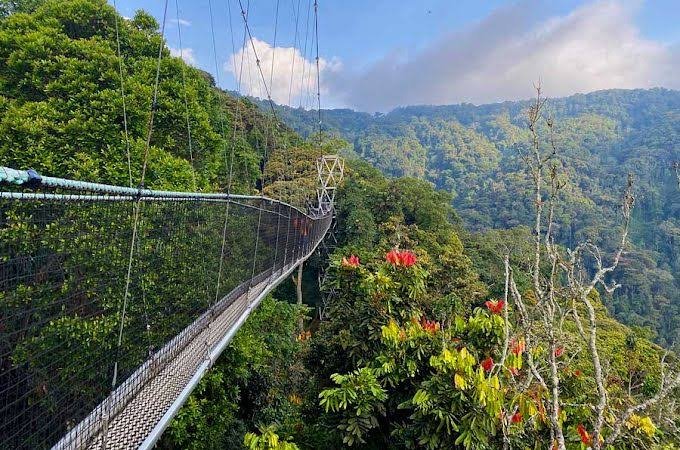
While Rwanda’s Volcanoes National Park draws the gorilla trekking crowds, Nyungwe Forest, tucked into the country’s remote southwest, remains comparatively undiscovered despite offering one of East Africa’s most distinctive forest adventures. Home to chimpanzees and a dozen other primate species, Nyungwe is best known among those who do visit for its canopy walk, a suspended steel bridge strung seventy meters above the forest floor that offers a dramatically different vantage point on the forest canopy than any ground-based trail.
Chimpanzee trekking in Nyungwe delivers much of the same thrill as Uganda’s more famous Kibale Forest, but with a fraction of the visitors, since Nyungwe sits well off the beaten path relative to Rwanda’s main gorilla trekking circuit further north. Combined with excellent birdwatching and genuinely dramatic mountain scenery, Nyungwe Forest rewards travelers willing to extend their Rwanda itinerary into territory most gorilla-focused visitors never reach.
Because Nyungwe requires a longer drive from Kigali than Volcanoes National Park, most visitors who make the trip build in at least two nights, combining a chimpanzee trek, the canopy walk, and a guided forest hike into a single unhurried stay. For travelers who have already done the standard gorilla circuit, Nyungwe is one of the more rewarding ways to go further off the beaten path East Africa without leaving Rwanda.
6. The Chalbi Desert, Northern Kenya
Few landscapes in East Africa feel as genuinely remote as the Chalbi Desert, a vast, cracked salt flat in Kenya’s far north, bordering territory inhabited by the Gabbra and Rendille peoples. Reaching the Chalbi Desert requires a serious overland journey or a charter flight, placing it firmly off the beaten path even by the standards of adventurous East Africa travelers, and few tour itineraries venture this far north at all.
What rewards the effort is a landscape unlike anywhere else in the region: shimmering salt pans, scattered oases, and semi-nomadic communities whose way of life has adapted to one of the harshest environments in East Africa. Travelers who make it to the Chalbi Desert often combine the trip with visits to nearby Marsabit National Park and its forested volcanic crater, creating a northern Kenya adventure that stands in sharp contrast to the Masai Mara’s more conventional safari experience further south.
Accommodation along this route remains basic by comparison with Kenya’s main safari circuit, and travelers should budget extra time for rough roads and long driving days, but that same lack of polish is precisely why the Chalbi Desert remains one of the most authentic off the beaten path East Africa experiences anywhere in the region.
7. Lake Turkana, Kenya
Known as the Jade Sea for its striking turquoise-green color, Lake Turkana sits isolated in Kenya’s remote northwest, the world’s largest permanent desert lake and a landscape that feels closer to another planet than to the rest of East Africa. Reaching Lake Turkana remains genuinely difficult, whether by long overland drive or small aircraft, which has kept this extraordinary destination firmly off the beaten path East Africa destination despite its UNESCO World Heritage status and its significance as a site of major paleontological discoveries at nearby Koobi Fora.
Adventure travelers drawn to Lake Turkana come for the stark volcanic scenery, the chance to visit El Molo, Turkana, and Rendille communities living along its shores, and a sense of genuine remoteness increasingly hard to find elsewhere in East Africa. Combined with Central Island National Park’s crater lakes and resident crocodile population, Lake Turkana offers one of the region’s most dramatic and least visited adventure destinations for travelers with the time and tolerance for a demanding journey.
Most visitors reach Lake Turkana via Loiyangalani on the lake’s eastern shore, using it as a base for boat excursions and community visits over several days. Given how few organized tours venture this far north, travelers wanting to add Lake Turkana to an off the beaten path Kenya itinerary are usually better served working with a specialist operator familiar with current road and security conditions along the route.
8. Lake Natron, Tanzania
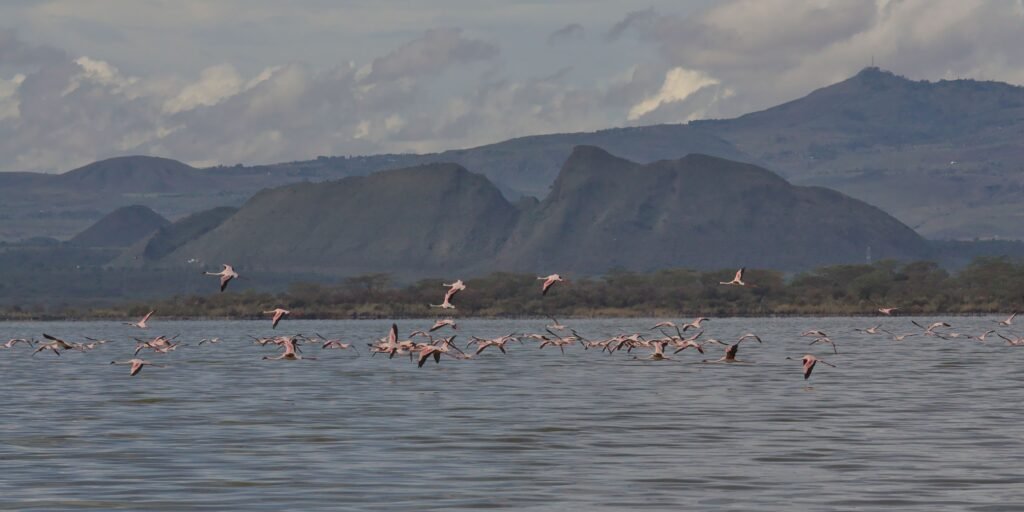
In Tanzania’s far north, close to the Kenyan border, Lake Natron is a caustic, flamingo-filled soda lake overshadowed almost entirely by its more famous neighbors, the Serengeti and Ngorongoro Crater. Its alkaline waters, often stained a deep red by salt-loving microorganisms, support one of the largest breeding populations of lesser flamingos in the world, a genuinely remarkable sight that most Tanzania itineraries never make time for.
Beyond the flamingos, Lake Natron sits at the base of Ol Doinyo Lengai, an active volcano sacred to the local Maasai, and travelers willing to venture off the beaten path East Africa destination here you can combine a flamingo-watching excursion with a demanding overnight hike to the volcano’s summit crater. Because Lake Natron requires a deliberate detour from the standard northern Tanzania safari circuit, it remains one of the country’s most underexplored adventure destinations, rewarding travelers with landscapes and wildlife spectacles found almost nowhere else on the continent.
Most itineraries route to Lake Natron from Arusha or as a stop between the Serengeti and Ngorongoro Crater, and a single night at one of the small camps near the lakeshore is usually enough to fit in both the flamingo viewing and, for the more ambitious, the pre-dawn start needed for the Ol Doinyo Lengai hike, making this one of the more accessible off the beaten path additions to a standard Tanzania safari.
9. Mafia Island, Tanzania
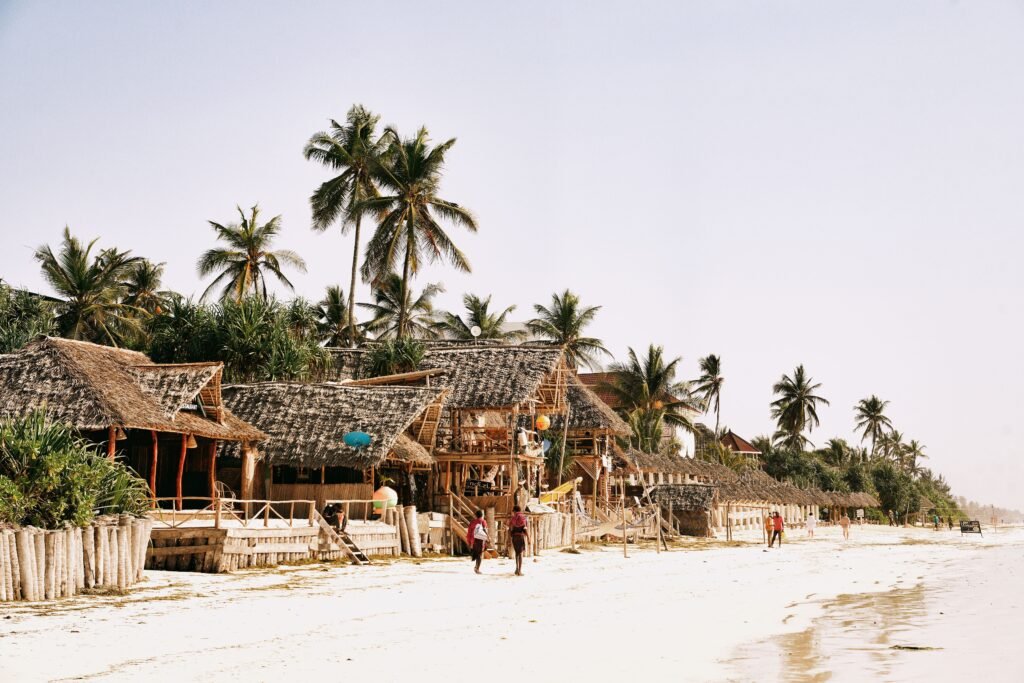
While Zanzibar dominates Tanzania’s beach tourism, Mafia Island, further south along the coast, offers a quieter, more adventurous alternative that remains genuinely off the beaten path. Part of a protected marine park, Mafia Island is best known among those who do make the journey for its exceptional whale shark diving, with the gentle giants congregating in its waters for much of the year in numbers rarely matched elsewhere in East Africa.
Beyond whale shark encounters, Mafia Island offers excellent diving and snorkeling across largely untouched coral reefs, quiet beaches without Zanzibar’s crowds, and a slower, more relaxed pace generally. Because Mafia Island requires a separate flight connection rather than sitting on the main Zanzibar ferry route, it has stayed well off the beaten path East Africa relative to its more famous neighbor, making it an increasingly popular choice for divers and adventure travelers looking for a genuine alternative to Tanzania’s better-known coastal destinations.
Whale shark season runs roughly from October through March, and travelers timing a visit around these months significantly improve their odds of a genuine in-water encounter. A three or four night stay allows time for several dives or snorkeling trips alongside simple beach relaxation, making Mafia Island one of the easier off the beaten path additions to a wider Tanzania coastal itinerary.
10. Kyambura Gorge, Uganda

Cut into the open savanna of Queen Elizabeth National Park, Kyambura Gorge, known locally as the Valley of Apes, remains one of Uganda’s most overlooked adventure destinations despite sitting inside one of the country’s most visited parks. A steep descent leads from flat grassland into dense riverine forest sheltering a community of wild chimpanzees, along with several other primate species, all within a ravine that most Queen Elizabeth visitors never realize exists.
Chimpanzee trekking in Kyambura Gorge is cost effective, and while sighting odds are somewhat lower, the dramatic contrast between open savanna above and dense forest below makes this one of the more genuinely surprising adventure experiences anywhere in Uganda. For travelers who assume they have already seen everything Queen Elizabeth National Park has to offer after a few days of game drives and a Kazinga Channel cruise, Kyambura Gorge is a reminder that even well-established parks can hold destinations that remain, in practice, well off the beaten path.
Because permits for Kyambura Gorge are rarely in high demand, same-day or next-day bookings are usually possible even during peak season, making it one of the easiest off the beaten path East Africa additions on this entire list to arrange at short notice.
What Makes a Destination Genuinely Off the Beaten Path
Not every quiet corner of East Africa deserves the off the beaten path label, and it is worth being precise about what the term actually means before applying it to a destination. A genuinely off the beaten path place is not simply one with fewer tourists than the Serengeti or Bwindi; plenty of destinations are quiet purely because they offer little of real interest.
What distinguishes a true off the beaten path East Africa adventure is the combination of low visitor numbers with genuine substance, a landscape, culture, or wildlife encounter that would draw real interest if more people knew about it, paired with the extra effort required to actually get there.
Every destination on this list meets that bar. Karamoja is off the beaten path not because northeastern Uganda is uninteresting, but because the roads are long and the region has historically been overlooked by mainstream tour operators. Lake Turkana sits off the beaten path because reaching it demands real logistical commitment, not because the Jade Sea lacks drama.
This distinction matters for travelers planning an off the beaten path trip, since a destination that is merely remote and empty offers a very different experience from one that is remote and genuinely rewarding, and it is the latter kind of off the beaten path destination that consistently produces the stories travelers tell for years afterward.
It is also worth saying that off the beaten path status is not permanent. Off the beaten path destinations that felt genuinely undiscovered a decade ago, Sipi Falls among them, have seen steadily growing visitor numbers as word has spread, and some of the places on this list will likely follow the same trajectory over time. For travelers drawn specifically to the idea of going off the beaten path, there is real value in visiting sooner rather than later, both for the quality of the experience itself and for the chance to support local communities and conservation efforts before a destination’s off the beaten path reputation inevitably starts to fade.
Practical Tips for Off the Beaten Path Travel in East Africa
A few practical realities apply across nearly every off the beaten path destination on this list. Flexibility matters more for off the beaten path East Africa travel than for a conventional safari itinerary, since road conditions, weather, and local logistics can shift schedules by a day or more without much warning.
Building buffer days into an itinerary that includes destinations like the Chalbi Desert, Lake Turkana, or Karamoja is far wiser than trying to run a tight, back-to-back schedule the way a standard Masai Mara or Serengeti circuit might allow.
Local guides and specialist operators matter considerably more for off the beaten path East Africa destinations than for East Africa’s established circuit. Many of the places on this list, from Lake Natron to the Congo Nile Trail, depend on relationships between operators and local communities that have been built over years, and travelers attempting to arrange these trips independently often find logistics considerably harder than anticipated. A good travel consultant with direct experience of these off the beaten path routes can save considerable time and frustration, particularly for destinations requiring charter flights or multi-day overland travel.
Budget expectations should also shift. While some off the beaten path East Africa destinations, particularly those reached by charter flight, can be more expensive per day than a standard lodge-based safari, others, like the Ssese Islands or a basic Chalbi Desert camp, cost considerably less than East Africa’s premier parks. Researching each destination’s specific logistics and costs individually, rather than assuming off the beaten path East Africa automatically means either cheaper or pricier, gives a far more accurate picture when building a realistic budget for this kind of trip.
Planning an Off the Beaten Path East Africa Adventure
Building a trip around destinations this far off the beaten path East Africa requires more flexibility and planning time than a standard safari circuit, since many of these places involve longer drives, charter flights, or limited accommodation options compared with East Africa’s established tourist routes. Working with a travel consultant who knows the region well matters considerably more here than on a conventional itinerary, since local knowledge of current road conditions, seasonal access, and community relationships often determines whether a visit to somewhere like the Chalbi Desert or Lake Turkana goes smoothly.
Most travelers combine one or two off the beaten path additions with a more conventional East Africa itinerary, rather than building an entire trip around remote destinations alone. A gorilla trekking safari in Rwanda might extend to include Lake Kivu and the Congo Nile Trail, while a northern Tanzania safari focused on the Serengeti could add a detour to Lake Natron before returning to the main circuit. This balanced approach tends to work best, giving travelers the security and comfort of East Africa’s proven highlights alongside the genuine adventure and discovery that only these lesser-known destinations can offer.
Whichever combination a traveler chooses, the common thread across every destination on this list is the same: a genuine sense of discovery that has become increasingly rare across East Africa’s most popular parks and beaches. For travelers who have already experienced the region’s headline attractions, or who simply want their first trip to start somewhere less expected, these ten destinations prove that going off the beaten path in East Africa still delivers exactly the kind of adventure that drew most travelers to the region in the first place.